Kongsee

Collection

Goodreads Choice Awards — Non-Fiction

Award-winning non-fiction titles recognised by the Goodreads Choice Awards. From memoirs to science, history to self-help.

1217 books available

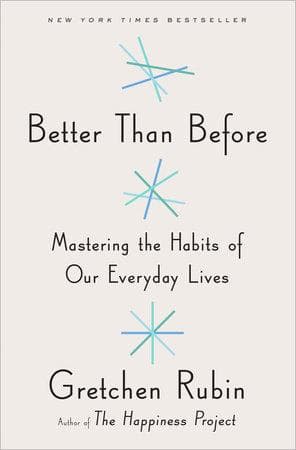
Better Than Before: Mastering the Habits of Our Everyday Lives

Gretchen Rubin

New York Times Bestseller Washington Post Bestseller The author of the blockbuster New York Times bestsellers, The Happiness Project and Happier at Home, tackles the critical question: How do we change? Gretchen Rubin's answer: through habits . Habits are the invisible architecture of everyday life. It takes work to make a habit, but once that habit is set, we can harness the energy of habits to build happier, stronger, more productive lives. So if habits are a key to change, then what we really need to know is: How do we change our habits ? Better than Before answers that question. It presents a practical, concrete framework to allow readers to understand their habits—and to change them for good. Infused with Rubin’s compelling voice, rigorous research, and easy humor, and packed with vivid stories of lives transformed, Better than Before explains the (sometimes counter-intuitive) core principles of habit formation. Along the way, Rubin uses herself as guinea pig, tests her theories on family and friends, and answers readers’ most pressing questions—oddly, questions that other writers and researchers tend to ignore: • Why do I find it tough to create a habit for something I love to do? • Sometimes I can change a habit overnight, and sometimes I can’t change a habit, no matter how hard I try. Why? • How quickly can I change a habit? • What can I do to make sure I stick to a new habit? • How can I help someone else change a habit? • Why can I keep habits that benefit others, but can’t make habits that are just for me? Whether readers want to get more sleep, stop checking their devices, maintain a healthy weight, or finish an important project, habits make change possible. Reading just a few chapters of Better Than Before will make readers eager to start work on their own habits—even before they’ve finished the book.

RM 46.51New
View

And There Was Light: Abraham Lincoln and the American Struggle

Jon Meacham

The life and moral evolution of Abraham Lincoln, exploring why and how Lincoln confronted secession, threats to democracy, and the tragedy of slavery in order to expand the possibilities of America. A president who governed a divided country has much to teach us in a twenty-first-century moment of polarization and political crisis. Abraham Lincoln was president when implacable secessionists gave no quarter in a clash of visions inextricably bound up with money, power, race, identity, and faith. He was hated and hailed, excoriated and revered. In Lincoln we can see the possibilities of the presidency as well as its limitations. At once familiar and elusive, Lincoln tends to be seen in popular minds as the greatest of American presidents—a remote icon—or as a politician driven more by calculation than by conviction. This illuminating new portrait gives us a very human Lincoln—an imperfect man whose moral antislavery commitment was essential to the story of justice in America. Here is the Lincoln who, as a boy, was steeped in the sermons of emancipation by Baptist preachers; who insisted that slavery was a moral evil; and who sought, as he put it, to do right as God gave him light to see the right. This book tells the story of Lincoln from his birth on the Kentucky frontier in 1809 to his leadership during the Civil War to his tragic assassination at Ford’s Theater on Good Friday 1865: his rise, his self-education through reading, his loves, his bouts of depression, his political failures, his deepening faith, and his persistent conviction that slavery must end. In a nation shaped by the courage of the enslaved of the era and by the brave witness of Black Americans of the nineteenth century, Lincoln’s story illuminates the ways and means of politics, the marshaling of power in a belligerent democracy, the durability of white supremacy in America, and the capacity of conscience to shape the maelstrom of events. Lincoln was not all he might have been—few human beings ever are—but he was more than many men have ever been. We could have done worse. And we have. And, as Lincoln himself would readily acknowledge, we can always do better. But we will do so only if we see Abraham Lincoln—and ourselves—whole.

View

Headstrong

Rachel Swaby

Fifty-two inspiring and insightful profiles of history’s brightest female scientists. “Rachel Swaby’s no-nonsense and needed Headstrong dynamically profiles historically overlooked female visionaries in science, technology, engineering, and math.”— Elle In 2013, the New York Times published an obituary for Yvonne Brill. It began: “She made a mean beef stroganoff, followed her husband from job to job, and took eight years off from work to raise three children.” It wasn’t until the second paragraph that readers discovered why the Times had devoted several hundred words to her life: Brill was a brilliant rocket scientist who invented a propulsion system to keep communications satellites in orbit, and had recently been awarded the National Medal of Technology and Innovation. Among the questions the obituary—and consequent outcry—prompted were, Who are the role models for today’s female scientists, and where can we find the stories that cast them in their true light? Headstrong delivers a powerful, global, and engaging response. Covering Nobel Prize winners and major innovators, as well as lesser-known but hugely significant scientists who influence our every day, Rachel Swaby’s vibrant profiles span centuries of courageous thinkers and illustrate how each one’s ideas developed, from their first moment of scientific engagement through the research and discovery for which they’re best known. This fascinating tour reveals 52 women at their best—while encouraging and inspiring a new generation of girls to put on their lab coats.

RM 17.90
View

You've Gone Too Far This Time, Sir!

Danny Bent

Have you ever woken up in the sultry heat of the morning, your hair and beard teeming with maggots, and then had potatoes picked out of your ears? Have you ever felt the cold barrel of a semi automatic gun against your forehead? When Danny Bent cycled 15,000 kilometres from the UK to India to raise money for ActionAid, it was a decision that took twenty years and one minute. For twenty years he had wanted to do something to raise money for charity. The one minute was when as their teacher he was put on the spot by his pupils and declared that the means was by bike, and he was going to India. What he had signed up for was slogging along roads with trucks bearing down on him, unable to see and choking in the smog; shooting down treacherous descents with 100 foot drops, shaking with cold and too numb to brake; muscle burn and saddle sores; delirium and food poisoning; thirst and malnutrition; foul and insanitary conditions; life-threatening crises; obstructive border guards, crazed dogs and inquisitive passers-by. 'You've Gone Too Far This Time, Sir!' is a real and compelling blow-by-blow account of Danny's trip across Europe, the former Soviet Republics, Russia, China, Pakistan and India. And what people he met! They are the true delight of this book, mostly charming, sometimes reckless, occasionally threatening, always unpredictable, and forever inviting Danny to be up for the challenge of entertaining them, in one instance by dancing in front of a packed stadium, in another by eating sheep's brains in a local night market. Danny turns the wheels, you turn the pages. The pace is relentless. The story is both heart-stopping and heart-warming. The arrival is breakdown-and-cry emotional. And there's loads of fun and wonderment along the way too. What a book! What a ride! Live your dream. Go for it, Danny.

View

The Girl Who Smiled Beads: A Story of War and What Comes After

Clemantine Wamariya, Elizabeth Weil

A riveting story of dislocation, survival, and the power of the imagination to save us Clemantine Wamariya was six years old when her mother and father began to speak in whispers, when neighbors began to disappear, and when she heard the loud, ugly sounds her brother said were "thunder." It was 1994, and in 100 days more than 800,000 people would be murdered in Rwanda and millions more displaced. Clemantine and her fifteen-year-old sister, Claire, ran and spent the next six years wandering through seven African countries searching for safety--hiding under beds, foraging for food, surviving and fleeing refugee camps, finding unexpected kindness, witnessing unimaginable cruelty. They did not know whether their parents were alive. At age twelve, Clemantine, along with Claire, was granted asylum in the United States--a chance to build a new life. Chicago was disorienting, filled with neon lights, antiseptic smells, endless concrete. Clemantine spoke five languages but almost no English, and had barely gone to school. Many people wanted to help--a family in the North Shore suburbs invited Clemantine to live with them as their daughter. Others saw her only as broken. They thought she needed, and wanted, to be saved. Meanwhile Claire, who had for so long protected and provided for Clemantine, found herself on a very different path, cleaning hotel rooms to support her three children. Raw, urgent, yet disarmingly beautiful, The Girl Who Smiled Beads captures the true costs and aftershocks of war: what is forever lost, what can be repaired, the fragility and importance of memory, the faith that one can learn, again, to love oneself, even with deep scars.

View

Eden Undone: A True Story of Sex, Murder, and Utopia at the Dawn of World War II

Abbott Kahler

An incredible true story of murder in a utopian community established on a remote Galápagos island by European refugees and the American industrialist who became embroiled in the investigation—from the New York Times bestselling author of The Ghosts of Eden Park At the height of the Great Depression, Los Angeles oil mogul George Allan Hancock and his crew of Smithsonian scientists came upon a gruesome two bodies, mummified by the searing heat, on the shore of a remote Galápagos island. For the past four years Hancock and other American elites had traveled the South Seas to collect specimens for scientific research. On one trip to the Galápagos, Hancock was surprised to discover an equally exotic group of European exiles who had fled political and economic unrest, hoping to create a utopian paradise. One was so devoted to a life of isolation that he’d had his teeth extracted and replaced with a set of steel dentures. As Hancock and his fellow American explorers would witness, paradise had turned into chaos. The three sets of exiles—a Berlin doctor and his lover, a traumatized World War I veteran and his young family, and an Austrian baroness with two adoring paramours—were riven by conflict. Petty slights led to angry confrontations. The baroness, wielding a riding crop and pearl-handled revolver, staged physical fights between her two lovers and unabashedly seduced American tourists. The conclusion was with two exiles missing and two others dead, the survivors hurled accusations of murder. Using never-before-published archives, Abbott Kahler weaves a chilling, stranger-than-fiction tale worthy of Agatha Christie. Set against the backdrop of the Great Depression and the march to World War II, with a mystery as alluring and curious as the Galápagos itself, Eden Undone explores the universal and timeless desire to seek utopia—and lays bare the human fallibility that, inevitably, renders such a quest doomed.

RM 75.05
View

Bittersweet: How Sorrow and Longing Make Us Whole

Susan Cain

In her new masterpiece, the author of the bestselling phenomenon Quiet reveals the power of a bittersweet outlook on life, and why we’ve been so blind to its value. With Quiet , Susan Cain urged our society to cultivate space for the undervalued, indispensable introverts among us, thereby revealing an untapped power hidden in plain sight. Now she employs the same mix of research, storytelling, and memoir to explore why we experience sorrow and longing, and the surprising lessons these states of mind teach us about creativity, compassion, leadership, spirituality, mortality, and love. Bittersweetness is a tendency to states of longing, poignancy, and sorrow; an acute awareness of passing time; and a curiously piercing joy when beholding beauty. It recognizes that light and dark, birth and death—bitter and sweet—are forever paired. A song in a minor key, an elegiac poem, or even a touching television commercial all can bring us to this sublime, even holy, state of mind—and, ultimately, to greater kinship with our fellow humans. But bittersweetness is not, as we tend to think, just a momentary feeling or event. It’s also a way of being, a storied heritage. Our artistic and spiritual traditions—amplified by recent scientific and management research—teach us its power. Cain shows how a bittersweet state of mind is the quiet force that helps us transcend our personal and collective pain. If we don’t acknowledge our own sorrows and longings, she says, we can end up inflicting them on others via abuse, domination, or neglect. But if we realize that all humans know—or will know—loss and suffering, we can turn toward each other. And we can learn to transform our own pain into creativity, transcendence, and connection. At a time of profound discord and personal anxiety, Bittersweet brings us together in deep and unexpected ways.

View
Previous

Latest • Page 1/61

Next
WhatsApp support