Kongsee

Collection

Goodreads Choice Awards — Non-Fiction

Award-winning non-fiction titles recognised by the Goodreads Choice Awards. From memoirs to science, history to self-help.

1217 books available

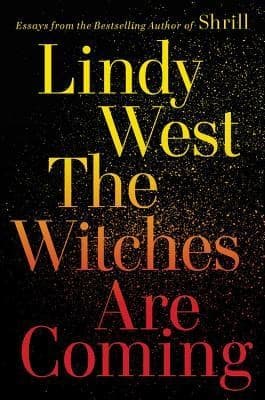
The Witches Are Coming

Lindy West

In this wickedly funny cultural critique, the author of the critically acclaimed memoir and Hulu series Shrill exposes misogyny in the #MeToo era. THIS IS A WITCH HUNT. WE’RE WITCHES, AND WE’RE HUNTING YOU. From the moment powerful men started falling to the #MeToo movement, the lamentations began: this is feminism gone too far, this is injustice, this is a witch hunt. In The Witches Are Coming , firebrand author of the New York Times bestselling memoir and now critically acclaimed Hulu TV series Shrill , Lindy West, turns that refrain on its head. You think this is a witch hunt? Fine. You’ve got one. In a laugh-out-loud, incisive cultural critique, West extolls the world-changing magic of truth, urging readers to reckon with dark lies in the heart of the American mythos, and unpacking the complicated, and sometimes tragic, politics of not being a white man in the twenty-first century. She tracks the misogyny and propaganda hidden (or not so hidden) in the media she and her peers devoured growing up, a buffet of distortions, delusions, prejudice, and outright bullsh*t that has allowed white male mediocrity to maintain a death grip on American culture and politics-and that delivered us to this precarious, disorienting moment in history. West writes, “We were just a hair’s breadth from electing America’s first female president to succeed America’s first black president. We weren’t done, but we were doing it. And then, true to form—like the Balrog’s whip catching Gandalf by his little gray bootie, like the husband in a Lifetime movie hissing, ‘If I can’t have you, no one can’—white American voters shoved an incompetent, racist con man into the White House.” We cannot understand how we got here-how the land of the free became Trump’s America—without examining the chasm between who we are and who we think we are, without fact—checking the stories we tell ourselves about ourselves and each other. The truth can transform us; there is witchcraft in it. Lindy West turns on the light.

View

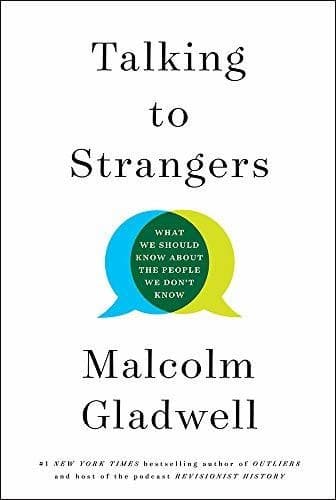
Talking to Strangers: What We Should Know About the People We Don't Know

Malcolm Gladwell

Malcolm Gladwell, host of the podcast Revisionist History and author of the #1 New York Times bestseller Outliers , offers a powerful examination of our interactions with strangers -- and why they often go wrong. How did Fidel Castro fool the CIA for a generation? Why did Neville Chamberlain think he could trust Adolf Hitler? Why are campus sexual assaults on the rise? Do television sitcoms teach us something about the way we relate to each other that isn't true? While tackling these questions, Malcolm Gladwell was not solely writing a book for the page. He was also producing for the ear. In the audiobook version of Talking to Strangers, you'll hear the voices of people he interviewed--scientists, criminologists, military psychologists. Court transcripts are brought to life with re-enactments. You actually hear the contentious arrest of Sandra Bland by the side of the road in Texas. As Gladwell revisits the deceptions of Bernie Madoff, the trial of Amanda Knox, and the suicide of Sylvia Plath, you hear directly from many of the players in these real-life tragedies. There's even a theme song - Janelle Monae's "Hell You Talmbout." Something is very wrong, Gladwell argues, with the tools and strategies we use to make sense of people we don't know. And because we don't know how to talk to strangers, we are inviting conflict and misunderstanding in ways that have a profound effect on our lives and our world.

RM 39.90
View

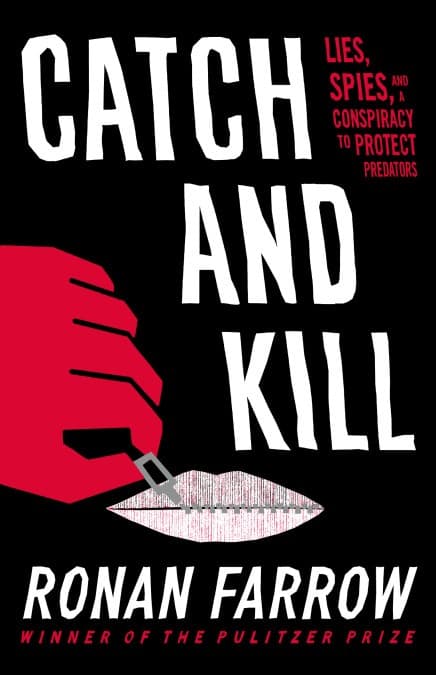
Catch and Kill: Lies, Spies, and a Conspiracy to Protect Predators

Ronan Farrow

In this instant New York Times bestselling account of violence and espionage, Pulitzer Prize-winning investigative reporter Ronan Farrow exposes serial abusers and a cabal of powerful interests hell-bent on covering up the truth, at any cost. In 2017, a routine network television investigation led Ronan Farrow to a story only whispered about: one of Hollywood’s most powerful producers was a predator, protected by fear, wealth, and a conspiracy of silence. As Farrow drew closer to the truth, shadowy operatives, from high-priced lawyers to elite war-hardened spies, mounted a secret campaign of intimidation, threatening his career, following his every move, and weaponizing an account of abuse in his own family. All the while, Farrow and his producer faced a degree of resistance they could not explain — until now. And a trail of clues revealed corruption and cover-ups from Hollywood to Washington and beyond. This is the untold story of the exotic tactics of surveillance and intimidation deployed by wealthy and connected men to threaten journalists, evade accountability, and silence victims of abuse. And it’s the story of the women who risked everything to expose the truth and spark a global movement. Both a spy thriller and a meticulous work of investigative journalism, Catch and Kill breaks devastating new stories about the rampant abuse of power and sheds far-reaching light on investigations that shook our culture.

RM 24.90
View

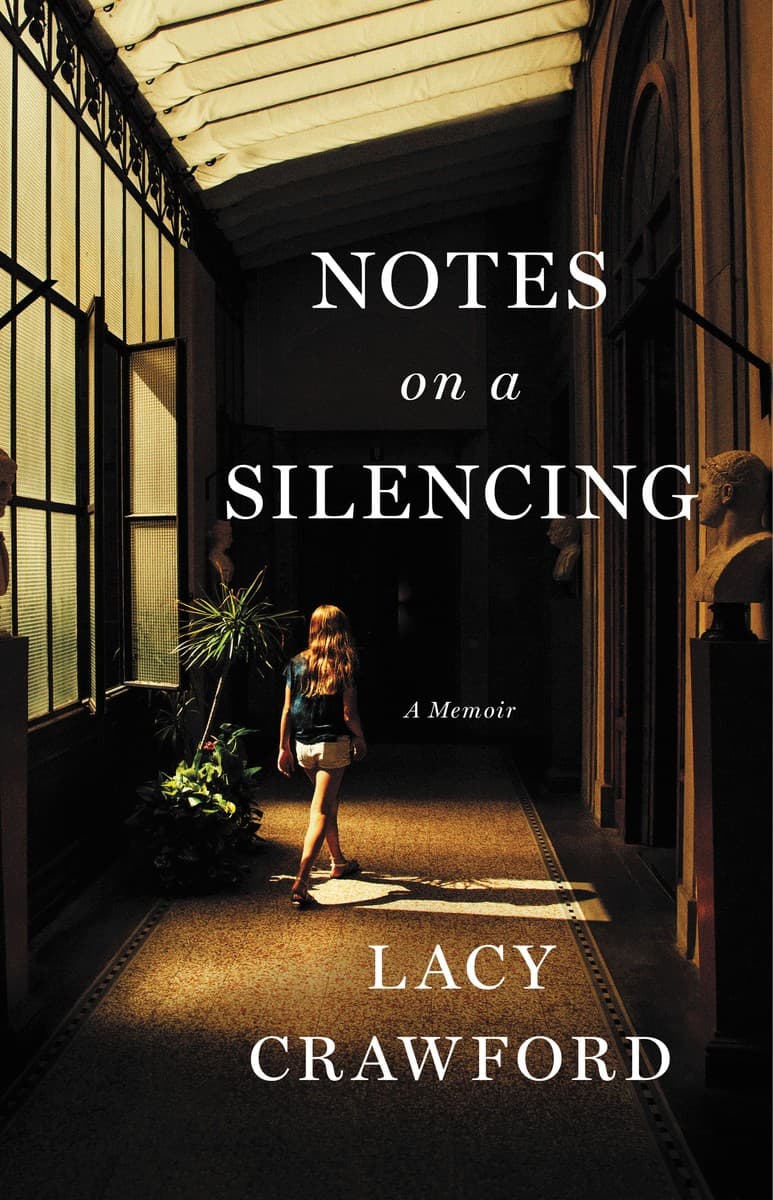
Notes on a Silencing: A Memoir

Lacy Crawford

A riveting, lucid memoir of a young woman's struggle to regain her sense of self after trauma, and the efforts by a powerful New England boarding school to silence her--at any cost When the elite St. Paul's School recently came under state investigation after extensive reports of sexual abuse on campus, Lacy Crawford thought she'd put behind her the assault she'd suffered at St. Paul's decades before, when she was fifteen. Still, when detectives asked for victims to come forward, she sent a note. Her criminal case file reopened, she saw for the first time evidence that corroborated her memories. Here were depictions of the naïve, hard-working girl she'd been, a chorister and debater, the daughter of a priest; of the two senior athletes who assaulted her and were allowed to graduate with awards; and of the faculty, doctors, and priests who had known about Crawford's assault and gone to great lengths to bury it. Now a wife, mother, and writer living on the other side of the country, Crawford learned that police had uncovered astonishing proof of an institutional silencing years before, and that unnamed powers were still trying to block her case. The slander, innuendo, and lack of adult concern that Crawford had experienced as a student hadn't been imagined as the effects of trauma, after all: these were the actions of a school that prized its reputation above anything, even a child. This revelation launched Crawford on an extraordinary inquiry into the ways gender, privilege, and power shaped her experience as a girl at the gates of America's elite. Her investigation looks beyond the sprawling playing fields and soaring chapel towers of crucibles of power like St. Paul's, whose reckoning is still to come. And it runs deep into the channels of shame and guilt, witness and silencing, that dictate who can speak and who is heard in American society. An insightful, mature, beautifully written memoir, Notes on a Silencing is an arresting coming-of-age story that wrestles with an essential question for our time: what telling of a survivor's story will finally force a remedy?

View

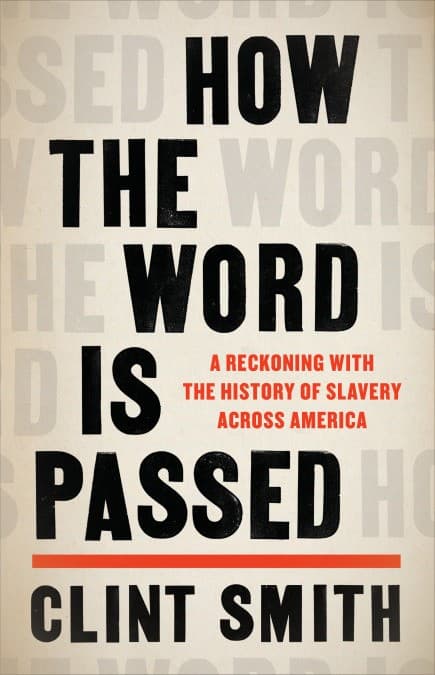
How the Word Is Passed: A Reckoning with the History of Slavery Across America

Clint Smith

Poet and contributor to The Atlantic Clint Smith’s revealing, contemporary portrait of America as a slave owning nation Beginning in his own hometown of New Orleans, Clint Smith leads the reader through an unforgettable tour of monuments and landmarks-those that are honest about the past and those that are not-that offer an intergenerational story of how slavery has been central in shaping our nation's collective history, and ourselves. It is the story of the Monticello Plantation in Virginia, the estate where Thomas Jefferson wrote letters espousing the urgent need for liberty while enslaving over 400 people on the premises. It is the story of the Whitney Plantation, one of the only former plantations devoted to preserving the experience of the enslaved people whose lives and work sustained it. It is the story of Angola Prison in Louisiana, a former plantation named for the country from which most of its enslaved people arrived and which has since become one of the most gruesome maximum-security prisons in the world. And it is the story of Blandford Cemetery, the final resting place of tens of thousands of Confederate soldiers. In a deeply researched and transporting exploration of the legacy of slavery and its imprint on centuries of American history, How the Word Is Passed illustrates how some of our country's most essential stories are hidden in plain view-whether in places we might drive by on our way to work, holidays such as Juneteenth, or entire neighborhoods—like downtown Manhattan—on which the brutal history of the trade in enslaved men, women and children has been deeply imprinted. Informed by scholarship and brought alive by the story of people living today, Clint Smith’s debut work of nonfiction is a landmark work of reflection and insight that offers a new understanding of the hopeful role that memory and history can play in understanding our country.

View

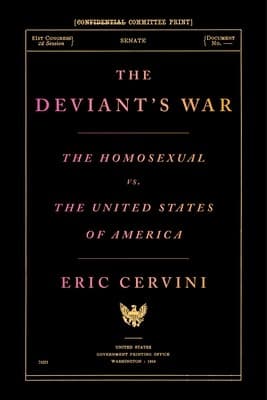
The Deviant's War: The Homosexual vs. the United States of America

Eric Cervini

The secret history of the fight for gay rights that began a generation before Stonewall. In 1957, Frank Kameny, a rising astronomer working for the U.S. Defense Department in Hawaii, received a summons to report immediately to Washington, D.C. The Pentagon had reason to believe he was a homosexual, and after a series of humiliating interviews, Kameny, like countless gay men and women before him, was promptly dismissed from his government job. Unlike many others, though, Kameny fought back. Eric Cervini's The Deviant's War is the story of what followed. This book is an assiduously researched history of an early champion of gay liberation, one who fought for the right to follow his passion and serve his country in the wake of Joseph McCarthy's Lavender Scare. We follow Kameny as he explores the underground gay scenes of Boston and Washington, D.C., where he formulates his arguments against the U.S. Government's classification of gay men and women as "sexual perverts." At a time when staying in the closet remained the default, he exposed the hypocrisies of the American establishment, accelerated a broader revolution in sexual morals, and invented what we now know as Gay Pride. Based on firsthand accounts, recently declassified FBI records, and forty thousand personal documents, The Deviant's War unfolds over the course of the 1960s, as the Mattachine Society of Washington, the group Kameny founded, became the first organization to protest the systematic persecution of gay federal employees. It traces the forgotten ties that bound gay rights to the Black Freedom Movement, the New Left, lesbian activism, and trans resistance. Above all, it is a story of America (and Washington) at a cultural and sexual crossroads; of public battles with Congress; of FBI informants; murder; betrayal; sex; love; and ultimately victory.

RM 90.85
View

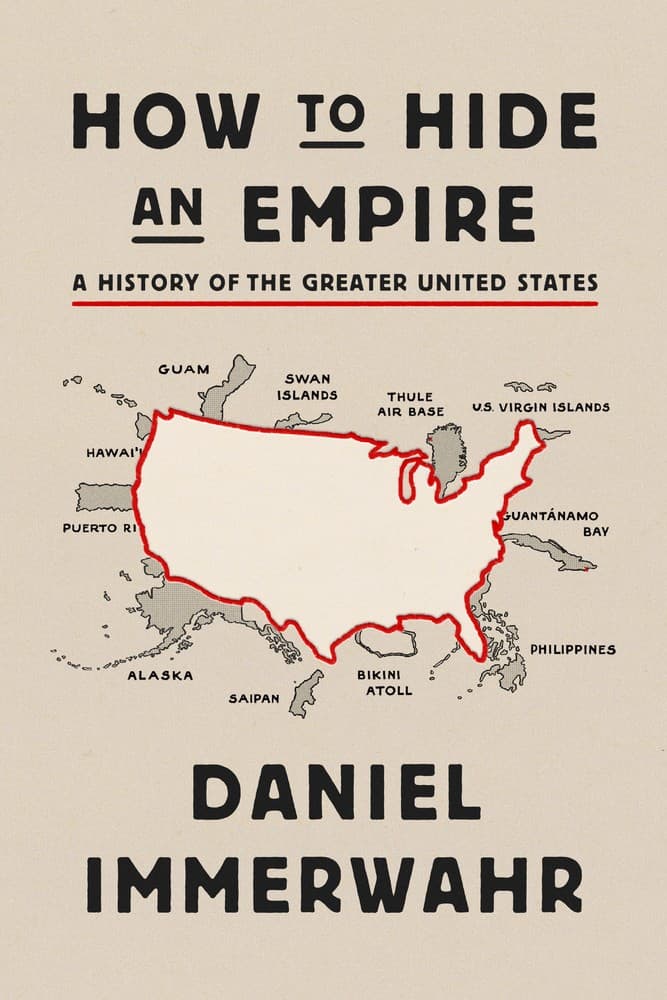
How to Hide an Empire: A History of the Greater United States

Daniel Immerwahr

A pathbreaking history of the United States' overseas possessions and the true meaning of its empire We are familiar with maps that outline all fifty states. And we are also familiar with the idea that the United States is an "empire," exercising power around the world. But what about the actual territories--the islands, atolls, and archipelagos--this country has governed and inhabited? In How to Hide an Empire , Daniel Immerwahr tells the fascinating story of the United States outside the United States. In crackling, fast-paced prose, he reveals forgotten episodes that cast American history in a new light. We travel to the Guano Islands, where prospectors collected one of the nineteenth century's most valuable commodities, and the Philippines, site of the most destructive event on U.S. soil. In Puerto Rico, Immerwahr shows how U.S. doctors conducted grisly experiments they would never have conducted on the mainland and charts the emergence of independence fighters who would shoot up the U.S. Congress. In the years after World War II, Immerwahr notes, the United States moved away from colonialism. Instead, it put innovations in electronics, transportation, and culture to use, devising a new sort of influence that did not require the control of space. Rich with absorbing vignettes, full of surprises, and driven by an original conception of what empire and globalization mean today, How to Hide an Empire is a major and compulsively readable work of history.

RM 171.27
View

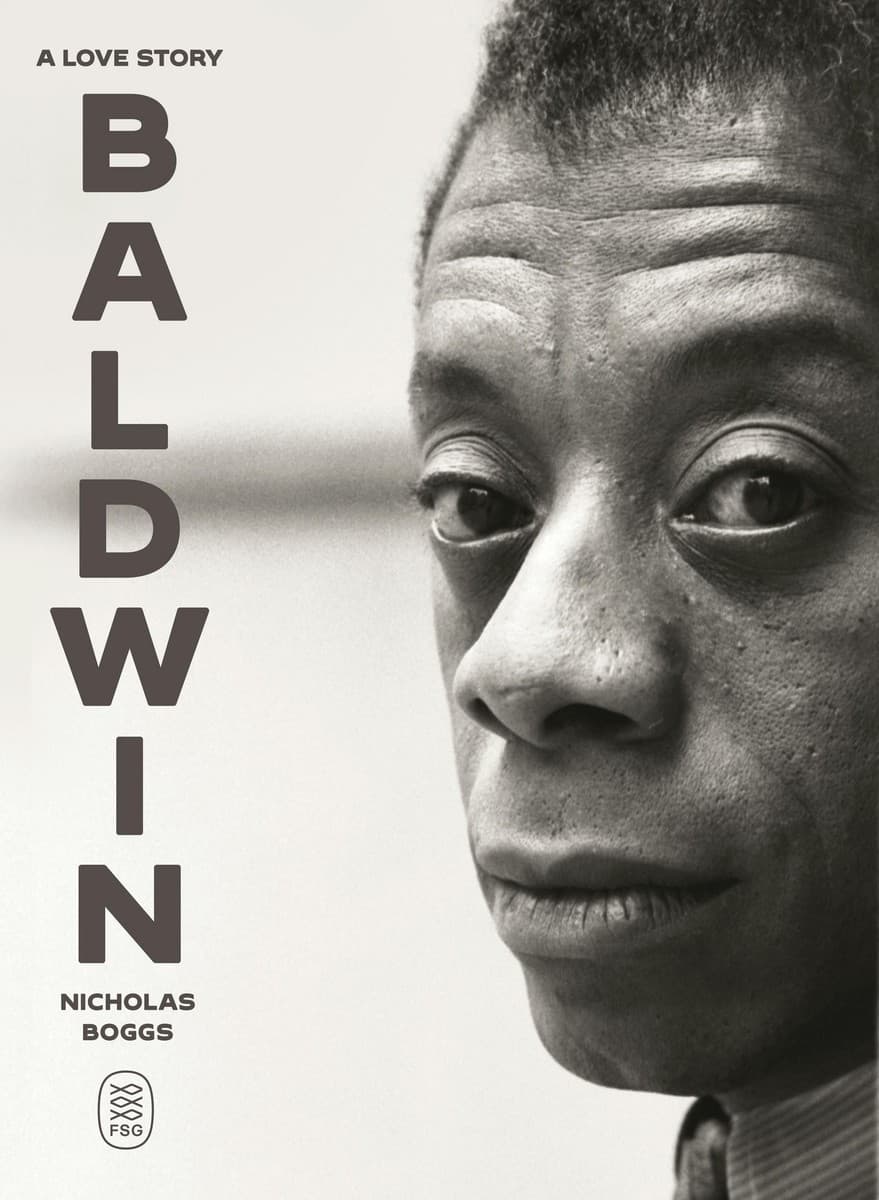
Baldwin: A Love Story

Nicholas Boggs

Drawing on extensive new archival material, this spellbinding biography reveals how James Baldwin's relationships shaped his work. A Love Story tells the overlapping stories of James Baldwin’s most sustaining with his mentor, the Black American painter Beauford Delaney; with his lover and muse, the Swiss painter Lucien Happersberger; and with his collaborators, the famed Turkish actor Engin Cezzar and the iconoclastic French artist Yoran Cazac. This biography shows for the first time how Baldwin drew on complex structures within these relationships—geographical, cultural, political, artistic, and erotic—and alchemized them into art that spoke truth to power and had an indelible impact on the Civil Rights Movement and on Black and queer literary history. Nicholas Boggs's rich and subtle narration of Baldwin’s public story and his lucid discussion of his work are underpinned by what he calls “a search for the truth about Baldwin’s most sustaining intimate relationships and how they had shaped his life and art, which in turn has had such an indelible impact on the literary and political landscape of the twentieth century and continues to influence and even offer some measure of hope for the world today. It would not be until close to the end of this voyage that Irealized what I had actually been researching and trying to write all along was a new James Baldwin biography. But from the very beginning, I always knew it was a love story."

RM 308.81
View

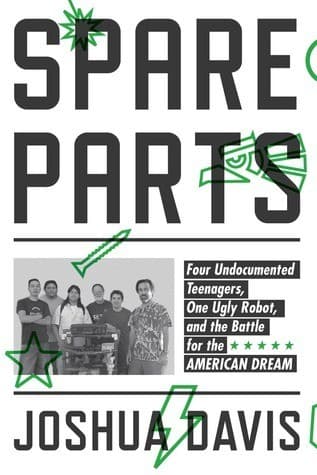
Spare Parts

Joshua Davis

Four undocumented Mexican American students, two great teachers, one robot-building contest...and a major motion picture. In 2004, four Latino teenagers arrived at the Marine Advanced Technology Education Robotics Competition at the University of California, Santa Barbara. They were born in Mexico but raised in Phoenix, Arizona, where they attended an underfunded public high school. No one had ever suggested to Oscar, Cristian, Luis, or Lorenzo that they might amount to much - but two inspiring science teachers had convinced these impoverished, undocumented kids from the desert who had never even seen the ocean that they should try to build an underwater robot. And build a robot they did. Their robot wasn't pretty, especially compared to those of the competition. They were going up against some of the best collegiate engineers in the country, including a team from MIT backed by a $10,000 grant from ExxonMobil. The Phoenix teenagers had scraped together less than $1,000 and built their robot out of scavenged parts. This was never a level competition—and yet, against all odds... they won! But this is just the beginning for these four, whose story—which became a key inspiration to the DREAMers movement—will go on to include first-generation college graduations, deportation, bean-picking in Mexico, and service in Afghanistan. Joshua Davis' Spare Parts is a story about overcoming insurmountable odds and four young men who proved they were among the most patriotic and talented Americans in this country—even as the country tried to kick them out.

RM 75.05
View

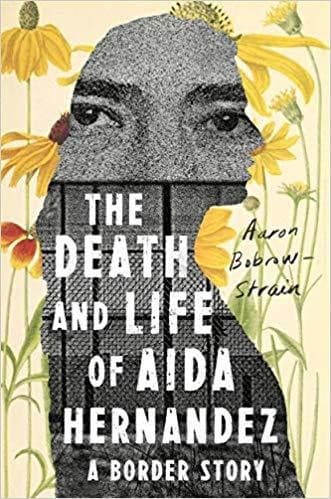
The Death and Life of Aida Hernandez: A Border Story

Aaron Bobrow-Strain

What happens when an undocumented teen mother takes on the U.S. immigration system? When Aida Hernandez was born in 1987 in Agua Prieta, Mexico, the nearby U.S. border was little more than a worn-down fence. Eight years later, Aida's mother took her and her siblings to live in Douglas, Arizona. By then, the border had become one of the most heavily policed sites in America. Undocumented, Aida fought to make her way. She learned English, watched Friends , and, after having a baby at sixteen, dreamed of teaching dance and moving with her son to New York City. But life had other plans. Following a misstep that led to her deportation, Aida found herself in a Mexican city marked by violence, in a country that was not hers. To get back to the United States and reunite with her son, she embarked on a harrowing journey. The daughter of a rebel hero from the mountains of Chihuahua, Aida has a genius for survival--but returning to the United States was just the beginning of her quest. Taking us into detention centers, immigration courts, and the inner lives of Aida and other daring characters, The Death and Life of Aida Hernandez reveals the human consequences of militarizing what was once a more forgiving border. With emotional force and narrative suspense, Aaron Bobrow-Strain brings us into the heart of a violently unequal America. He also shows us that the heroes of our current immigration wars are less likely to be perfect paragons of virtue than complex, flawed human beings who deserve justice and empathy all the same.

RM 98.75
View

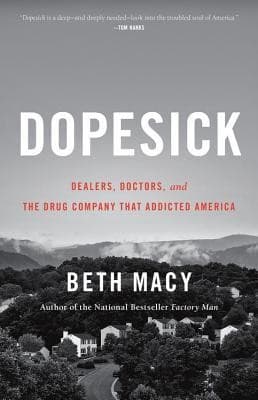
Dopesick: Dealers, Doctors, and the Drug Company that Addicted America

Beth Macy

Beth Macy takes us into the epicenter of America's twenty-plus year struggle with opioid addiction. From distressed small communities in Central Appalachia to wealthy suburbs; from disparate cities to once-idyllic farm towns; it's a heartbreaking trajectory that illustrates how this national crisis has persisted for so long and become so firmly entrenched. Beginning with a single dealer who lands in a small Virginia town and sets about turning high school football stars into heroin overdose statistics, Macy endeavors to answer a grieving mother's question-why her only son died-and comes away with a harrowing story of greed and need. From the introduction of OxyContin in 1996, Macy parses how America embraced a medical culture where overtreatment with painkillers became the norm. In some of the same distressed communities featured in her bestselling book Factory Man , the unemployed use painkillers both to numb the pain of joblessness and pay their bills, while privileged teens trade pills in cul-de-sacs, and even high school standouts fall prey to prostitution, jail, and death. Through unsparing, yet deeply human portraits of the families and first responders struggling to ameliorate this epidemic, each facet of the crisis comes into focus. In these politically fragmented times, Beth Macy shows, astonishingly, that the only thing that unites Americans across geographic and class lines is opioid drug abuse. But in a country unable to provide basic healthcare for all, Macy still finds reason to hope-and signs of the spirit and tenacity necessary in those facing addiction to build a better future for themselves and their families.

RM 86.86
View
Previous

Latest • Page 34/61

Next
WhatsApp support