Kongsee

Collection

Goodreads Choice Awards — Non-Fiction

Award-winning non-fiction titles recognised by the Goodreads Choice Awards. From memoirs to science, history to self-help.

1217 books available

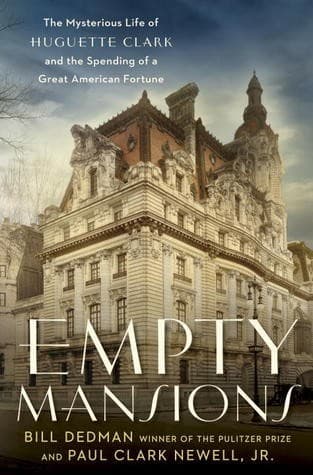
Empty Mansions

Bill Dedman, Paul Clark Newell Jr

When Pulitzer Prize – winning journalist Bill Dedman noticed in 2009 a grand home for sale, unoccupied for nearly sixty years, he stumbled through a surprising portal into American history. Empty Mansions is a rich mystery of wealth and loss, connecting the Gilded Age opulence of the nineteenth century with a twenty-first-century battle over a $300 million inheritance. At its heart is a reclusive heiress named Huguette Clark, a woman so secretive that, at the time of her death at age 104, no new photograph of her had been seen in decades. Though she owned palatial homes in California, New York, and Connecticut, why had she lived for twenty years in a simple hospital room, despite being in excellent health? Why were her valuables being sold off? Was she in control of her fortune, or controlled by those managing her money? Dedman has collaborated with Huguette Clark’s cousin, Paul Clark Newell, Jr., one of the few relatives to have frequent conversations with her. Dedman and Newell tell a fairy tale in reverse: the bright, talented daughter, born into a family of extreme wealth and privilege, who secrets herself away from the outside world. Huguette was the daughter of self-made copper industrialist W. A. Clark, nearly as rich as Rockefeller in his day, a controversial senator, railroad builder, and founder of Las Vegas. She grew up in the largest house in New York City, a remarkable dwelling with 121 rooms for a family of four. She owned paintings by Degas and Renoir, a world-renowned Stradivarius violin, a vast collection of antique dolls. But wanting more than treasures, she devoted her wealth to buying gifts for friends and strangers alike, to quietly pursuing her own work as an artist, and to guarding the privacy she valued above all else. The Clark family story spans nearly all of American history in three generations, from a log cabin in Pennsylvania to mining camps in the Montana gold rush, from backdoor politics in Washington to a distress call from an elegant Fifth Avenue apartment. The same Huguette who was touched by the terror attacks of 9/11 held a ticket nine decades earlier for a first-class stateroom on the second voyage of the Titanic . Empty Mansions reveals a complex portrait of the mysterious Huguette and her intimate circle. We meet her extravagant father, her publicity-shy mother, her star-crossed sister, her French boyfriend, her nurse who received more than $30 million in gifts, and the relatives fighting to inherit Huguette’s copper fortune. Richly illustrated with more than seventy photographs, Empty Mansions is an enthralling story of an eccentric of the highest order, a last jewel of the Gilded Age who lived life on her own terms. The No. 1 New York Times bestseller. Best nonfiction books of the year at Goodreads, Amazon.com, and Barnes & Noble. One of the New York Times critic Janet Maslin's 10 favorite books of 2013.

View

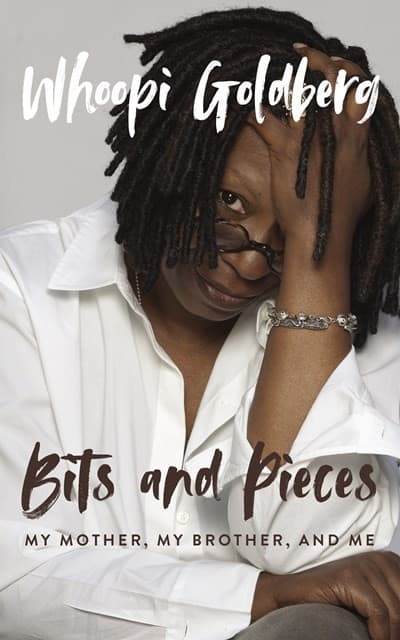
Bits and Pieces: My Mother, My Brother, and Me

Whoopi Goldberg

From multi-award winner Whoopi Goldberg comes a new and unique memoir of her family and their influence on her early life. If it weren’t for Emma Johnson, Caryn Johnson would have never become Whoopi Goldberg. Emma gave her children the loving care and wisdom they needed to succeed in life, always encouraging them to be true to themselves. When Whoopi lost her mother in 2010—and then her older brother, Clyde, five years later—she felt deeply alone; the only people who truly knew her were gone. Emma raised her children not just to survive, but to thrive. In this intimate and heartfelt memoir, Whoopi shares many of the deeply personal stories of their lives together for the first time. Growing up in the projects in New York City, there were trips to Coney Island, the Ice Capades, and museums, and every Christmas was a magical experience. To this day, she doesn’t know how her mother was able to give them such an enriching childhood, despite the struggles they faced—and it wasn’t until she was well into adulthood that Whoopi learned just how traumatic some of those struggles were. Fans of personal memoirs such as Finding Me by Viola Davis and In Pieces by Sally Field will be touched by Bits and a moving tribute from a daughter to her mother, and beautiful portrait of three people who loved each other deeply. Whoopi writes, “Not everybody gets to walk this earth with folks who let you be exactly who you are and who give you the confidence to become exactly who you want to be. So, I thought I’d share mine with you.”

View

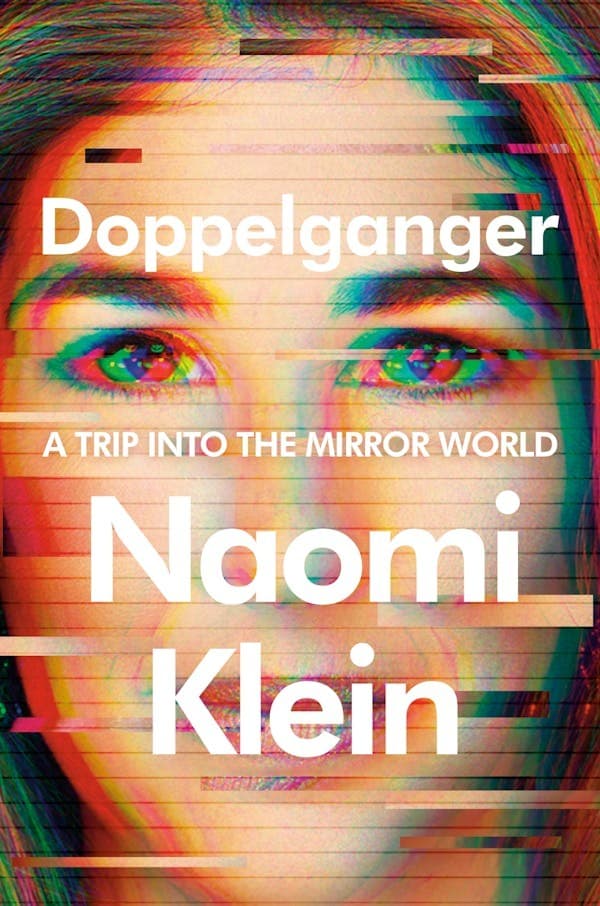
Doppelganger: A Trip into the Mirror World

Naomi Klein

What if you woke up one morning and found you’d acquired another self―a double who was almost you and yet not you at all? What if that double shared many of your preoccupations but, in a twisted, upside-down way, furthered the very causes you’d devoted your life to fighting against? Not long ago, the celebrated activist and public intellectual Naomi Klein had just such an experience―she was confronted with a doppelganger whose views she found abhorrent but whose name and public persona were sufficiently similar to her own that many people got confused about who was who. Destabilized, she lost her bearings, until she began to understand the experience as one manifestation of a strangeness many of us have come to know but struggle to define: AI-generated text is blurring the line between genuine and spurious communication; New Age wellness entrepreneurs turned anti-vaxxers are scrambling familiar political allegiances of left and right; and liberal democracies are teetering on the edge of absurdist authoritarianism, even as the oceans rise. Under such conditions, reality itself seems to have become unmoored. Is there a cure for our moment of collective vertigo? Naomi Klein is one of our most trenchant and influential social critics, an essential analyst of what branding, austerity, and climate profiteering have done to our societies and souls. Here she turns her gaze inward to our psychic landscapes, and outward to the possibilities for building hope amid intersecting economic, medical, and political crises. With the assistance of Sigmund Freud, Jordan Peele, Alfred Hitchcock, and bell hooks, among other accomplices, Klein uses wry humor and a keen sense of the ridiculous to face the strange doubles that haunt us―and that have come to feel as intimate and proximate as a warped reflection in the mirror. Combining comic memoir with chilling reportage and cobweb-clearing analysis, Klein seeks to smash that mirror and chart a path beyond despair. Doppelganger asks: What do we neglect as we polish and perfect our digital reflections? Is it possible to dispose of our doubles and overcome the pathologies of a culture of multiplication? Can we create a politics of collective care and undertake a true reckoning with historical crimes? The result is a revelatory treatment of the way many of us think and feel now―and an intellectual adventure story for our times.

View

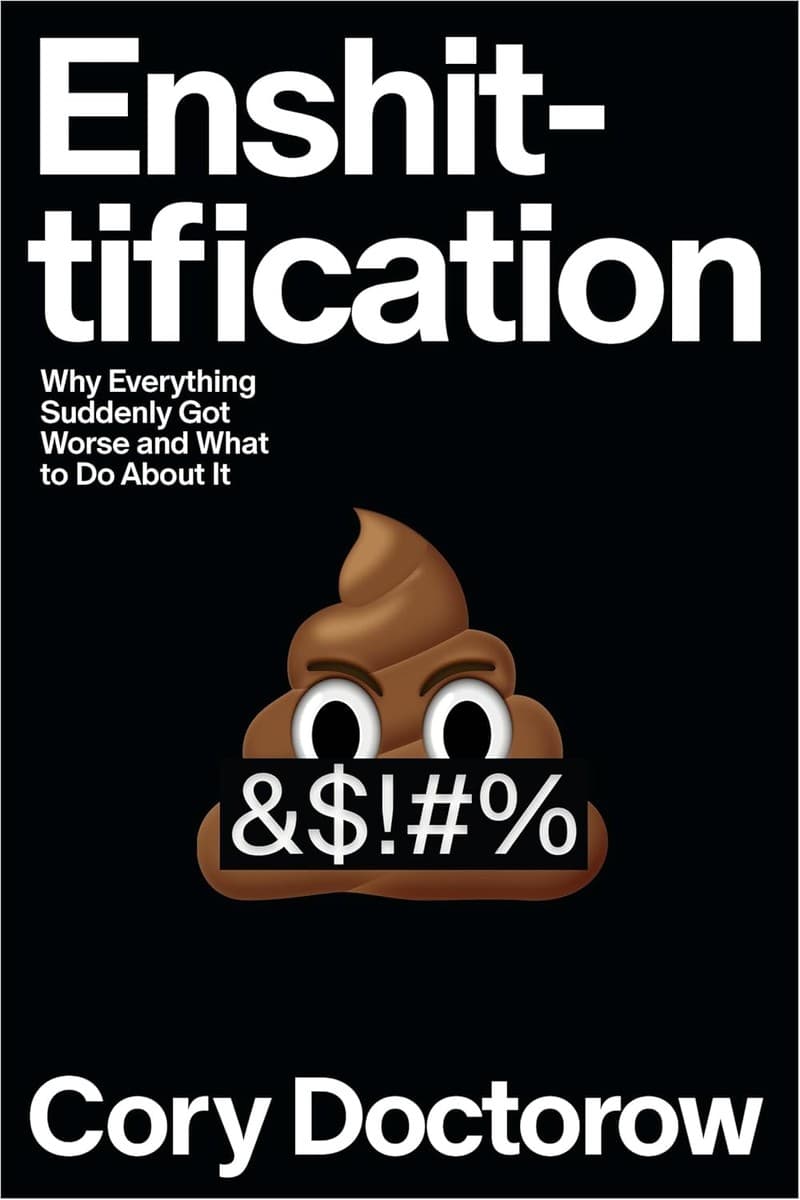
Enshittification

Cory Doctorow

Enshittification: It’s not just you―the internet sucks now. It’s been enshittified. That was no accident, and it’s not gonna fix itself. Here’s how we’ll disenshittify it so we can have a new, good internet. We are all living through the Enshittocene―the Great Enshittening―a time in which the services that matter to us, that we rely on, are being turned into giant piles of shit. It’s frustrating. Demoralizing. Even terrifying. The once-glorious internet has degenerated into “platforms” that rose to dominance because they delivered convenient and delightful services efficiently and reliably. But once we were locked in to those services, the tech bosses turned on us, relying on our dependency to keep us using the services even as they got worse and worse. The platform bosses did the same to the companies that had flocked to their services to sell stuff to us. Once we were all locked in―businesses and users―the tech companies stripped out all utility, save the bare minimum needed to stave off total collapse. In Enshittification, Cory Doctorow shows us where it comes from: not the iron laws of economics, or the great forces of history, but specific policy choices made by powerful people who ignored every warning about the consequences of those choices. These are choices that can be undone. Enshittification is a Big Tech disassembly manual, a road map for the seizure of the means of computation. It is a diagnosis, and it is a cure.

RM 469.10
View

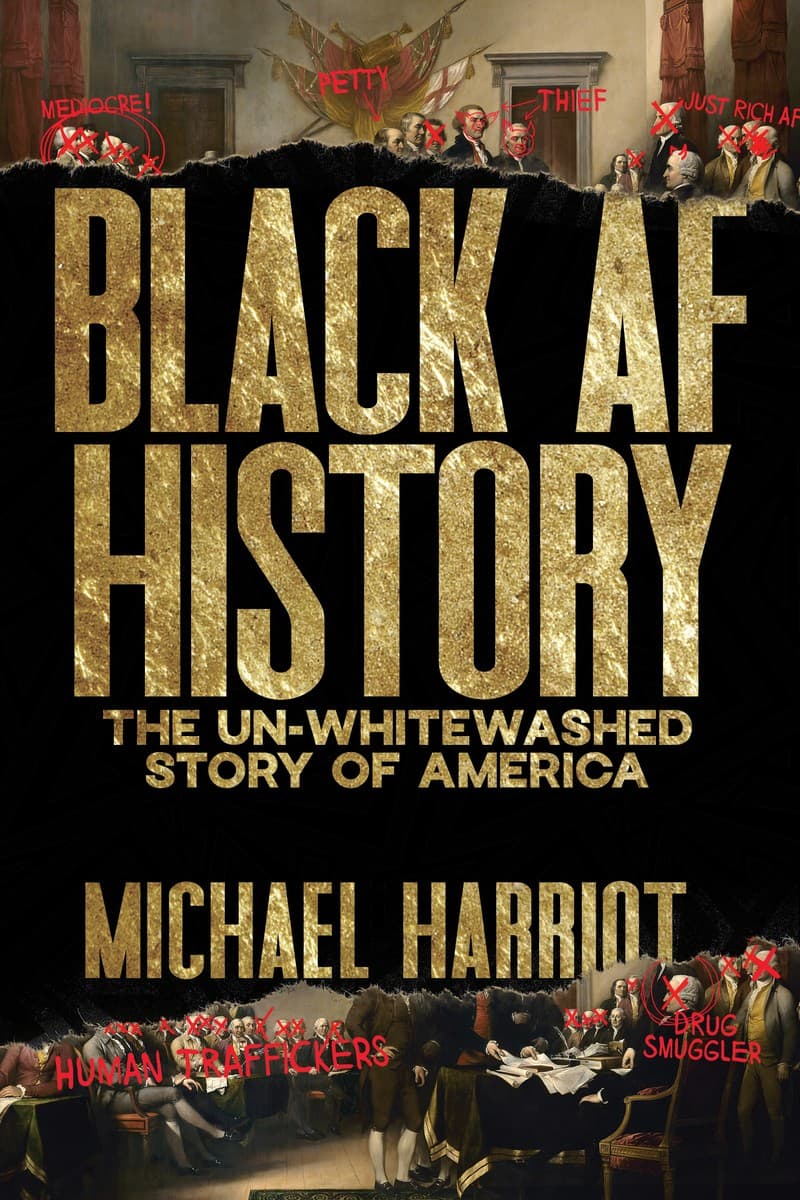
Black AF History: The Un-Whitewashed Story of America

Michael Harriot

From acclaimed columnist and political commentator Michael Harriot, a searingly smart and bitingly hilarious retelling of American history that corrects the record and showcases the perspectives and experiences of Black Americans. America’s backstory is a whitewashed mythology implanted in our collective memory. It is the story of the pilgrims on the Mayflower building a new nation. It is George Washington’s cherry tree and Abraham Lincoln’s log cabin. It is the fantastic tale of slaves that spontaneously teleported themselves here with nothing but strong backs and negro spirituals. It is a sugarcoated legend based on an almost true story. It should come as no surprise that the dominant narrative of American history is blighted with errors and oversights—after all, history books were written by white men with their perspectives at the forefront. It could even be said that the devaluation and erasure of the Black experience is as American as apple pie. In Black AF History , Michael Harriot presents a more accurate version of American history. Combining unapologetically provocative storytelling with meticulous research based on primary sources as well as the work of pioneering Black historians, scholars, and journalists, Harriot removes the white sugarcoating from the American story, placing Black people squarely at the center. With incisive wit, Harriot speaks hilarious truth to oppressive power, subverting conventional historical narratives with little-known stories about the experiences of Black Americans. From the African Americans who arrived before 1619 to the unenslavable bandit who inspired America’s first police force, this long overdue corrective provides a revealing look into our past that is as urgent as it is necessary. For too long, we have refused to acknowledge that American history is white history . Not this one. This history is Black AF .

RM 128.38
View

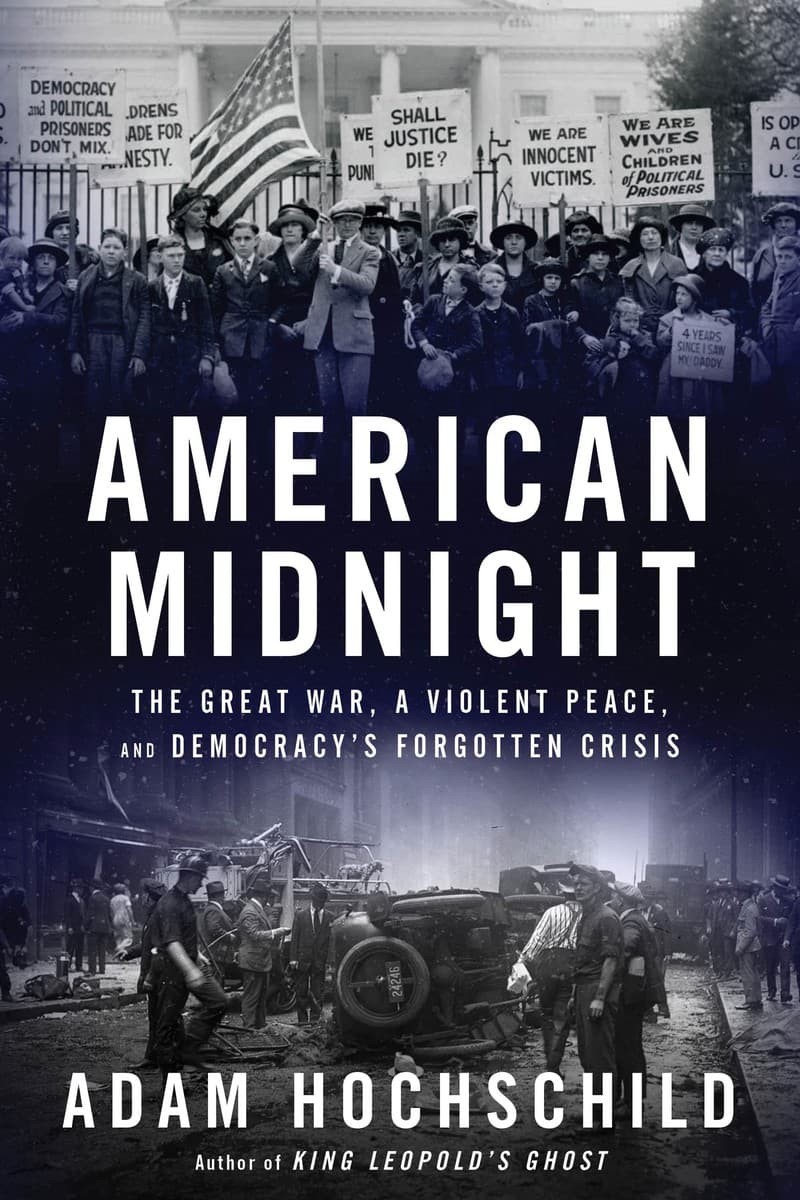
American Midnight: The Great War, a Violent Peace, and Democracy’s Forgotten Crisis

Adam Hochschild

From award-winning, New York Times bestselling historian Adam Hochschild, a fast-paced, revelatory new account of a pivotal but neglected period in American history: World War I and its stormy aftermath, when bloodshed and repression on the home front nearly doomed American democracy. The nation was on the brink. Angry mobs burned Black churches to the ground and chased down pacifists and immigrants. Well over a thousand men and women were jailed solely for what they had written or said, even in private. An astonishing 250,000 people joined a nationwide vigilante group—sponsored by the Department of Justice. This was America during and after the Great War: a brief but appalling era blighted by torture, censorship, and killings. Adam Hochschild brings to life this troubled period, which stretched from 1917 to 1921, through the interwoven tales of a colorful cast of characters: some well-known, among them the sphinxlike Woodrow Wilson and the ambitious young bureaucrat J. Edgar Hoover; others less familiar, such as the fiery antiwar advocate Kate Richards O’Hare and the outspoken Leo Wendell, a labor radical who was frequently arrested and wholly trusted by his comrades—but who was in fact Hoover’s star undercover agent. A groundbreaking work of narrative history, American Midnight recalls these horrifying yet inspiring four years, when some brave Americans strove to keep their fractured country democratic, while ruthless others stimulated toxic currents of racism, nativism, red-baiting, and contempt for the rule of law—poisons that feel ominously familiar today.

RM 98.71
View

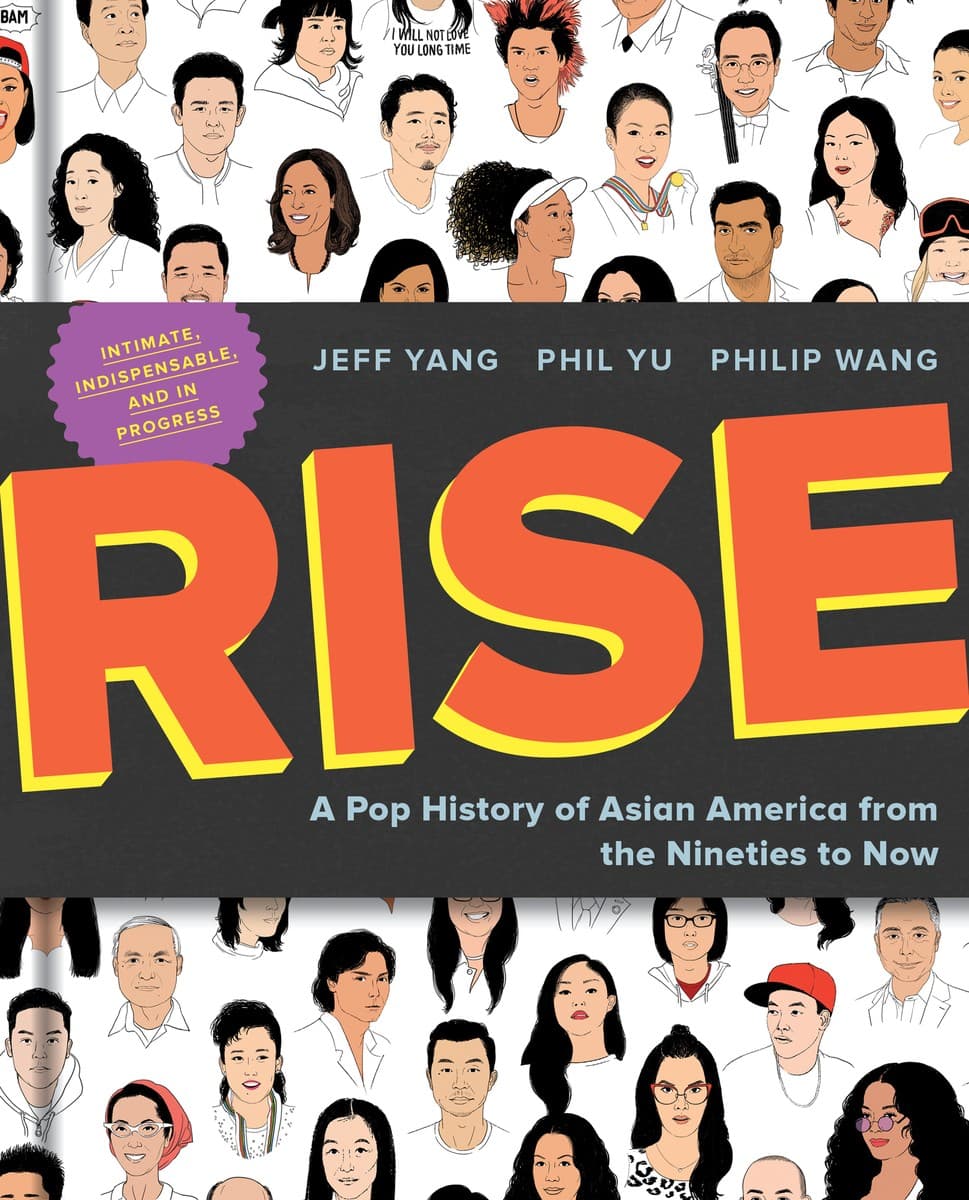
Rise: A Pop History of Asian America from the Nineties to Now

Jeff Yang, Phil Yu, Philip Wang

Cultural critic Jeff Yang, blogger Phil Yu of Angry Asian Man, and Wong Fu Productions’ Philip Wang team up (with iconic guests!) for a graphic romp through the ups and downs of how, over the past three decades, Asian Americans went from quiet and invisible to incredibly relevant and irresistibly cool The first generation of U.S.-born Asian Americans raised after 1965’s Hart-Cellar Act passed would have found it difficult to imagine that sushi and boba would one day be beloved by all, that a Korean boy band named BTS would be the biggest musical act in the world, that one of the biggest movies of 2018 would be Crazy Rich Asians , or that a Facebook group for Asian American identity memes would be 2 million members strong. And that’s not mentioning the execs working behind the scenes at major companies; the activists and representatives fighting for equity; and the singers, rappers, dance crews, and social media pioneers making their mark on pop culture. And still: Asian America is just getting started. In this intimate, eye-opening, and frequently hilarious guided tour through the pop-cultural touchstones and sociopolitical shifts of the 1990s, 2000s, 2010s, and beyond, Jeff Yang, Phil Yu, and Phil Wang chronicle how we’ve arrived at today’s unprecedented diversity of Asian American cultural representation through engaging, interactive graphics (like a step-by-step walk-through of a typical night out in Koreatown...for those who probably won't remember it the day after), charts (how much has yellowface fluctuated decade over decade?), graphic essays from major AAPI artists, exclusive roundtables with Asian American cultural icons, and more, framed by extended insider narratives of each decade by the three co-authors. Rise is an informative, lively, and inclusive celebration of community, and will remain a cultural touchstone for years to come.

RM 114.51
View

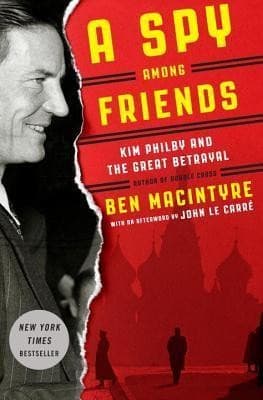
A Spy Among Friends

Ben Macintyre, John le Carré

Master storyteller Ben Macintyre’s most ambitious work to date brings to life the twentieth century’s greatest spy story. Kim Philby was the greatest spy in history, a brilliant and charming man who rose to head Britain’s counterintelligence against the Soviet Union during the height of the Cold War—while he was secretly working for the enemy. And nobody thought he knew Philby like Nicholas Elliott, Philby’s best friend and fellow officer in MI6. The two men had gone to the same schools, belonged to the same exclusive clubs, grown close through the crucible of wartime intelligence work and long nights of drink and revelry. It was madness for one to think the other might be a communist spy, bent on subverting Western values and the power of the free world. But Philby was secretly betraying his friend. Every word Elliott breathed to Philby was transmitted back to Moscow—and not just Elliott’s words, for in America, Philby had made another powerful friend: James Jesus Angleton, the crafty, paranoid head of CIA counterintelligence. Angleton's and Elliott’s unwitting disclosures helped Philby sink almost every important Anglo-American spy operation for twenty years, leading countless operatives to their doom. Even as the web of suspicion closed around him, and Philby was driven to greater lies to protect his cover, his two friends never abandoned him—until it was too late. The stunning truth of his betrayal would have devastating consequences on the two men who thought they knew him best, and on the intelligence services he left crippled in his wake. Told with heart-pounding suspense and keen psychological insight, and based on personal papers and never-before-seen British intelligence files, A Spy Among Friends is Ben Macintyre’s best book yet, a high-water mark in Cold War history telling.

RM 71.10
View

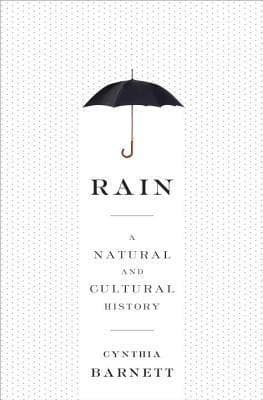
Rain

Cynthia Barnett

Rain is elemental, mysterious, precious, destructive. It is the subject of countless poems and paintings; the top of the weather report; the source of the world's water. Yet this is the first book to tell the story of rain. Cynthia Barnett's Rain begins four billion years ago with the torrents that filled the oceans, and builds to the storms of climate change. It weaves together science—the true shape of a raindrop, the mysteries of frog and fish rains—with the human story of our ambition to control rain, from ancient rain dances to the 2,203 miles of levees that attempt to straitjacket the Mississippi River. It offers a glimpse of our "founding forecaster," Thomas Jefferson, who measured every drizzle long before modern meteorology. Two centuries later, rainy skies would help inspire Morrissey’s mopes and Kurt Cobain’s grunge. Rain is also a travelogue, taking readers to Scotland to tell the surprising story of the mackintosh raincoat, and to India, where villagers extract the scent of rain from the monsoon-drenched earth and turn it into perfume. Now, after thousands of years spent praying for rain or worshiping it; burning witches at the stake to stop rain or sacrificing small children to bring it; mocking rain with irrigated agriculture and cities built in floodplains; even trying to blast rain out of the sky with mortars meant for war, humanity has finally managed to change the rain. Only not in ways we intended. As climate change upends rainfall patterns and unleashes increasingly severe storms and drought, Barnett shows rain to be a unifying force in a fractured world. Too much and not nearly enough, rain is a conversation we share, and this is a book for everyone who has ever experienced it.

View

Boom Town: The Fantastical Saga of Oklahoma City, Its Chaotic Founding, Its Apocalyptic Weather, Its Purloined Basketball Team, and the Dream of Becoming a World-class Metropolis

Sam Anderson

Award-winning journalist Sam Anderson’s long-awaited debut is a brilliant, kaleidoscopic narrative of Oklahoma City--a great American story of civics, basketball, and destiny. Oklahoma City was born from chaos. It was founded in a bizarre but momentous "Land Run" in 1889, when thousands of people lined up along the borders of Oklahoma Territory and rushed in at noon to stake their claims. Since then, it has been a city torn between the wild energy that drives its outsized ambitions, and the forces of order that seek sustainable progress. Nowhere was this dynamic better realized than in the drama of the Oklahoma City Thunder basketball team's 2012-13 season, when the Thunder's brilliant general manager, Sam Presti, ignited a firestorm by trading future superstar James Harden just days before the first game. Presti's all-in gamble on "the Process"—the patient, methodical management style that dictated the trade as the team’s best hope for long-term greatness—kicked off a pivotal year in the city's history, one that would include pitched battles over urban planning, a series of cataclysmic tornadoes, and the frenzied hope that an NBA championship might finally deliver the glory of which the city had always dreamed. Boom Town announces the arrival of an exciting literary voice. Sam Anderson, former book critic for New York magazine and now a staff writer at the New York Times magazine, unfolds an idiosyncratic mix of American history, sports reporting, urban studies, gonzo memoir, and much more to tell the strange but compelling story of an American city whose unique mix of geography and history make it a fascinating microcosm of the democratic experiment. Filled with characters ranging from NBA superstars Kevin Durant and Russell Westbrook; to Flaming Lips oddball frontman Wayne Coyne; to legendary Great Plains meteorologist Gary England; to Stanley Draper, Oklahoma City's would-be Robert Moses; to civil rights activist Clara Luper; to the citizens and public servants who survived the notorious 1995 bombing of the Alfred P. Murrah federal building, Boom Town offers a remarkable look at the urban tapestry woven from control and chaos, sports and civics.

RM 312.72
View
RM 19.90
View

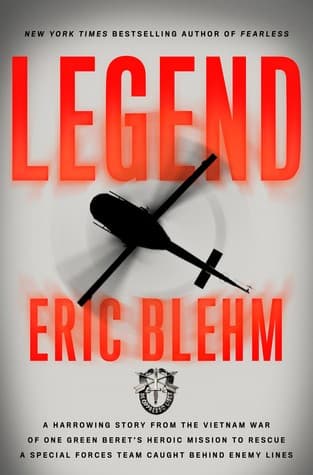
Legend

Eric Blehm

The unforgettable account and courageous actions of the U.S. Army’s 240th Assault Helicopter Company and Green Beret staff sergeant Roy Benavidez, who risked everything to rescue a Special Forces team trapped behind enemy lines In Legend , acclaimed bestselling author Eric Blehm takes as his canvas the Vietnam War, as seen through a single mission that occurred on May 2, 1968. A twelve-man Special Forces team had been covertly inserted into a small clearing in the jungles of neutral Cambodia—where U.S. forces were forbidden to operate. Their objective, just miles over the Vietnam border, was to collect evidence that proved the North Vietnamese Army was using the Cambodian sanctuary as a major conduit for supplying troops and materiel to the south via the Ho Chi Minh Trail. What the team didn’t know was that they had infiltrated a section of jungle that concealed a major enemy base. Soon they found them¬selves surrounded by hundreds of NVA troops, under attack, low on ammunition, and stacking the bodies of the dead as cover in a desperate attempt to survive the onslaught. When Special Forces staff sergeant Roy Benavidez heard the distress call, he jumped aboard the next helicopter bound for the combat zone without hesitation. Orphaned at the age of seven, Benavidez had picked cotton alongside his family as a child and dropped out of school as a teen before joining the Army. Although he was grievously wounded during his first tour of duty in Vietnam and told he would never walk again, Benavidez fought his way back—ultimately earning his green beret. What followed would become legend in the Special Operations community. Flown into the foray of battle by the courageous pilots and crew of the 240th Assault Helicopter Company, Benavidez jumped from the hovering aircraft and ran nearly 100 yards through withering enemy fire. Despite being immediately and severely wounded, Benavidez reached the perimeter of the decimated team, provided medical care, and proceed¬ed to organize an extraordinary defense and rescue. During the hours-long battle, he was bayoneted, shot, and hit by grenade shrapnel more than thirty times, yet he refused to abandon his efforts until every survivor was out of harm’s way.

RM 71.10
View
Previous

Latest • Page 36/61

Next
WhatsApp support