Kongsee

Collection

Goodreads Choice Awards — Non-Fiction

Award-winning non-fiction titles recognised by the Goodreads Choice Awards. From memoirs to science, history to self-help.

1217 books available

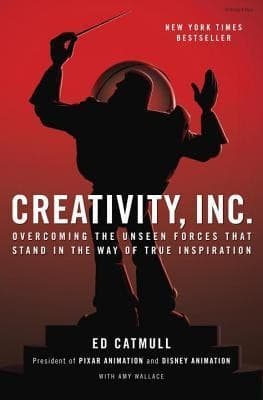
Creativity, Inc.

Ed Catmull, Amy Wallace

“What does it mean to manage well?” From Ed Catmull, co-founder (with Steve Jobs and John Lasseter) of Pixar Animation Studios, comes an incisive book about creativity in business—sure to appeal to readers of Daniel Pink, Tom Peters, and Chip and Dan Heath. Creativity, Inc. is a book for managers who want to lead their employees to new heights, a manual for anyone who strives for originality, and the first-ever, all-access trip into the nerve center of Pixar Animation—into the meetings, postmortems, and “Braintrust” sessions where some of the most successful films in history are made. It is, at heart, a book about how to build a creative culture—but it is also, as Pixar co-founder and president Ed Catmull writes, “an expression of the ideas that I believe make the best in us possible.” For nearly twenty years, Pixar has dominated the world of animation, producing such beloved films as the Toy Story trilogy, Monsters, Inc., Finding Nemo, The Incredibles, Up, and WALL-E, which have gone on to set box-office records and garner thirty Academy Awards. The joyousness of the storytelling, the inventive plots, the emotional authenticity: In some ways, Pixar movies are an object lesson in what creativity really is . Here, in this book, Catmull reveals the ideals and techniques that have made Pixar so widely admired—and so profitable. As a young man, Ed Catmull had a dream: to make the first computer-animated movie. He nurtured that dream as a Ph.D. student at the University of Utah, where many computer science pioneers got their start, and then forged a partnership with George Lucas that led, indirectly, to his founding Pixar with Steve Jobs and John Lasseter in 1986. Nine years later, Toy Story was released, changing animation forever. The essential ingredient in that movie’s success—and in the thirteen movies that followed—was the unique environment that Catmull and his colleagues built at Pixar, based on philosophies that protect the creative process and defy convention, such as: • Give a good idea to a mediocre team, and they will screw it up. But give a mediocre idea to a great team, and they will either fix it or come up with something better. • If you don’t strive to uncover what is unseen and understand its nature, you will be ill prepared to lead. • It’s not the manager’s job to prevent risks. It’s the manager’s job to make it safe for others to take them. • The cost of preventing errors is often far greater than the cost of fixing them. • A company’s communication structure should not mirror its organizational structure. Everybody should be able to talk to anybody. • Do not assume that general agreement will lead to change—it takes substantial energy to move a group, even when all are on board.
View

The Road to Character

David Brooks

#1 NEW YORK TIMES BESTSELLER • David Brooks challenges us to rebalance the scales between the focus on external success—“résumé virtues”—and our core principles. NAMED ONE OF THE BEST BOOKS OF THE YEAR BY THE ECONOMIST With the wisdom, humor, curiosity, and sharp insights that have brought millions of readers to his New York Times column and his previous bestsellers, David Brooks has consistently illuminated our daily lives in surprising and original ways. In The Social Animal, he explored the neuroscience of human connection and how we can flourish together. Now, in The Road to Character, he focuses on the deeper values that should inform our lives. Looking to some of the world’s greatest thinkers and inspiring leaders, Brooks explores how, through internal struggle and a sense of their own limitations, they have built a strong inner character. Labor activist Frances Perkins understood the need to suppress parts of herself so that she could be an instrument in a larger cause. Dwight Eisenhower organized his life not around impulsive self-expression but considered self-restraint. Dorothy Day, a devout Catholic convert and champion of the poor, learned as a young woman the vocabulary of simplicity and surrender. Civil rights pioneers A. Philip Randolph and Bayard Rustin learned reticence and the logic of self-discipline, the need to distrust oneself even while waging a noble crusade. Blending psychology, politics, spirituality, and confessional, The Road to Character provides an opportunity for us to rethink our priorities, and strive to build rich inner lives marked by humility and moral depth. “Joy,” David Brooks writes, “is a byproduct experienced by people who are aiming for something else. But it comes.”

RM 82.95
View

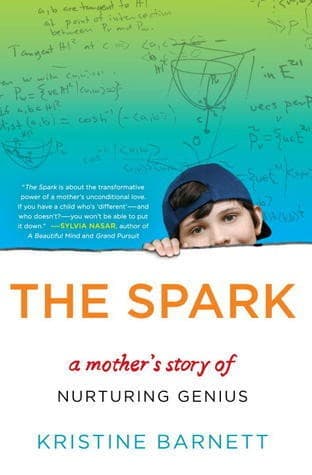
The Spark

Kristine Barnett

Kristine Barnett’s son Jacob has an IQ higher than Einstein’s, a photographic memory, and he taught himself calculus in two weeks. At nine he started working on an original theory in astrophysics that experts believe may someday put him in line for a Nobel Prize, and at age twelve he became a paid researcher in quantum physics. But the story of Kristine’s journey with Jake is all the more remarkable because his extraordinary mind was almost lost to autism. At age two, when Jake was diagnosed, Kristine was told he might never be able to tie his own shoes. The Spark is a remarkable memoir of mother and son. Surrounded by “experts” at home and in special ed who tried to focus on Jake’s most basic skills and curtail his distracting interests—moving shadows on the wall, stars, plaid patterns on sofa fabric—Jake made no progress, withdrew more and more into his own world, and eventually stopped talking completely. Kristine knew in her heart that she had to make a change. Against the advice of her husband, Michael, and the developmental specialists, Kristine followed her instincts, pulled Jake out of special ed, and began preparing him for mainstream kindergarten on her own. Relying on the insights she developed at the daycare center she runs out of the garage in her home, Kristine resolved to follow Jacob’s “spark”—his passionate interests. Why concentrate on what he couldn’t do? Why not focus on what he could? This basic philosophy, along with her belief in the power of ordinary childhood experiences (softball, picnics, s’mores around the campfire) and the importance of play, helped Kristine overcome huge odds. The Barnetts were not wealthy people, and in addition to financial hardship, Kristine herself faced serious health issues. But through hard work and determination on behalf of Jake and his two younger brothers, as well as an undying faith in their community, friends, and family, Kristine and Michael prevailed. The results were beyond anything anyone could have imagined. Dramatic, inspiring, and transformative, The Spark is about the power of love and courage in the face of overwhelming obstacles, and the dazzling possibilities that can occur when we learn how to tap the true potential that lies within every child, and in all of us.

View

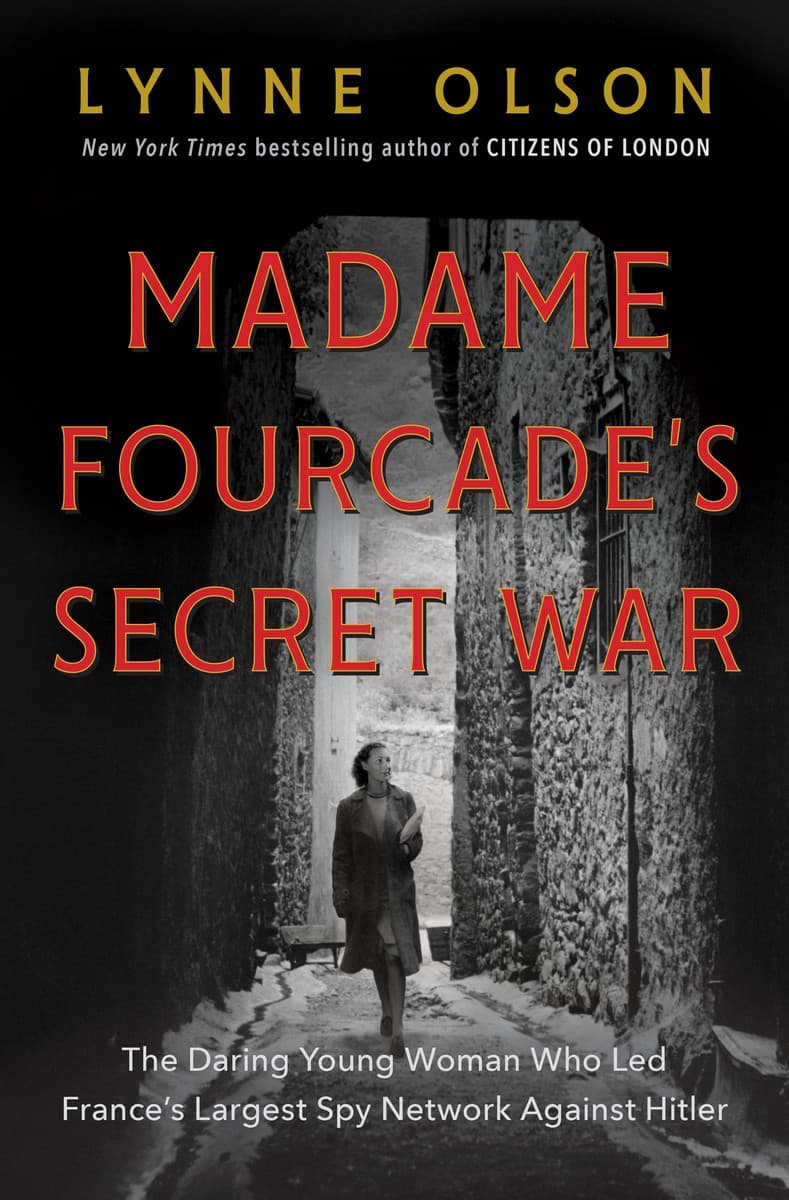
Madame Fourcade's Secret War: The Daring Young Woman Who Led France's Largest Spy Network Against Hitler

Lynne Olson

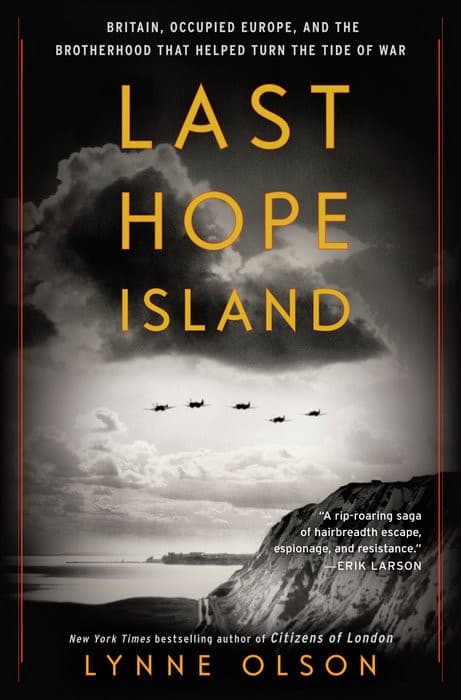
The little-known true story of Marie-Madeleine Fourcade, the woman who headed the largest spy network in occupied France during World War II, from the bestselling author of Citizens of London and Last Hope Island In 1941 a thirty-one-year-old Frenchwoman, a young mother born to privilege and known for her beauty and glamour, became the leader of a vast intelligence organization--the only woman to serve as a chef de r�sistance during the war. Strong-willed, independent, and a lifelong rebel against her country's conservative, patriarchal society, Marie-Madeleine Fourcade was temperamentally made for the job. Her group's name was Alliance, but the Gestapo dubbed it Noah's Ark because its agents used the names of animals as their aliases. The name Marie-Madeleine chose for herself was Hedgehog: a tough little animal, unthreatening in appearance, that, as a colleague of hers put it, "even a lion would hesitate to bite." No other French spy network lasted as long or supplied as much crucial intelligence--including providing American and British military commanders with a 55-foot-long map of the beaches and roads on which the Allies would land on D-Day--as Alliance. The Gestapo pursued them relentlessly, capturing, torturing, and executing hundreds of its three thousand agents, including Fourcade's own lover and many of her key spies. Although Fourcade, the mother of two young children, moved her headquarters every few weeks, constantly changing her hair color, clothing, and identity, she was captured twice by the Nazis. Both times she managed to escape--once by slipping naked through the bars of her jail cell--and continued to hold her network together even as it repeatedly threatened to crumble around her. Though so many of her agents died defending their country, Fourcade survived the occupation to become active in postwar French politics. Now, in this dramatic account of the war that split France in two and forced its people to live side by side with their hated German occupiers, Lynne Olson tells the fascinating story of a woman who stood up for her nation, her fellow citizens, and herself.

RM 90.85
View

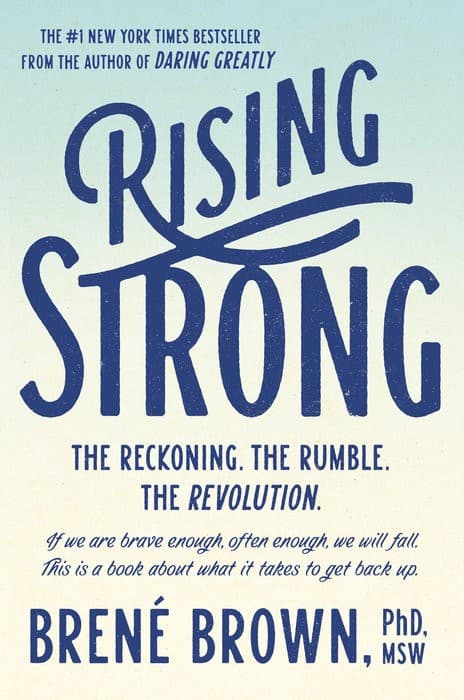
Rising Strong

Brené Brown

Social scientist Brené Brown has ignited a global conversation on courage, vulnerability, shame, and worthiness. Her pioneering work uncovered a profound truth: Vulnerability—the willingness to show up and be seen with no guarantee of outcome—is the only path to more love, belonging, creativity, and joy. But living a brave life is not always easy: We are, inevitably, going to stumble and fall. It is the rise from falling that Brown takes as her subject in Rising Strong . As a grounded theory researcher, Brown has listened as a range of people—from leaders in Fortune 500 companies and the military to artists, couples in long-term relationships, teachers, and parents—shared their stories of being brave, falling, and getting back up. She asked herself, What do these people with strong and loving relationships, leaders nurturing creativity, artists pushing innovation, and clergy walking with people through faith and mystery have in common? The answer was clear: They recognize the power of emotion and they’re not afraid to lean in to discomfort. Walking into our stories of hurt can feel dangerous. But the process of regaining our footing in the midst of struggle is where our courage is tested and our values are forged. Our stories of struggle can be big ones, like the loss of a job or the end of a relationship, or smaller ones, like a conflict with a friend or colleague. Regardless of magnitude or circumstance, the rising strong process is the same: We reckon with our emotions and get curious about what we’re feeling; we rumble with our stories until we get to a place of truth; and we live this process, every day, until it becomes a practice and creates nothing short of a revolution in our lives. Rising strong after a fall is how we cultivate wholeheartedness. It’s the process, Brown writes, that teaches us the most about who we are.

View

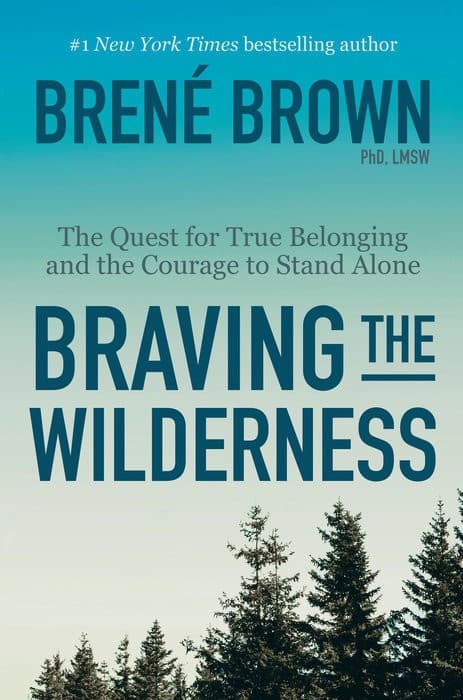
Braving the Wilderness: Reese's Book Club

Brené Brown

#1 NEW YORK TIMES BESTSELLER - A timely and important book that challenges everything we think we know about cultivating true belonging in our communities, organizations, and culture, from the #1 bestselling author of Rising Strong , Daring Greatly , and The Gifts of Imperfection REESE’S BOOK CLUB PICK "True belonging doesn't require us to change who we are. It requires us to be who we are." Social scientist Brené Brown, PhD, LMSW, has sparked a global conversation about the experiences that bring meaning to our lives--experiences of courage, vulnerability, love, belonging, shame, and empathy. In Braving the Wilderness , Brown redefines what it means to truly belong in an age of increased polarization. With her trademark mix of research, storytelling, and honesty, Brown will again change the cultural conversation while mapping a clear path to true belonging. Brown argues that we're experiencing a spiritual crisis of disconnection, and introduces four practices of true belonging that challenge everything we believe about ourselves and each other. She writes, "True belonging requires us to believe in and belong to ourselves so fully that we can find sacredness both in being a part of something and in standing alone when necessary. But in a culture that's rife with perfectionism and pleasing, and with the erosion of civility, it's easy to stay quiet, hide in our ideological bunkers, or fit in rather than show up as our true selves and brave the wilderness of uncertainty and criticism. But true belonging is not something we negotiate or accomplish with others; it's a daily practice that demands integrity and authenticity. It's a personal commitment that we carry in our hearts." Brown offers us the clarity and courage we need to find our way back to ourselves and to each other. And that path cuts right through the wilderness. Brown writes, "The wilderness is an untamed, unpredictable place of solitude and searching. It is a place as dangerous as it is breathtaking, a place as sought after as it is feared. But it turns out to be the place of true belonging, and it's the bravest and most sacred place you will ever stand."

RM 110.60
View

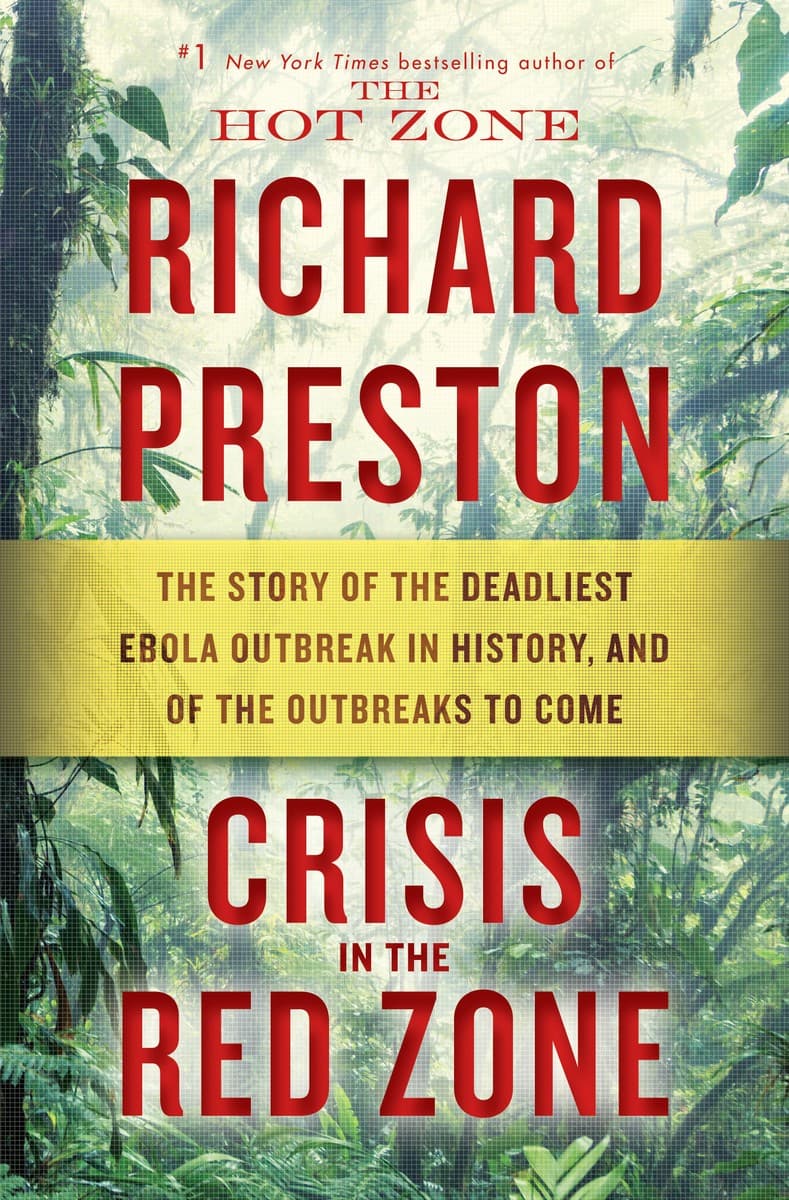
Crisis in the Red Zone: The Story of the Deadliest Ebola Outbreak in History, and of the Outbreaks to Come

Richard Preston

The 2013–2014 Ebola epidemic was the deadliest ever—but the outbreaks continue. Now comes a gripping account of the doctors and scientists fighting to protect us, an urgent wake-up call about the future of emerging viruses—from the #1 bestselling author of The Hot Zone , soon to be a National Geographic original miniseries. This time, Ebola started with a two-year-old child who likely had contact with a wild creature and whose entire family quickly fell ill and died. The ensuing global drama activated health professionals in North America, Europe, and Africa in a desperate race against time to contain the viral wildfire. By the end—as the virus mutated into its deadliest form, and spread farther and faster than ever before—30,000 people would be infected, and the dead would be spread across eight countries on three continents. In this taut and suspenseful medical drama, Richard Preston deeply chronicles the outbreak, in which we saw for the first time the specter of Ebola jumping continents, crossing the Atlantic, and infecting people in America. Rich in characters and conflict—physical, emotional, and ethical— Crisis in the Red Zone is an immersion in one of the great public health calamities of our time. Preston writes of doctors and nurses in the field putting their own lives on the line, of government bureaucrats and NGO administrators moving, often fitfully, to try to contain the outbreak, and of pharmaceutical companies racing to develop drugs to combat the virus. He also explores the charged ethical dilemma over who should and did receive the rare doses of an experimental treatment when they became available at the peak of the disaster. Crisis in the Red Zone makes clear that the outbreak of 2013–2014 is a harbinger of further, more severe outbreaks, and of emerging viruses heretofore unimagined—in any country, on any continent. In our ever more interconnected world, with roads and towns cut deep into the jungles of equatorial Africa, viruses both familiar and undiscovered are being unleashed into more densely populated areas than ever before. The more we discover about the virosphere, the more we realize its deadly potential. Crisis in the Red Zone is an exquisitely timely book, a stark warning of viral outbreaks to come.

View

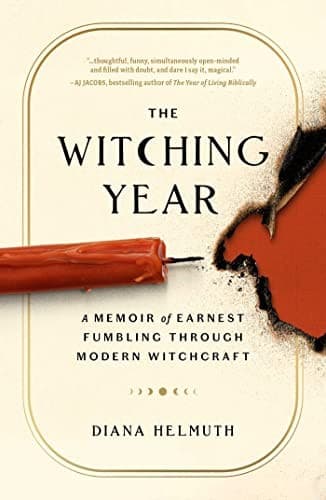
The Witching Year: A Memoir of Earnest Fumbling Through Modern Witchcraft

Diana Helmuth

A skeptic’s year-long quest to find spiritual fulfillment through modern Witchcraft, perfect for fans of A.J. Jacobs and Mary Roach. Diana Helmuth, thirty-three, is skeptical of organized religion. She is also skeptical of disorganized religion. But, more than anything, she is tired of God being dead. So, she decides to try on the fastest growing, self-directed faith in Witchcraft. The result is 366 days of observation, trial, error, wit, and back spasms. Witches today are often presented as confident and finished, proud and powerful. Diana is eager to join them. She wants to follow all the rules, memorize all the incantations, and read all the liturgy. But there’s one glaring problem: no Witch can agree on what the right rules, liturgy, and incantations are. As with life, Diana will have to define the craft for herself, looking past the fashionable and figuring out how to define the real. Along the way, she travels to Salem and Edinburgh (two very Crafty hubs) and attends a week-long (clothing optional) Witch camp in Northern California. Whether she’s trying to perform a full moon ritual on a cardboard box, summon an ancient demon with scotch tape and a kitchen trivet, or just trying to become a calmer, happier person, her biggest question Will any of this really work? The Witching Year follows in the footsteps of celebrated memoirs by journalists like A.J. Jacobs, Mary Roach, and Caitlin Doughty, who knit humor and reportage together in search of something worth believing.

View

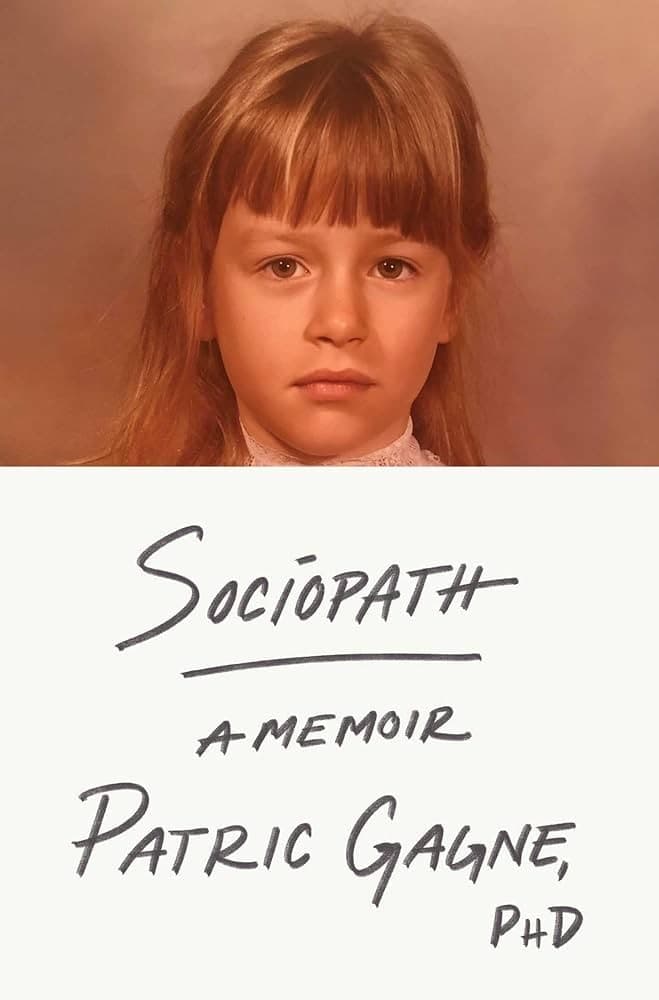
Sociopath

Patric Gagne

A fascinating, revelatory memoir revealing the author’s struggle to come to terms with her own sociopathy and shed light on the often maligned and misunderstood mental disorder. Patric Gagne realized she made others uncomfortable before she started kindergarten. Something about her caused people to react in a way she didn’t understand. She suspected it was because she didn’t feel things the way other kids did. Emotions like fear, guilt, and empathy eluded her. For the most part, she felt nothing. And she didn’t like the way that “nothing” felt. She did her best to pretend she was like everyone else, but the constant pressure to conform to a society she knew rejected anyone like her was unbearable. So Patric stole. She lied. She was occasionally violent. She became an expert lock-picker and home-invader. All with the goal of replacing the nothingness with...something. In college, Patric finally confirmed what she’d long suspected. She was a sociopath. But even though it was the very first personality disorder identified—well over 200 years ago—sociopathy had been neglected by mental health professionals for decades. She was told there was no treatment, no hope for a normal life. She found herself haunted by sociopaths in pop culture, madmen and evil villains who are considered monsters. Her future looked grim. But when Patric reconnects with an old flame, she gets a glimpse of a future beyond her diagnosis. If she’s capable of love, it must mean that she isn’t a monster. With the help of her sweetheart (and some curious characters she meets along the way) she embarks on a mission to prove that the millions of Americans who share her diagnosis aren’t all monsters either. This is the inspiring story of her journey to change her fate and how she managed to build a life full of love and hope.

View

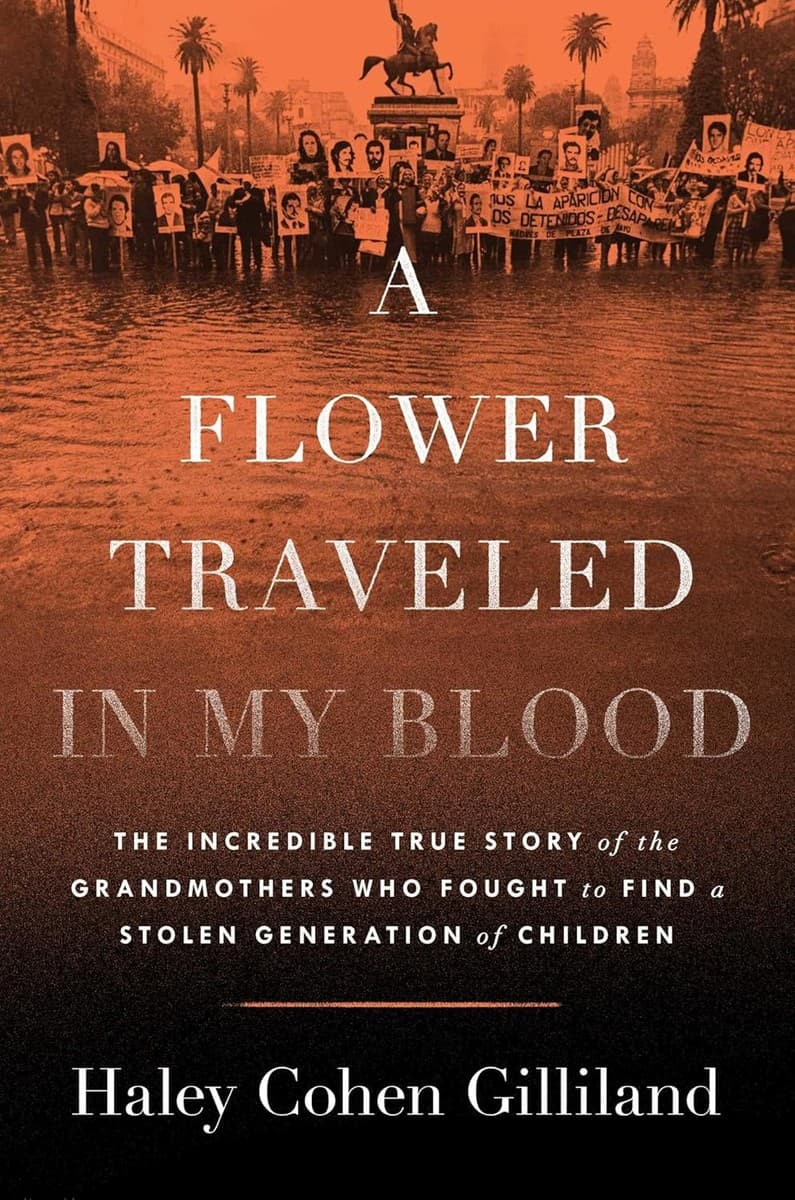
A Flower Traveled in My Blood

Haley Cohen Gilliland

For readers of Say Nothing and The Immortal Life of Henrietta Lacks , the epic, true story of the Abuelas de Plaza de Mayo, grandmothers who fought to find their stolen grandchildren during Argentina’s brutal dictatorship. In the early hours of March 24th, 1976, the streets of Buenos Aires rumbled with tanks as soldiers seized the presidential palace, overthrowing Argentina’s leader. To many, it seemed like just another coup in a continent troubled by them, amid political violence and Cold War tensions. But there was something darker about this new regime. Quietly supported by the United States and much of Argentina itself, which was sick of constant bombings and gunfights, the junta quickly launched the “National Reorganization Process” or El Proceso —a bland name masking their ruthless campaign to crush the political left and instill the country with “Western, Christian” values. The dictatorship, which continued until 1983, decimated a generation. One of the military’s most diabolical acts was the disappearance of hundreds of pregnant women. Patricia Roisinblit was among them, a mother and leftist revolutionary labeled “subversive” and abducted while eight months pregnant with her second child. Patricia gave birth in captivity, making one last call to her mother, Rosa, before vanishing. Her newborn son was also taken, one of hundreds given to police, military families, and dictatorship supporters, while their biological parents were secretly executed and their bodies disposed of. For Rosa and the other mothers in her same situation, the loss was unimaginable; their only solace was the hope that their grandchildren were still alive. United by this faith, a group of fierce grandmothers formed the Abuelas de Plaza de Mayo, dedicated to finding the stolen children and seeking justice from a nation that betrayed them. A Flower Traveled in My Blood is Rosa and the Abuelas’ extraordinary story, told by a journalist with unique access. With authority and compassion, Haley Cohen Gilliland brings this tale to life, tracing the lives of Patricia, Rosa, and her stolen grandson, Guillermo. As the Abuelas transform into detectives, they confront military officers, sift through government documents, assume aliases to see suspected grandchildren, and even pioneer a groundbreaking genetics test with an American scientist. A compelling mystery and deeply researched account of a pivotal era in world history, A Flower Traveled in My Blood takes readers on a journey of love, resilience, and redemption, revealing new truths about memory, identity, and family.

View

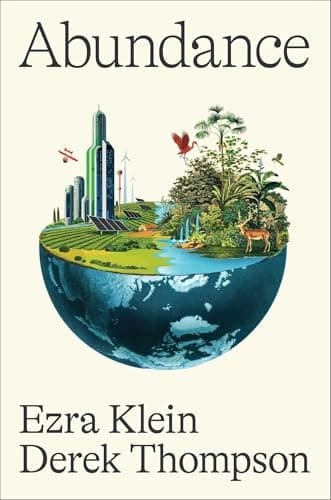
Abundance

Ezra Klein, Derek Thompson

From bestselling authors and journalistic titans Ezra Klein and Derek Thompson, Abundance is a once-in-a-generation, paradigm-shifting call to rethink big, entrenched problems that seem mired in systemic from climate change to housing, education to healthcare. To trace the global history of the twenty-first century so far is to trace a history of growing unaffordability and shortage. After years of refusing to build sufficient housing, the entire country has a national housing crisis. After years of slashing immigration, we don’t have enough workers. After decades of off-shoring manufacturing, we have a shortage of chips for cars and computers. Despite decades of being warned about the consequences of climate change, we haven’t built anything close to the clean energy infrastructure we need. The crisis that’s clicking into focus now has been building for decades—because we haven’t been building enough. Abundance explains that our problems today are not the results of yesteryear’s villains. Rather, one generation’s solutions have become the next generation’s problems. Rules and regulations designed to solve the environmental problems of the 1970s often prevent urban density and green energy projects that would help solve the environmental problems of the 2020s. Laws meant to ensure that government considers the consequences of its actions in matters of education and healthcare have made it too difficult for government to act consequentially. In the last few decades, our capacity to see problems has sharpened while our ability to solve them has diminished. Progress requires the ability to see promise rather than just peril in the creation of new ideas and projects, and an instinct to design systems and institutions that make building possible. In a book exploring how can move from a liberalism that not only protects and preserves but also builds, Klein and Thompson trace the political, economic, and cultural barriers to progress and how we can adopt a mindset directed toward abundance, and not scarcity, to overcome them.

View

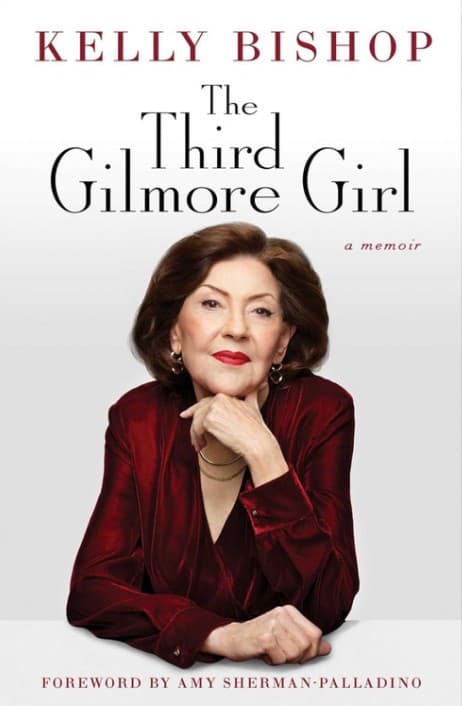
The Third Gilmore Girl: A Memoir

Kelly Bishop, Amy Sherman-Palladino

After more than a half century in show business, Kelly Bishop has stories to tell. From her Tony Award-winning performance in the original Broadway cast of A Chorus Line, to playing Jennifer Grey’s mother in Dirty Dancing, to her iconic role as matriarch Emily Gilmore in the groundbreaking television classic Gilmore Girls, few actors have enjoyed such long-running success—and even fewer can claim the adoration that this legendary actress has cultivated over her many working years. Kelly's instantly recognizable voice has echoed through theaters and living rooms for decades. For the first time, Kelly opens the door into her own life. She retraces her steps from Broadway to Hollywood and everywhere in between, reflecting on her decades-long career and sharing some of her greatest memories and the lessons she learned along the way. From her early days as a dancer at Radio City Music Hall in the '60s, to marrying young to a compulsive gambler, to her time as a burned-out Las Vegas showgirl, nothing is off-limits. She takes readers behind the scenes, from how she helped create a role in A Chorus Line, what it was like having Ed Herrmann as her TV husband and Lauren Graham as her TV daughter, and working with some of the biggest names in showbiz. The result is an enchanting celebration of a fearless and versatile performer whose talent and spirit have earned her an enduring place in the hearts and homes of millions. Chock-full of witty insights and personal photographs, The Third Gilmore Girl is a warm, unapologetic, lively memoir from a woman who has left indelible impressions on her audiences—and who has no plans of slowing down.

View

Counting the Cost

Jill Duggar, Derick Dillard, Craig Borlase

INSTANT NEW YORK TIMES BESTSELLER For the first time, discover the unedited truth about the Duggars, the traditional Christian family that captivated the nation on TLC’s hit show 19 Kids and Counting . Jill Duggar and her husband Derick are finally ready to share their story, revealing the secrets, manipulation, and intimidation behind the show that remained hidden from their fans. Jill and Derick knew a normal life wasn’t possible for them. As a star on the popular TLC reality show 19 Kids and Counting , Jill grew up in front of viewers who were fascinated by her family’s way of life. She was the responsible, second daughter of Jim Bob and Michelle’s nineteen kids; always with a baby on her hip and happy to wear the modest ankle-length dresses with throat-high necklines. She didn’t protest the strict model of patriarchy that her family followed, which declares that men are superior, that women are expected to be wives and mothers and are discouraged from attaining a higher education, and that parental authority over their children continues well into adulthood, even once they are married. But as Jill got older, married Derick, and they embarked on their own lives, the red flags became too obvious to ignore. For as long as they could, Jill and Derick tried to be obedient family members—they weren’t willing to rock the boat. But now they’re raising a family of their own, and they’re done with the secrets. Thanks to time, tears, therapy, and blessings from God, they have the strength to share their journey. Theirs is a remarkable story of the power of the truth and is a moving example of how to find healing through honesty.

View
Previous

Latest • Page 40/61

Next
WhatsApp support