Kongsee

Collection

Goodreads Choice Awards — Non-Fiction

Award-winning non-fiction titles recognised by the Goodreads Choice Awards. From memoirs to science, history to self-help.

1217 books available

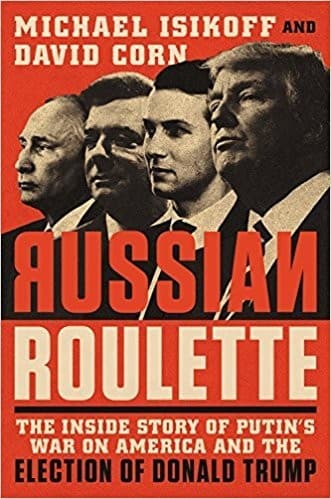
Russian Roulette: The Inside Story of Putin's War on America and the Election of Donald Trump

Michael Isikoff, David Corn

The incredible, harrowing account of how American democracy was hacked by Moscow as part of a covert operation to influence the U.S. election and help Donald Trump gain the presidency. Russian Roulette is a story of political skullduggery unprecedented in American history. It weaves together tales of international intrigue, cyber espionage, and superpower rivalry. After U.S.-Russia relations soured, as Vladimir Putin moved to reassert Russian strength on the global stage, Moscow trained its best hackers and trolls on U.S. political targets and exploited WikiLeaks to disseminate information that could affect the 2016 election. The Russians were wildly successful and the great break-in of 2016 was no "third-rate burglary." It was far more sophisticated and sinister — a brazen act of political espionage designed to interfere with American democracy. At the end of the day, Trump, the candidate who pursued business deals in Russia, won. And millions of Americans were left wondering, what the hell happened? This story of high-tech spying and multiple political feuds is told against the backdrop of Trump's strange relationship with Putin and the curious ties between members of his inner circle — including Paul Manafort and Michael Flynn — and Russia. Russian Roulette chronicles and explores this bizarre scandal, explains the stakes, and answers one of the biggest questions in American politics: How and why did a foreign government infiltrate the country's political process and gain influence in Washington?

View

How Music Got Free

Stephen Richard Witt

What happens when an entire generation commits the same crime? How Music Got Free is a riveting story of obsession, music, crime, and money, featuring visionaries and criminals, moguls and tech-savvy teenagers. It’s about the greatest pirate in history, the most powerful executive in the music business, a revolutionary invention and an illegal website four times the size of the iTunes Music Store. Journalist Stephen Witt traces the secret history of digital music piracy, from the German audio engineers who invented the mp3, to a North Carolina compact-disc manufacturing plant where factory worker Dell Glover leaked nearly two thousand albums over the course of a decade, to the high-rises of midtown Manhattan where music executive Doug Morris cornered the global market on rap, and, finally, into the darkest recesses of the Internet. Through these interwoven narratives, Witt has written a thrilling book that depicts the moment in history when ordinary life became forever entwined with the world online — when, suddenly, all the music ever recorded was available for free. In the page-turning tradition of writers like Michael Lewis and Lawrence Wright, Witt’s deeply-reported first book introduces the unforgettable characters—inventors, executives, factory workers, and smugglers—who revolutionized an entire artform, and reveals for the first time the secret underworld of media pirates that transformed our digital lives. An irresistible never-before-told story of greed, cunning, genius, and deceit, How Music Got Free isn’t just a story of the music industry—it’s a must-read history of the Internet itself.

RM 17.90
View

In the Hurricane's Eye: The Genius of George Washington and the Victory at Yorktown

Nathaniel Philbrick

The thrilling story of the Revolutionary War finale from the New York Times bestselling author of In the Heart of the Sea and Valiant Ambition . Here is the story of the remarkable year leading up to the siege of Yorktown. It sets Washington against his traitorous nemesis Benedict Arnold and places him in impossible situations and constant acrimonious negotiation with his French allies, along with his young protégé, the Marquis de Lafayette and his energetic general Nathanael Greene. In a narrative that moves from the ship-crowded waters off Newport, Rhode Island, to a wooded hillside near North Carolina's Guilford Courthouse, to the Dutch storehouses on the Caribbean island of St. Eustatius, Philbrick narrates the pivotal naval battle that brought the end of America's long, elusive path to independence. It was an improbable triumph made possible by Washington's brilliant strategy, leadership, and revolutionary use of sea power. In the Hurricane's Eye opens in the fall of 1780. For five years, American and British forces had clashed along the edge of a vast continent and were now at a stalemate. The Royal Navy, with its fleet of powerful warships (just one of which mounted more cannons than possessed by the entire rebel army), could attack the rebels' seaside cities at will. The Rebels could just fall back inland and wait. Neither side could inflict the killing blow. As Washington knew better than anyone, only the French navy could break Britain's stranglehold on the eastern seaboard and thus ensure an American victory. In the Battle of the Chesapeake (1781 - called the most important naval engagement in the history of the world), a French admiral foiled British attempts to rescue the army led by General Cornwallis. By making the subsequent victory at Yorktown a virtual inevitability, this naval battle--masterminded by Washington but waged without a single American ship--was largely responsible for the independence of the United States. A riveting and wide-ranging narrative, full of dramatic, unexpected turns, In the Hurricane's Eye reveals that the fate of the American Revolution depended, in the end, on Washington and the sea.

RM 297.08
View

Valiant Ambition

Nathaniel Philbrick

From the New York Times bestselling author of In The Heart of the Sea , comes a surprising account of the middle years of the American Revolution, and the tragic relationship between George Washington and Benedict Arnold. In September 1776, the vulnerable Continental Army under an unsure George Washington (who had never commanded a large force in battle) evacuates New York after a devastating defeat by the British Army. Three weeks later, near the Canadian border, one of his favorite generals, Benedict Arnold, miraculously succeeds in postponing the British naval advance down Lake Champlain that might have ended the war. Four years later, as the book ends, Washington has vanquished his demons and Arnold has fled to the enemy after a foiled attempt to surrender the American fortress at West Point to the British. After four years of war, America is forced to realize that the real threat to its liberties might not come from without but from within. Valiant Ambition is a complex, controversial, and dramatic portrait of a people in crisis and the war that gave birth to a nation. The focus is on loyalty and personal integrity, evoking a Shakespearean tragedy that unfolds in the key relationship of Washington and Arnold, who is an impulsive but sympathetic hero whose misfortunes at the hands of self-serving politicians fatally destroy his faith in the legitimacy of the rebellion. As a country wary of tyrants suddenly must figure out how it should be led, Washington’s unmatched ability to rise above the petty politics of his time enables him to win the war that really matters.

RM 71.10
View

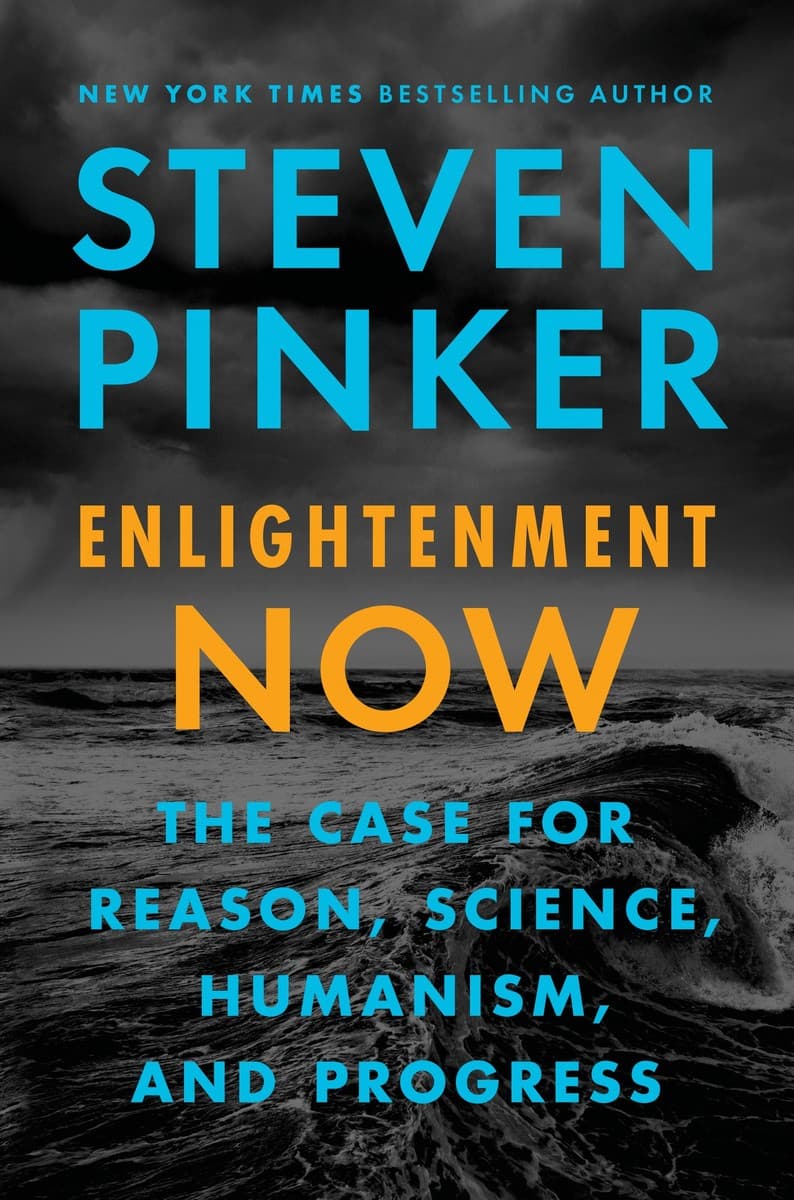
Enlightenment Now: The Case for Reason, Science, Humanism, and Progress

Steven Pinker

If you think the world is coming to an end, think again: people are living longer, healthier, freer, and happier lives, and while our problems are formidable, the solutions lie in the Enlightenment ideal of using reason and science. Is the world really falling apart? Is the ideal of progress obsolete? In this elegant assessment of the human condition in the third millennium, cognitive scientist and public intellectual Steven Pinker urges us to step back from the gory headlines and prophecies of doom, which play to our psychological biases. Instead, follow the data: In seventy-five jaw-dropping graphs, Pinker shows that life, health, prosperity, safety, peace, knowledge, and happiness are on the rise, not just in the West, but worldwide. This progress is not the result of some cosmic force. It is a gift of the Enlightenment: the conviction that reason and science can enhance human flourishing. Far from being a naïve hope, the Enlightenment, we now know, has worked. But more than ever, it needs a vigorous defense. The Enlightenment project swims against currents of human nature–tribalism, authoritarianism, demonization, magical thinking–which demagogues are all too willing to exploit. Many commentators, committed to political, religious, or romantic ideologies, fight a rearguard action against it. The result is a corrosive fatalism and a willingness to wreck the precious institutions of liberal democracy and global cooperation. With intellectual depth and literary flair, Enlightenment Now makes the case for reason, science, and humanism: the ideals we need to confront our problems and continue our progress.

View

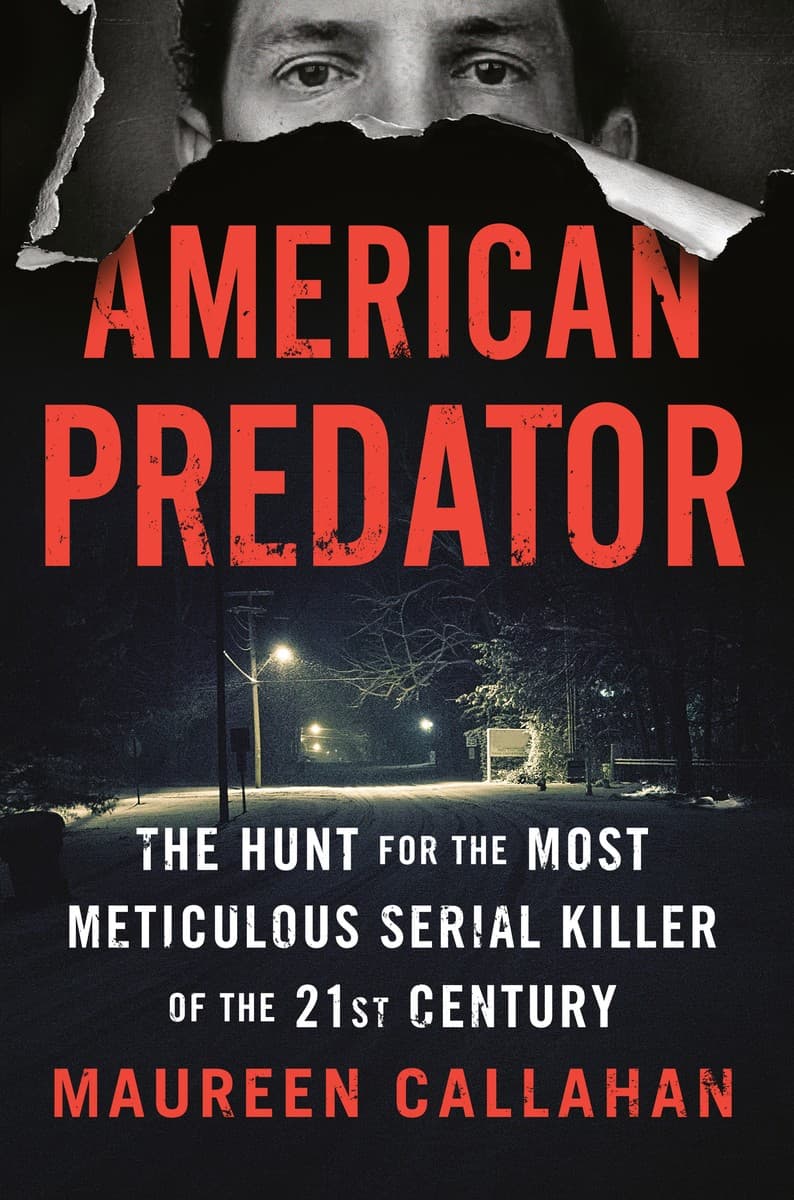
American Predator: The Hunt for the Most Meticulous Serial Killer of the 21st Century

Maureen Callahan

Ted Bundy. John Wayne Gacy. Jeffrey Dahmer. The names of notorious serial killers are usually well-known; they echo in the news and in public consciousness. But most people have never heard of Israel Keyes, one of the most ambitious and terrifying serial killers in modern history. The FBI considered his behavior unprecedented. Described by a prosecutor as "a force of pure evil," Keyes was a predator who struck all over the United States. He buried "kill kits"--cash, weapons, and body-disposal tools--in remote locations across the country. Over the course of fourteen years, Keyes would fly to a city, rent a car, and drive thousands of miles in order to use his kits. He would break into a stranger's house, abduct his victims in broad daylight, and kill and dispose of them in mere hours. And then he would return home to Alaska, resuming life as a quiet, reliable construction worker devoted to his only daughter. When journalist Maureen Callahan first heard about Israel Keyes in 2012, she was captivated by how a killer of this magnitude could go undetected by law enforcement for over a decade. And so began a project that consumed her for the next several years--uncovering the true story behind how the FBI ultimately caught Israel Keyes, and trying to understand what it means for a killer like Keyes to exist. A killer who left a path of monstrous, randomly committed crimes in his wake--many of which remain unsolved to this day. American Predator is the ambitious culmination of years of interviews with key figures in law enforcement and in Keyes's life, and research uncovered from classified FBI files. Callahan takes us on a journey into the chilling, nightmarish mind of a relentless killer, and to the limitations of traditional law enforcement.

View

The Clean Plate: Eat, Reset, Heal

Gwyneth Paltrow

Clean lifestyle guru Gwyneth Paltrow shows that delicious food can also heal the body--with 100 food-lover's recipes that can be customized into targeted meal plans and detox programs. Gwyneth Paltrow stands behind the power of simple, quality food. Her recipes always focus on delicious flavors and clean ingredients--pillars that have launched her cookbooks to bestseller status. Now she's back with her most ambitious cookbook to date: a collection of 100 recipes and customizable meal plans that offer taste, simplicity, and targeted health benefits. This food-lover's cookbook offers everything from smoothies and soups to bowls, entrees, and desserts, with the ease and flavor that we have come to expect from Gwyneth; With beautiful color photography by Ditte Isager. Highlights include hardworking staples like Turkey Meatball Pho, Sheet Pan Chicken Broccolini, and Butternut Squash Tacos, and sweet treats like Cashew Turmeric Iced Lattes, and Chocolate Chia Pudding. As if the delicious recipes weren't enough, the second half of the book offers meal plans, detoxes, and cleanses that can be customized to address the reader's specific needs, desired results, and common ailments. Supported by Gwyneth's team of experts and doctors, the book offers specific eating plans to tackle: Adrenal Fatigue: (with Dr. Alejandro Junger) Heart Health (with Dr. Steven Gundry) Candida (with Dr. Amy Myers) Heavy Metal Overload (with Dr. James Novak) This is sure to be the most exciting cookbook yet, from the biggest name in clean eating.

RM 34.90
View

The Trayvon Generation

Elizabeth Alexander

From a Pulitzer Prize finalist and New York Times bestselling author and poet comes a galvanizing meditation on the power of art and culture to illuminate America's unresolved problem with race. *Named a Most Anticipated Title of 2022 by TIME magazine, New York Times , Bustle , and more* In the midst of civil unrest in the summer of 2020 and following the murders of George Floyd, Breonna Taylor, and Ahmaud Arbery, Elizabeth Alexander—one of the great literary voices of our time—turned a mother's eye to her sons’ and students’ generation and wrote a celebrated and moving reflection on the challenges facing young Black America. Originally published in the New Yorker , the essay incisively and lovingly observed the experiences, attitudes, and cultural expressions of what she referred to as the Trayvon Generation, who even as children could not be shielded from the brutality that has affected the lives of so many Black people. The Trayvon Generation expands the viral essay that spoke so resonantly to the persistence of race as an ongoing issue at the center of the American experience. Alexander looks both to our past and our future with profound insight, brilliant analysis, and mighty heart, interweaving her voice with groundbreaking works of art by some of our most extraordinary artists. At this crucial time in American history when we reckon with who we are as a nation and how we move forward, Alexander's lyrical prose gives us perspective informed by historical understanding, her lifelong devotion to education, and an intimate grasp of the visioning power of art. This breathtaking book is essential reading and an expression of both the tragedies and hopes for the young people of this era that is sure to be embraced by those who are leading the movement for change and anyone rising to meet the moment.

RM 86.90
View

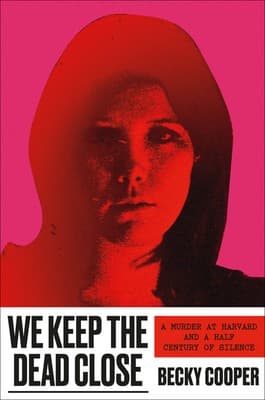
We Keep the Dead Close: A Murder at Harvard and a Half Century of Silence

Becky Cooper

Dive into a true crime narrative of an unsolved 1969 murder at Harvard, of obsession and love for a girl who dreamt of rising among men. You have to remember, he reminded me, that Harvard is older than the U.S. government. You have to remember because Harvard doesn't let you forget. 1969: the height of counterculture and the year universities would seek to curb the unruly spectacle of student protest; the winter that Harvard University would begin the tumultuous process of merging with Radcliffe, its all-female sister school; and the year that Jane Britton, an ambitious twenty-three-year-old graduate student in Harvard's Anthropology Department and daughter of Radcliffe Vice President J. Boyd Britton, would be found bludgeoned to death in her Cambridge, Massachusetts apartment. Forty years later, Becky Cooper a curious undergrad, will hear the first whispers of the story. In the first telling the body was nameless. The story was this: a Harvard student had had an affair with her professor, and the professor had murdered her in the Peabody Museum of Archaeology and Ethnology because she'd threatened to talk about the affair. Though the rumor proves false, the story that unfolds, one that Cooper will follow for ten years, is even more complex: a tale of gender inequality in academia, a 'cowboy culture' among empowered male elites, the silencing effect of institutions, and our compulsion to rewrite the stories of female victims. We Keep the Dead Close is a memoir of mirrors, misogyny, and murder. It is at once a rumination on the violence and oppression that rules our revered institutions, a ghost story reflecting one young woman's past onto another's present, and a love story for a girl who was lost to history.

View

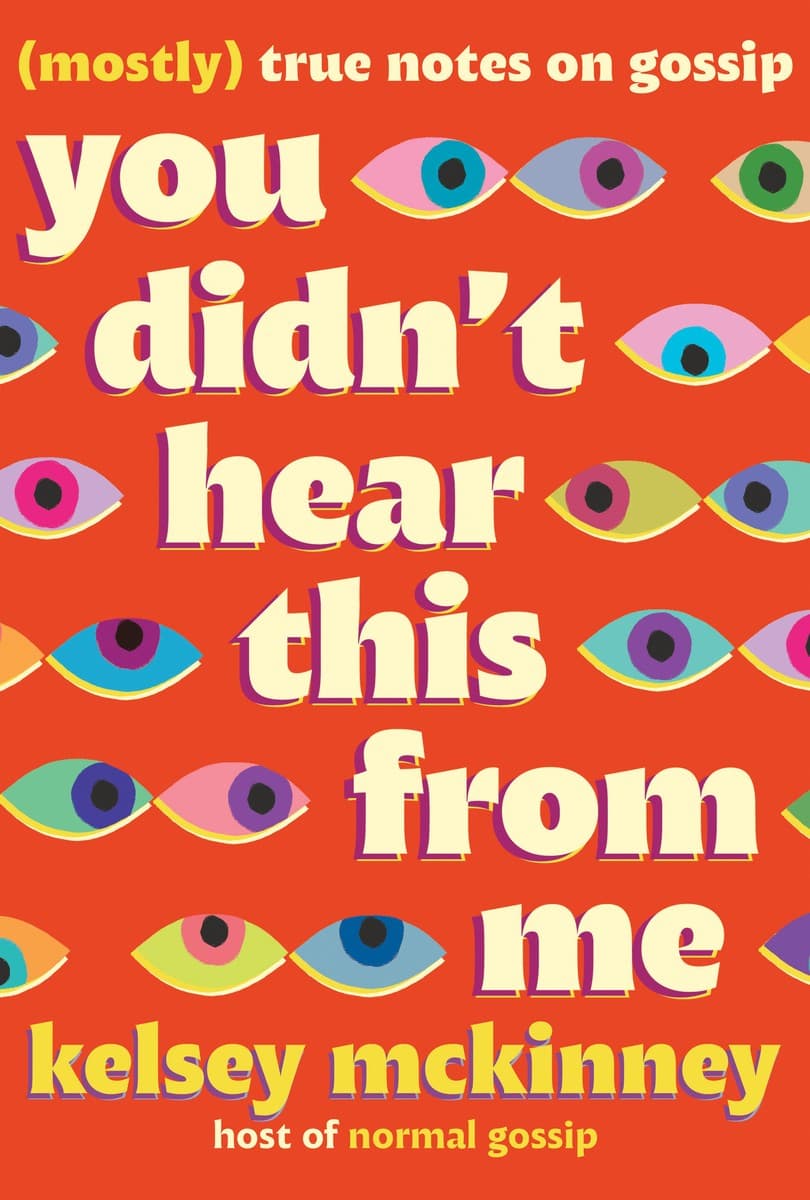
You Didn't Hear This from Me

Kelsey McKinney

A delightfully insightful exploration of our obsession with gossip that weaves together journalism, cultural criticism, and memoir, from the host of the massively popular Normal Gossip podcast. Can you keep a secret? As the pandemic forced us to socialize at a distance, Kelsey McKinney was mourning the juicy updates, jaw-dropping stories, and idle chatter that she’d typically collect over drinks with friends. She realized she wasn’t the only one missing these little morsels and her hunger for this aspect of normalcy took on a life of its own and the blockbuster Normal Gossip podcast was born. With listenership in the millions and gossip quickly becoming her day job, Kelsey found herself with the urge to think more critically about gossip as a form, to better understand the role that it plays in our culture. In YOU DIDN'T HEAR THIS FROM ME, McKinney explores the murkiness of everyday storytelling. Why is gossip considered a sin and how can we better recognize when gossip is being weaponized against the oppressed? Why do we think we’re entitled to every detail of a celebrity’s personal life because they are a public figure? And how do we even define “gossip,” anyway? She dishes on the art of eavesdropping and dives deep into how pop culture has changed the way that we look at hearsay. But as much as the book aims to treat gossip as a subject worthy of rigor, it also hopes to capture the heart of how enchanting and fun it can be to lean over and whisper something a little salacious into your friend’s ear. With wit and honesty, McKinney unmasks what we're actually searching for when we demand to know the truth – and how much the truth really matters in the first place.

View
Previous

Latest • Page 49/61

Next
WhatsApp support