Kongsee

Collection

Goodreads Choice Awards — Non-Fiction

Award-winning non-fiction titles recognised by the Goodreads Choice Awards. From memoirs to science, history to self-help.

1217 books available

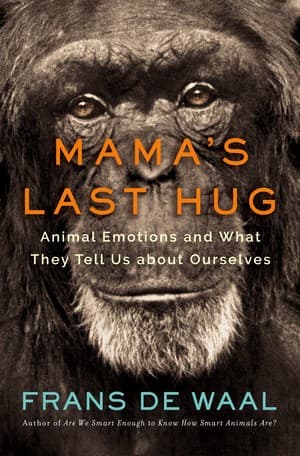
Mama's Last Hug: Animal Emotions and What They Tell Us about Ourselves

Frans de Waal

New York Times best-selling author and primatologist Frans de Waal explores the fascinating world of animal and human emotions. Frans de Waal has spent four decades at the forefront of animal research. Following up on the best-selling Are We Smart Enough to Know How Smart Animals Are? , which investigated animal intelligence, Mama’s Last Hug delivers a fascinating exploration of the rich emotional lives of animals. Mama’s Last Hug begins with the death of Mama, a chimpanzee matriarch who formed a deep bond with biologist Jan van Hooff. When Mama was dying, van Hooff took the unusual step of visiting her in her night cage for a last hug. Their goodbyes were filmed and went viral. Millions of people were deeply moved by the way Mama embraced the professor, welcoming him with a big smile while reassuring him by patting his neck, in a gesture often considered typically human but that is in fact common to all primates. This story and others like it form the core of de Waal’s argument, showing that humans are not the only species with the capacity for love, hate, fear, shame, guilt, joy, disgust, and empathy. De Waal discusses facial expressions, the emotions behind human politics, the illusion of free will, animal sentience, and, of course, Mama’s life and death. The message is one of continuity between us and other species, such as the radical proposal that emotions are like organs: we don’t have a single organ that other animals don’t have, and the same is true for our emotions. Mama’s Last Hug opens our hearts and minds to the many ways in which humans and other animals are connected, transforming how we view the living world around us.

View

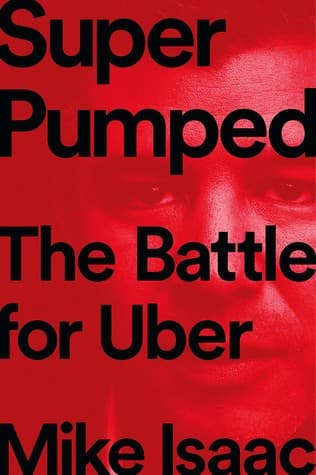
Super Pumped: The Battle for Uber

Mike Isaac

New York Times and Wall Street Journal Bestseller A New York Times technology correspondent presents the dramatic story of Uber, the Silicon Valley startup at the center of one of the great venture capital power struggles of our time. In June 2017, Travis Kalanick, the hard-charging CEO of Uber, was ousted in a boardroom coup that capped a brutal year for the transportation giant. Uber had catapulted to the top of the tech world, yet for many came to symbolize everything wrong with Silicon Valley. Award-winning New York Times technology correspondent Mike Isaac’s Super Pumped presents the dramatic rise and fall of Uber, set against an era of rapid upheaval in Silicon Valley. Backed by billions in venture capital dollars and led by a brash and ambitious founder, Uber promised to revolutionize the way we move people and goods through the world. A near instant “unicorn,” Uber seemed poised to take its place next to Amazon, Apple, and Google as a technology giant. What followed would become a corporate cautionary tale about the perils of startup culture and a vivid example of how blind worship of startup founders can go wildly wrong. Isaac recounts Uber’s pitched battles with taxi unions and drivers, the company’s toxic internal culture, and the bare-knuckle tactics it devised to overcome obstacles in its quest for dominance. With billions of dollars at stake, Isaac shows how venture capitalists asserted their power and seized control of the startup as it fought its way toward its fateful IPO. Based on hundreds of interviews with current and former Uber employees, along with previously unpublished documents, Super Pumped is a page-turning story of ambition and deception, obscene wealth, and bad behavior that explores how blistering technological and financial innovation culminated in one of the most catastrophic twelve-month periods in American corporate history.

RM 24.90
View

Ravensbrück

Sarah Helm

A groundbreaking, masterful, and absorbing account of the last hidden atrocity of World War II—Ravensbrück—the largest female-only concentration camp, where more than 100,000 women consisting of more than twenty nationalities were imprisoned. Shortly before the outbreak of World War II, Heinrich Himmler, the head of the SS and the architect of the Holocaust, oversaw the construction of a special concentration camp just fifty miles north of Berlin. He called it Ravensbrück, and during the years that followed thousands of people died there after enduring brutal forms of torture. All were women. There are a handful of studies and memoirs that reference Ravensbrück, but until now no one has written a full account of this atrocity, perhaps due to the mostly masculine narrative of war, or perhaps because it lacks the Jewish context of most mainstream Holocaust history. Ninety percent of Ravensbrück's prisoners were not Jewish. Rather, they were political prisoners, Resistance fighters, lesbians, prostitutes, even the sister of New York's Mayor LaGuardia. In a perverse twist, most of the guards were women themselves. Sarah Helm's groundbreaking work sheds much-needed light on an aspect of World War II that has remained in the shadows for decades. Using research into German and newly opened Russian archives, as well as interviews with survivors, Helm has produced a landmark achievement that weaves together various accounts, allowing us to follow characters on both sides of the prisoner/guard divide. Chilling, compelling, and deeply unsettling, Ravensbrück is essential reading for anyone concerned with Nazi history.

View

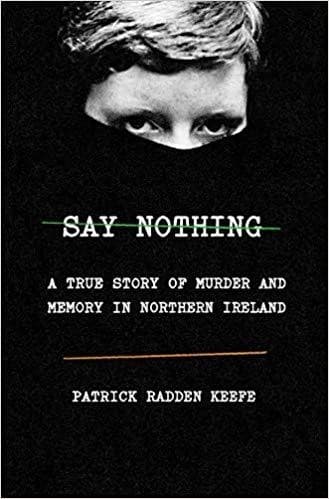
Say Nothing: A True Story of Murder and Memory in Northern Ireland

Patrick Radden Keefe

In December 1972, Jean McConville, a thirty-eight-year-old mother of ten, was dragged from her Belfast home by masked intruders, her children clinging to her legs. They never saw her again. Her abduction was one of the most notorious episodes of the vicious conflict known as The Troubles. Everyone in the neighborhood knew the I.R.A. was responsible. But in a climate of fear and paranoia, no one would speak of it. In 2003, five years after an accord brought an uneasy peace to Northern Ireland, a set of human bones was discovered on a beach. McConville's children knew it was their mother when they were told a blue safety pin was attached to the dress--with so many kids, she had always kept it handy for diapers or ripped clothes. Patrick Radden Keefe's mesmerizing book on the bitter conflict in Northern Ireland and its aftermath uses the McConville case as a starting point for the tale of a society wracked by a violent guerrilla war, a war whose consequences have never been reckoned with. The brutal violence seared not only people like the McConville children, but also I.R.A. members embittered by a peace that fell far short of the goal of a united Ireland, and left them wondering whether the killings they committed were not justified acts of war, but simple murders. Patrick Radden Keefe writes an intricate narrative about a notorious killing in Northern Ireland and its devastating repercussions.

View

The Future of the Mind: The Scientific Quest to Understand, Enhance, and Empower the Mind

Michio Kaku

The New York Times best-selling author of Physics of the Impossible , Physics of the Future and Hyperspace tackles the most fascinating and complex object in the known universe: the human brain . For the first time in history, the secrets of the living brain are being revealed by a battery of high tech brain scans devised by physicists. Now what was once solely the province of science fiction has become a startling reality. Recording memories, telepathy, videotaping our dreams, mind control, avatars, and telekinesis are not only possible; they already exist. The Future of the Mind gives us an authoritative and compelling look at the astonishing research being done in top laboratories around the world—all based on the latest advancements in neuroscience and physics. One day we might have a "smart pill" that can enhance our cognition; be able to upload our brain to a computer, neuron for neuron; send thoughts and emotions around the world on a "brain-net"; control computers and robots with our mind; push the very limits of immortality; and perhaps even send our consciousness across the universe. Dr. Kaku takes us on a grand tour of what the future might hold, giving us not only a solid sense of how the brain functions but also how these technologies will change our daily lives. He even presents a radically new way to think about "consciousness" and applies it to provide fresh insight into mental illness, artificial intelligence and alien consciousness. With Dr. Kaku's deep understanding of modern science and keen eye for future developments, The Future of the Mind is a scientific tour de force--an extraordinary, mind-boggling exploration of the frontiers of neuroscience.

RM 60.00
View

Lawrence in Arabia

Scott Anderson

A thrilling and revelatory narrative of one of the most epic and consequential periods in 20th century history – the Arab Revolt and the secret “great game” to control the Middle East The Arab Revolt against the Turks in World War One was, in the words of T.E. Lawrence, “a sideshow of a sideshow.” Amidst the slaughter in European trenches, the Western combatants paid scant attention to the Middle Eastern theater. As a result, the conflict was shaped to a remarkable degree by a small handful of adventurers and low-level officers far removed from the corridors of power. Curt Prüfer was an effete academic attached to the German embassy in Cairo, whose clandestine role was to foment Islamic jihad against British rule. Aaron Aaronsohn was a renowned agronomist and committed Zionist who gained the trust of the Ottoman governor of Syria. William Yale was the fallen scion of the American aristocracy, who traveled the Ottoman Empire on behalf of Standard Oil, dissembling to the Turks in order gain valuable oil concessions. At the center of it all was Lawrence. In early 1914 he was an archaeologist excavating ruins in the sands of Syria; by 1917 he was the most romantic figure of World War One, battling both the enemy and his own government to bring about the vision he had for the Arab people. The intertwined paths of these four men – the schemes they put in place, the battles they fought, the betrayals they endured and committed – mirror the grandeur, intrigue and tragedy of the war in the desert. Prüfer became Germany’s grand spymaster in the Middle East. Aaronsohn constructed an elaborate Jewish spy-ring in Palestine, only to have the anti-Semitic and bureaucratically-inept British first ignore and then misuse his organization, at tragic personal cost. Yale would become the only American intelligence agent in the entire Middle East – while still secretly on the payroll of Standard Oil. And the enigmatic Lawrence rode into legend at the head of an Arab army, even as he waged secret war against his own nation’s imperial ambitions. Based on years of intensive primary document research, Lawrence in Arabia definitively overturns received wisdom on how the modern Middle East was formed. Sweeping in its action, keen in its portraiture, acid in its condemnation of the destruction wrought by European colonial plots, this is a book that brilliantly captures the way in which the folly of the past creates the anguish of the present.

RM 90.85
View

The Most Human Human

Brian Christian

The Most Human Human is a provocative, exuberant, and profound exploration of the ways in which computers are reshaping our ideas of what it means to be human. Its starting point is the annual Turing Test, which pits artificial intelligence programs against people to determine if computers can “think.” Named for computer pioneer Alan Turing, the Tur­ing Test convenes a panel of judges who pose questions—ranging anywhere from celebrity gossip to moral conundrums—to hidden contestants in an attempt to discern which is human and which is a computer. The machine that most often fools the panel wins the Most Human Computer Award. But there is also a prize, bizarre and intriguing, for the Most Human Human. In 2008, the top AI program came short of passing the Turing Test by just one astonishing vote. In 2009, Brian Christian was chosen to participate, and he set out to make sure Homo sapiens would prevail. The author’s quest to be deemed more human than a com­puter opens a window onto our own nature. Interweaving modern phenomena like customer service “chatbots” and men using programmed dialogue to pick up women in bars with insights from fields as diverse as chess, psychiatry, and the law, Brian Christian examines the philosophical, bio­logical, and moral issues raised by the Turing Test. One central definition of human has been “a being that could reason.” If computers can reason, what does that mean for the special place we reserve for humanity?

View

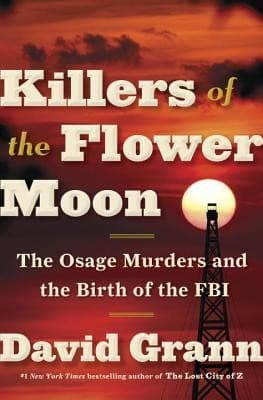
Killers of the Flower Moon

David Grann

In the 1920s, the richest people per capita in the world were members of the Osage Indian nation in Oklahoma. After oil was discovered beneath their land, the Osage rode in chauffeured automobiles, built mansions, and sent their children to study in Europe. Then, one by one, the Osage began to be killed off. The family of an Osage woman, Mollie Burkhart, became a prime target. Her relatives were shot and poisoned. And it was just the beginning, as more members of the tribe began to die under mysterious circumstances. In this last remnant of the Wild West—where oilmen such as J. P. Getty made their fortunes and where desperadoes such as Al Spencer, the “Phantom Terror,” roamed—many of those who dared to investigate the killings were themselves murdered. As the death toll climbed to more than twenty-four, the relatively new FBI took over. It was one of the organization’s first major homicide cases but the bureau badly bungled the investigation. In desperation, the young director, J. Edgar Hoover, turned to a former Texas Ranger named Tom White to unravel the mystery. White put together an undercover team, including an American Indian agents in the bureau. Together with the Osage they began to expose one of the most chilling conspiracies in American history. In Killers of the Flower Moon , David Grann revisits a shocking series of crimes in which dozens of people were murdered in cold blood. Based on years of research and startling new evidence, the book is a masterpiece of narrative nonfiction, as each step in the investigation reveals a series of sinister secrets and reversals. But more than that, it is a searing indictment of the callousness and prejudice toward American Indians that allowed the murderers to operate with impunity for so long. Killers of the Flower Moon is utterly compelling, but also emotionally devastating.

View

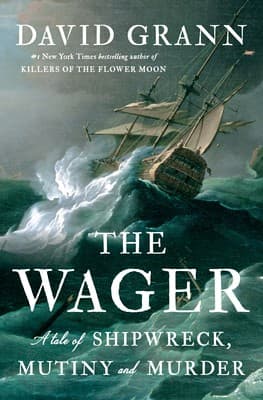
The Wager: A Tale of Shipwreck, Mutiny and Murder

David Grann

From the #1 New York Times bestselling author of Killers of the Flower Moon , a page-turning story of shipwreck, survival, and savagery, culminating in a court martial that reveals a shocking truth. The powerful narrative reveals the deeper meaning of the events on the Wager , showing that it was not only the captain and crew who ended up on trial, but the very idea of empire. On January 28, 1742, a ramshackle vessel of patched-together wood and cloth washed up on the coast of Brazil. Inside were thirty emaciated men, barely alive, and they had an extraordinary tale to tell. They were survivors of His Majesty's Ship the Wager , a British vessel that had left England in 1740 on a secret mission during an imperial war with Spain. While the Wager had been chasing a Spanish treasure-filled galleon known as "the prize of all the oceans," it had wrecked on a desolate island off the coast of Patagonia. The men, after being marooned for months and facing starvation, built the flimsy craft and sailed for more than a hundred days, traversing nearly 3,000 miles of storm-wracked seas. They were greeted as heroes. But then . . . six months later, another, even more decrepit craft landed on the coast of Chile. This boat contained just three castaways, and they told a very different story. The thirty sailors who landed in Brazil were not heroes - they were mutineers. The first group responded with countercharges of their own, of a tyrannical and murderous senior officer and his henchmen. It became clear that while stranded on the island the crew had fallen into anarchy, with warring factions fighting for dominion over the barren wilderness. As accusations of treachery and murder flew, the Admiralty convened a court martial to determine who was telling the truth. The stakes were life-and-death--for whomever the court found guilty could hang. The Wager is a grand tale of human behavior at the extremes told by one of our greatest nonfiction writers. Grann's recreation of the hidden world on a British warship rivals the work of Patrick O'Brian, his portrayal of the castaways' desperate straits stands up to the classics of survival writing such as The Endurance , and his account of the court martial has the savvy of a Scott Turow thriller. As always with Grann's work, the incredible twists of the narrative hold the reader spellbound.


View

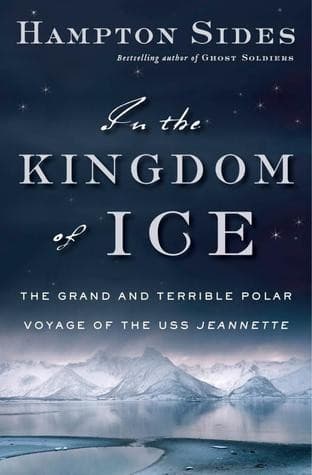
In the Kingdom of Ice: The Grand and Terrible Polar Voyage of the USS Jeannette

Hampton Sides

New York Times bestselling author Hampton Sides returns with a white-knuckle tale of polar exploration and survival in the Gilded Age. In the late nineteenth century, people were obsessed by one of the last unmapped areas of the globe: The North Pole. No one knew what existed beyond the fortress of ice rimming the northern oceans. James Gordon Bennett, the eccentric and stupendously wealthy owner of The New York Herald , had recently captured the world's attention by dispatching Stanley to Africa to find Dr. Livingstone. Now he was keen to recreate that sensation on an even more epic scale. So he funded an official U.S. naval expedition to reach the Pole, choosing as its captain a young officer named George Washington De Long, who had gained fame for a rescue operation off the coast of Greenland. De Long led a team of 32 men deep into uncharted Arctic waters, carrying the aspirations of a young country burning to become a world power. On July 8, 1879, the USS Jeannette set sail from San Francisco to cheering crowds in the grip of "Arctic Fever." The ship sailed into uncharted seas, but soon was trapped in pack ice. Two years into the harrowing voyage, the hull was breached. Amid the rush of water and the shrieks of breaking wooden boards, the crew abandoned the ship. Less than an hour later, the Jeannette sank to the bottom, and the men found themselves marooned a thousand miles north of Siberia with only the barest supplies. Thus began their long march across the endless ice - a frozen hell in the most lonesome corner of the world. Facing everything from snow blindness and polar bears to ferocious storms and frosty labyrinths, the expedition battled madness and starvation as they desperately strove for survival. With twists and turns worthy of a thriller, In the Kingdom of Ice is a spellbinding tale of heroism and determination in the most unforgiving territory on Earth. Listening length: 17 hours and 30 minutes

View
Previous

Latest • Page 28/61

Next
WhatsApp support