Kongsee

Collection

Goodreads Choice Awards — Non-Fiction

Award-winning non-fiction titles recognised by the Goodreads Choice Awards. From memoirs to science, history to self-help.

1217 books available

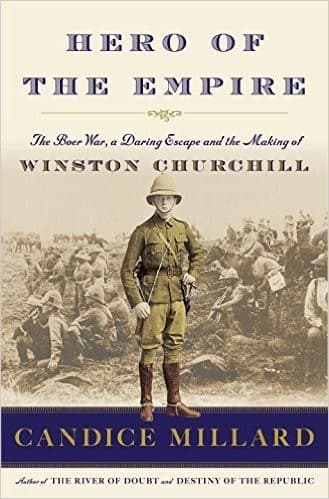
Hero of the Empire

Candice Millard

From New York Times bestselling author of Destiny of the Republic and The River of Doubt , a thrilling narrative of Winston Churchill's extraordinary and little-known exploits during the Boer War At age twenty-four, Winston Churchill was utterly convinced it was his destiny to become prime minister of England one day, despite the fact he had just lost his first election campaign for Parliament. He believed that to achieve his goal he must do something spectacular on the battlefield. Despite deliberately putting himself in extreme danger as a British Army officer in colonial wars in India and Sudan, and as a journalist covering a Cuban uprising against the Spanish, glory and fame had eluded him. Churchill arrived in South Africa in 1899, valet and crates of vintage wine in tow, there to cover the brutal colonial war the British were fighting with Boer rebels. But just two weeks after his arrival, the soldiers he was accompanying on an armored train were ambushed, and Churchill was taken prisoner. Remarkably, he pulled off a daring escape--but then had to traverse hundreds of miles of enemy territory, alone, with nothing but a crumpled wad of cash, four slabs of chocolate, and his wits to guide him. The story of his escape is incredible enough, but then Churchill enlisted, returned to South Africa, fought in several battles, and ultimately liberated the men with whom he had been imprisoned. Churchill would later remark that this period, "could I have seen my future, was to lay the foundations of my later life." Millard spins an epic story of bravery, savagery, and chance encounters with a cast of historical characters--including Rudyard Kipling, Lord Kitchener, and Mohandas Gandhi--with whom he would later share the world stage. But Hero of the Empire is more than an adventure story, for the lessons Churchill took from the Boer War would profoundly affect 20th century history. From the Hardcover edition.

RM 24.90
View

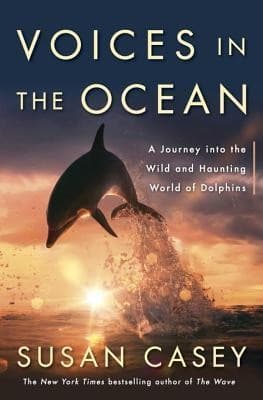
Voices in the Ocean

Susan Casey

While swimming off the coast of Maui, Susan Casey was surrounded by a pod of spinner dolphins. It was a profoundly transporting experience, and it inspired her to embark on a two-year global adventure to explore the nature of these remarkable beings and their complex relationship to humanity. Casey examines the career of the controversial John Lilly, the pioneer of modern dolphin studies whose work eventually led him down some very strange paths. She visits a community in Hawaii whose adherents believe dolphins are the key to spiritual enlightenment, travels to Ireland, where a dolphin named as “the world’s most loyal animal” has delighted tourists and locals for decades with his friendly antics, and consults with the world’s leading marine researchers, whose sense of wonder inspired by the dolphins they study increases the more they discover. Yet there is a dark side to our relationship with dolphins. They are the stars of a global multibillion-dollar captivity industry, whose money has fueled a sinister and lucrative trade in which dolphins are captured violently, then shipped and kept in brutal conditions. Casey’s investigation into this cruel underground takes her to the harrowing epicenter of the trade in the Solomon Islands, and to the Japanese town of Taiji, made famous by the Oscar-winning documentary The Cove, where she chronicles the annual slaughter and sale of dolphins in its narrow bay. Casey ends her narrative on the island of Crete, where millennia-old frescoes and artwork document the great Minoan civilization, a culture which lived in harmony with dolphins, and whose example shows the way to a more enlightened coexistence with the natural world.

RM 75.05
View

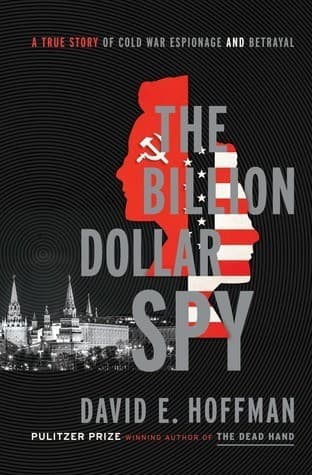
The Billion Dollar Spy

David E. Hoffman

From the author of the Pulitzer Prize-winning history The Dead Hand comes the riveting story of a spy who cracked open the Soviet military research establishment and a penetrating portrait of the CIA’s Moscow station, an outpost of daring espionage in the last years of the Cold War While driving out of the American embassy in Moscow on the evening of February 16, 1978, the chief of the CIA’s Moscow station heard a knock on his car window. A man on the curb handed him an envelope whose contents stunned U.S. intelligence: details of top-secret Soviet research and developments in military technology that were totally unknown to the United States. In the years that followed, the man, Adolf Tolkachev, an engineer in a Soviet military design bureau, used his high-level access to hand over tens of thousands of pages of technical secrets. His revelations allowed America to reshape its weapons systems to defeat Soviet radar on the ground and in the air, giving the United States near total superiority in the skies over Europe. One of the most valuable spies to work for the United States in the four decades of global confrontation with the Soviet Union, Tolkachev took enormous personal risks—but so did the Americans. The CIA had long struggled to recruit and run agents in Moscow, and Tolkachev was a singular breakthrough. Using spy cameras and secret codes as well as face-to-face meetings in parks and on street corners, Tolkachev and his handlers succeeded for years in eluding the feared KGB in its own backyard, until the day came when a shocking betrayal put them all at risk. Drawing on previously secret documents obtained from the CIA and on interviews with participants, David Hoffman has created an unprecedented and poignant portrait of Tolkachev, a man motivated by the depredations of the Soviet state to master the craft of spying against his own country. Stirring, unpredictable, and at times unbearably tense, The Billion Dollar Spy is a brilliant feat of reporting that unfolds like an espionage thriller.

View

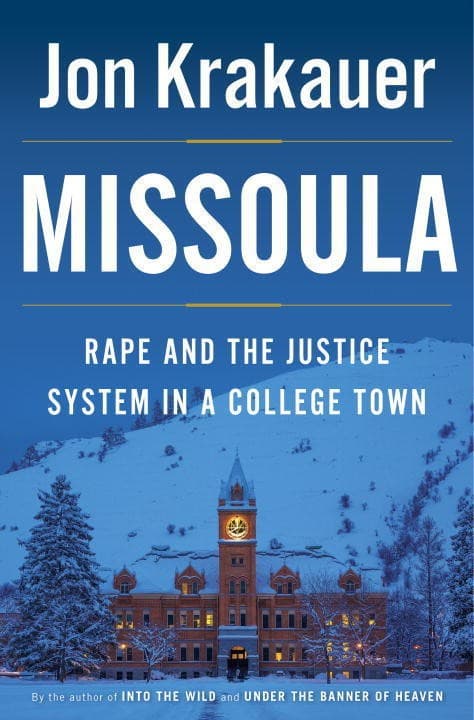
Missoula: Rape and the Justice System in a College Town

Jon Krakauer

From bestselling author Jon Krakauer, a stark, powerful, meticulously reported narrative about a series of sexual assaults at the University of Montana ­— stories that illuminate the human drama behind the national plague of campus rape. Missoula, Montana, is a typical college town, with a highly regarded state university, bucolic surroundings, a lively social scene, and an excellent football team — the Grizzlies — with a rabid fan base. The Department of Justice investigated 350 sexual assaults reported to the Missoula police between January 2008 and May 2012. Few of these assaults were properly handled by either the university or local authorities. In this, Missoula is also typical. A DOJ report released in December of 2014 estimates 110,000 women between the ages of eighteen and twenty-four are raped each year. Krakauer’s devastating narrative of what happened in Missoula makes clear why rape is so prevalent on American campuses, and why rape victims are so reluctant to report assault. Acquaintance rape is a crime like no other. Unlike burglary or embezzlement or any other felony, the victim often comes under more suspicion than the alleged perpetrator. This is especially true if the victim is sexually active; if she had been drinking prior to the assault — and if the man she accuses plays on a popular sports team. The vanishingly small but highly publicized incidents of false accusations are often used to dismiss her claims in the press. If the case goes to trial, the woman’s entire personal life becomes fair game for defense attorneys. This brutal reality goes a long way towards explaining why acquaintance rape is the most underreported crime in America. In addition to physical trauma, its victims often suffer devastating psychological damage that leads to feelings of shame, emotional paralysis and stigmatization. PTSD rates for rape victims are estimated to be 50%, higher than soldiers returning from war. In Missoula, Krakauer chronicles the searing experiences of several women in Missoula — the nights when they were raped; their fear and self-doubt in the aftermath; the way they were treated by the police, prosecutors, defense attorneys; the public vilification and private anguish; their bravery in pushing forward and what it cost them. Some of them went to the police. Some declined to go to the police, or to press charges, but sought redress from the university, which has its own, non-criminal judicial process when a student is accused of rape. In two cases the police agreed to press charges and the district attorney agreed to prosecute. One case led to a conviction; one to an acquittal. Those women courageous enough to press charges or to speak publicly about their experiences were attacked in the media, on Grizzly football fan sites, and/or to their faces. The university expelled three of the accused rapists, but one was reinstated by state officials in a secret proceeding. One district attorney testified for an alleged rapist at his university hearing. She later left the prosecutor’s office and successfully defended the Grizzlies’ star quarterback in his rape trial. The horror of being raped, in each woman’s case, was magnified by the mechanics of the justice system and the reaction of the community. Krakauer’s dispassionate, carefully documented account of what these women endured cuts through the abstract ideological debate about campus rape. College-age women are not raped because they are promiscuous, or drunk, or send mixed signals, or feel guilty about casual sex, or seek attention. They are the victims of a terrible crime and deserving of compassion from society and fairness from a justice system that is clearly broken.

View

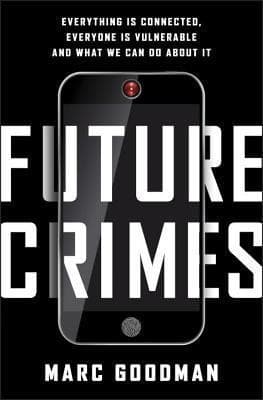
Future Crimes

Marc Goodman

One of the world’s leading authorities on global security, Marc Goodman takes readers deep into the digital underground to expose the alarming ways criminals, corporations, and even countries are using new and emerging technologies against you—and how this makes everyone more vulnerable than ever imagined. Technological advances have benefited our world in immeasurable ways, but there is an ominous flip side: our technology can be turned against us. Hackers can activate baby monitors to spy on families, thieves are analyzing social media posts to plot home invasions, and stalkers are exploiting the GPS on smart phones to track their victims’ every move. We all know today’s criminals can steal identities, drain online bank accounts, and wipe out computer servers, but that’s just the beginning. To date, no computer has been created that could not be hacked—a sobering fact given our radical dependence on these machines for everything from our nation’s power grid to air traffic control to financial services. Yet, as ubiquitous as technology seems today, just over the horizon is a tidal wave of scientific progress that will leave our heads spinning. If today’s Internet is the size of a golf ball, tomorrow’s will be the size of the sun. Welcome to the Internet of Things, a living, breathing, global information grid where every physical object will be online. But with greater connections come greater risks. Implantable medical devices such as pacemakers can be hacked to deliver a lethal jolt of electricity and a car’s brakes can be disabled at high speed from miles away. Meanwhile, 3-D printers can produce AK-47s, bioterrorists can download the recipe for Spanish flu, and cartels are using fleets of drones to ferry drugs across borders. With explosive insights based upon a career in law enforcement and counterterrorism, Marc Goodman takes readers on a vivid journey through the darkest recesses of the Internet. Reading like science fiction, but based in science fact, Future Crimes explores how bad actors are primed to hijack the technologies of tomorrow, including robotics, synthetic biology, nanotechnology, virtual reality, and artificial intelligence. These fields hold the power to create a world of unprecedented abundance and prosperity. But the technological bedrock upon which we are building our common future is deeply unstable and, like a house of cards, can come crashing down at any moment. Future Crimes provides a mind-blowing glimpse into the dark side of technological innovation and the unintended consequences of our connected world. Goodman offers a way out with clear steps we must take to survive the progress unfolding before us. Provocative, thrilling, and ultimately empowering, Future Crimes will serve as an urgent call to action that shows how we can take back control over our own devices and harness technology’s tremendous power for the betterment of humanity—before it’s too late. From the Hardcover edition.

View

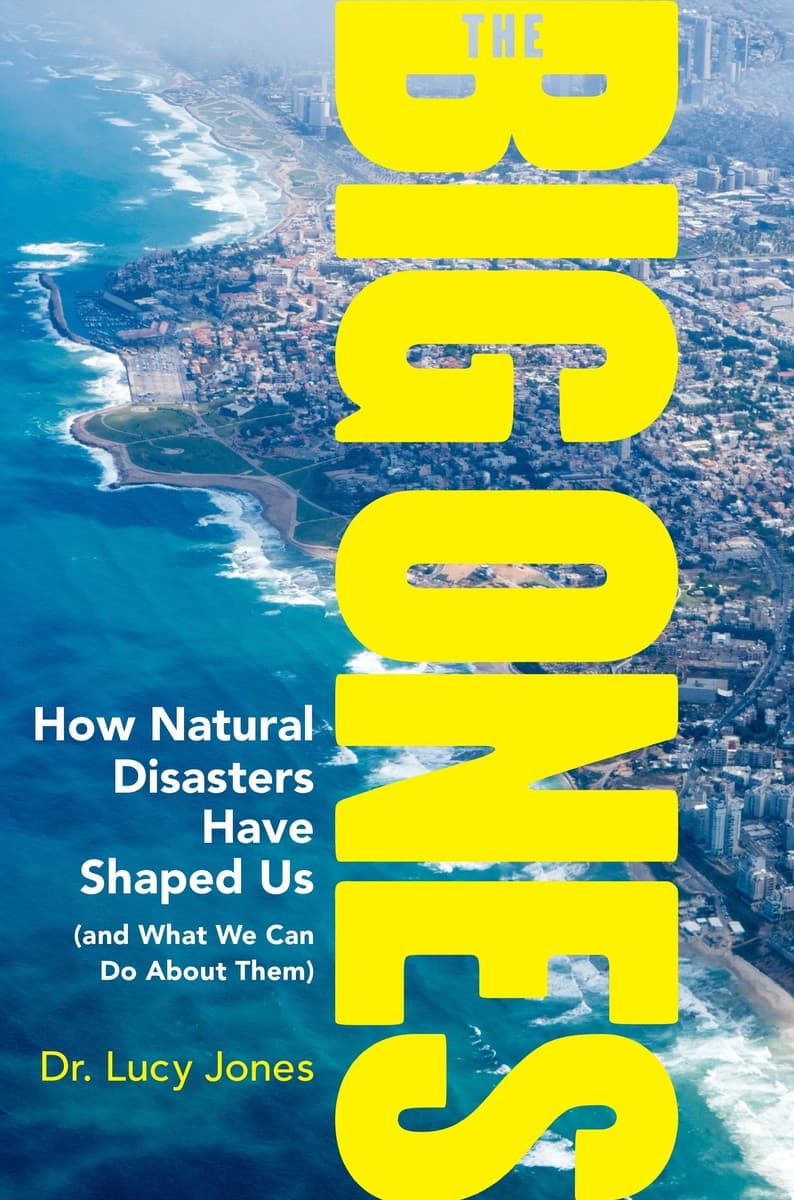
The Big Ones: How Natural Disasters Have Shaped Us and What We Can Do about Them

Lucy Jones

By a veteran seismologist of the U.S. Geological Survey, a lively and revealing history of the world's most disruptive natural disasters, their impact on our culture, and new ways of thinking about the ones to come Natural disasters emerge from the same forces that give our planet life. Earthquakes have provided us with natural springs. Volcanoes have given us fertile soil. A world without floods would be a world without rain. It is only when these forces exceed our ability to withstand them that they become disasters. Together, these colossal events have shaped our cities and their architecture; elevated leaders and toppled governments; influenced the way we reason, feel, fight, unite, and pray. The history of natural disasters is a history of ourselves. The Big Ones is a look at some of the most devastating disasters in human history, whose reverberations we continue to feel today. It considers Pompeii, and how a volcanic eruption in the first century AD challenged and reinforced prevailing views of religion for centuries to come. It explores the California floods of 1862, examining the failures of our collective memory. And it transports us to today, showing what Hurricane Katrina and the 2004 Indian Ocean tsunami can tell us about governance and globalization. With global temperatures rising, natural disasters are striking with greater frequency. More than just history, The Big Ones is a call to action. Natural disasters are inevitable; human catastrophes are not. With this energizing and richly researched book, Jones offers a look at our past, readying us to face down the Big Ones in our future.

RM 67.15
View

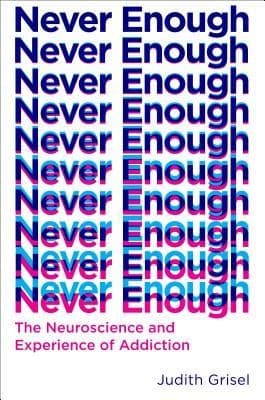
Never Enough: The Neuroscience and Experience of Addiction

Judith Grisel

From a renowned behavioral neuroscientist and recovered drug addict, an authoritative and accessible guide to understanding drug addiction: clearly explained brain science and vivid personal stories reveal how addiction happens, show why specific drugs--from opioids to alcohol to coke and more--are so hard to kick, and illuminate the path to recovery for addicts, loved ones, caregivers, and crafters of public policy. Addiction is epidemic and catastrophic. With more than one in every five people over the age of fourteen addicted, drug abuse has been called the most formidable health problem worldwide. If we are not victims ourselves, we all know someone struggling with the merciless compulsion to alter their experience by changing how their brain functions. Drawing on years of research--as well as personal experience as a recovered addict--researcher and professor Judy Grisel has reached a fundamental conclusion: for the addict, there will never be enough drugs. The brain's capacity to learn and adapt is seemingly infinite, allowing it to counteract any regular disruption, including that caused by drugs. What begins as a normal state punctuated by periods of being high transforms over time into a state of desperate craving that is only temporarily subdued by a fix, explaining why addicts are unable to live either with or without their drug. One by one, Grisel shows how different drugs act on the brain, the kind of experiential effects they generate, and the specific reasons why each is so hard to kick. Grisel's insights lead to a better understanding of the brain's critical contributions to addictive behavior, and will help inform a more rational, coherent, and compassionate response to the epidemic in our homes and communities.

RM 71.10
View

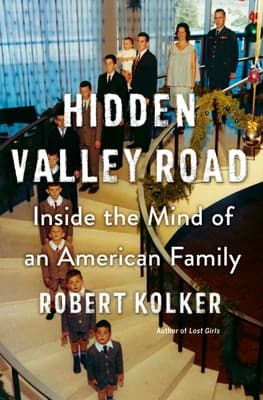
Hidden Valley Road: Inside the Mind of an American Family

Robert Kolker

The heartrending story of a midcentury American family with twelve children, six of them diagnosed with schizophrenia, that became science's great hope in the quest to understand the disease. Don and Mimi Galvin seemed to be living the American dream. After World War II, Don's work with the Air Force brought them to Colorado, where their twelve children perfectly spanned the baby boom: the oldest born in 1945, the youngest in 1965. In those years, there was an established script for a family like the Galvins—aspiration, hard work, upward mobility, domestic harmony—and they worked hard to play their parts. But behind the scenes was a different story: psychological breakdown, sudden shocking violence, hidden abuse. By the mid-1970s, six of the ten Galvin boys, one after another, were diagnosed as schizophrenic. How could all this happen to one family? What took place inside the house on Hidden Valley Road was so extraordinary that the Galvins became one of the first families to be studied by the National Institute of Mental Health. Their story offers a shadow history of the science of schizophrenia, from the era of institutionalization, lobotomy, and the schizophrenogenic mother to the search for genetic markers for the disease, always amid profound disagreements about the nature of the illness itself. And unbeknownst to the Galvins, samples of their DNA informed decades of genetic research that continues today, offering paths to treatment, prediction, and even eradication of the disease for future generations. With clarity and compassion, bestselling and award-winning author Robert Kolker uncovers one family's unforgettable legacy of suffering, love, and hope.

View

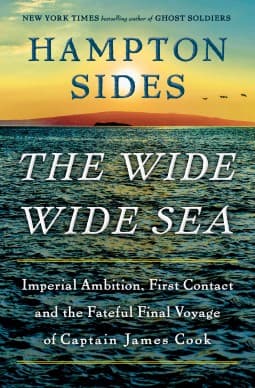
The Wide Wide Sea: Imperial Ambition, First Contact and the Fateful Final Voyage of Captain James Cook

Hampton Sides

From New York Times bestselling author Hampton Sides, an epic account of the most momentous voyage of the Age of Exploration, which culminated in Captain James Cook’s death in Hawaii, and left a complex and controversial legacy still debated to this day On July 12th, 1776, Captain James Cook, already lionized as the greatest explorer in British history, set off on his third voyage in his ship the HMS Resolution . Two-and-a-half years later, on a beach on the island of Hawaii, Cook was killed in a conflict with native Hawaiians. How did Cook, who was unique among captains for his respect for Indigenous peoples and cultures, come to that fatal moment? Hampton Sides’ bravura account of Cook’s last journey both wrestles with Cook’s legacy and provides a thrilling narrative of the titanic efforts and continual danger that characterized exploration in the 1700s. Cook was renowned for his peerless seamanship, his humane leadership, and his dedication to science-–the famed naturalist Joseph Banks accompanied him on his first voyage, and Cook has been called one of the most important figures of the Age of Enlightenment. He was also deeply interested in the native people he encountered. In fact, his stated mission was to return a Tahitian man, Mai, who had become the toast of London, to his home islands. On previous expeditions, Cook mapped huge swaths of the Pacific, including the east coast of Australia, and initiated first European contact with numerous peoples. He treated his crew well, and endeavored to learn about the societies he encountered with curiosity and without judgment. Yet something was different on this last voyage. Cook became mercurial, resorting to the lash to enforce discipline, and led his two vessels into danger time and again. Uncharacteristically, he ordered violent retaliation for perceived theft on the part of native peoples. This may have had something to do with his secret orders, which were to chart and claim lands before Britain’s imperial rivals could, and to discover the fabled Northwest Passage. Whatever Cook’s intentions, his scientific efforts were the sharp edge of the colonial sword, and the ultimate effects of first contact were catastrophic for Indigenous people around the world. The tensions between Cook’s overt and covert missions came to a head on the shores of Hawaii. His first landing there was harmonious, but when Cook returned after mapping the coast of the Pacific Northwest and Alaska, his exploitative treatment of the Hawaiians led to the fatal encounter. At once a ferociously-paced story of adventure on the high seas and a searching examination of the complexities and consequences of the Age of Exploration, THE WIDE WIDE SEA is a major work from one of our finest narrative nonfiction writers.

RM 98.75
View

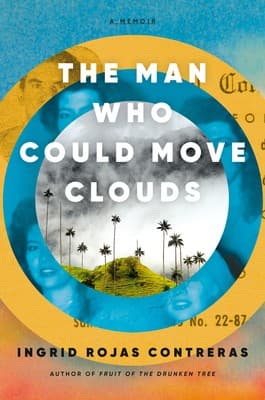
The Man Who Could Move Clouds

Ingrid Rojas Contreras

A TIME BEST BOOK OF THE SUMMER From the author of the "original, politically daring and passionately written" ( Vogue ) novel Fruit of the Drunken Tree , comes a dazzling, kaleidoscopic memoir reclaiming her family's otherworldly legacy. For Ingrid Rojas Contreras, magic runs in the family. Raised amid the political violence of 1980s and '90s Colombia, in a house bustling with her mother's fortune-telling clients, she was a hard child to surprise. Her maternal grandfather, Nono, was a renowned curandero, a community healer gifted with what the family called "the secrets" the power to talk to the dead, tell the future, treat the sick, and move the clouds. And as the first woman to inherit "the secrets," Rojas Contreras' mother was just as powerful. Mami delighted in her ability to appear in two places at once, and she could cast out even the most persistent spirits with nothing more than a glass of water. This legacy had always felt like it belonged to her mother and grandfather, until, while living in the U.S. in her twenties, Rojas Contreras suffered a head injury that left her with amnesia. As she regained partial memory, her family was excited to tell her that this had happened before: Decades ago Mami had taken a fall that left her with amnesia, too. And when she recovered, she had gained access to "the secrets." In 2012, spurred by a shared dream among Mami and her sisters, and her own powerful urge to relearn her family history in the aftermath of her memory loss, Rojas Contreras joins her mother on a journey to Colombia to disinter Nono's remains. With Mami as her unpredictable, stubborn, and often hilarious guide, Rojas Contreras traces her lineage back to her Indigenous and Spanish roots, uncovering the violent and rigid colonial narrative that would eventually break her mestizo family into two camps: those who believe "the secrets" are a gift, and those who are convinced they are a curse. Interweaving family stories more enchanting than those in any novel, resurrected Colombian history, and her own deeply personal reckonings with the bounds of reality, Rojas Contreras writes her way through the incomprehensible and into her inheritance. The result is a luminous testament to the power of storytelling as a healing art and an invitation to embrace the extraordinary.

RM 67.15
View

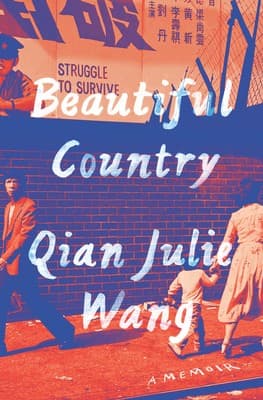
Beautiful Country

Qian Julie Wang

In Chinese, the word for America, Mei Guo, translates directly to “beautiful country.” Yet when seven-year-old Qian arrives in New York City in 1994 full of curiosity, she is overwhelmed by crushing fear and scarcity. In China, Qian’s parents were professors; in America, her family is "illegal" and it will require all the determination and small joys they can muster to survive. In Chinatown, Qian’s parents labor in sweatshops. Instead of laughing at her jokes, they fight constantly, taking out the stress of their new life on one another. Shunned by her classmates and teachers for her limited English, Qian takes refuge in the library and masters the language through books, coming to think of The Berenstain Bears as her first American friends. And where there is delight to be found, Qian relishes it: her first bite of gloriously greasy pizza, weekly "shopping days," when Qian finds small treasures in the trash lining Brooklyn’s streets, and a magical Christmas visit to Rockefeller Center — confirmation that the New York City she saw in movies does exist after all. But then Qian’s headstrong Ma Ma collapses, revealing an illness that she has kept secret for months for fear of the cost and scrutiny of a doctor’s visit. As Ba Ba retreats further inward, Qian has little to hold onto beyond his constant refrain: Whatever happens, say that you were born here, that you’ve always lived here. Inhabiting her childhood perspective with exquisite lyric clarity and unforgettable charm and strength, Qian Julie Wang has penned an essential American story about a family fracturing under the weight of invisibility, and a girl coming of age in the shadows, who never stops seeking the light. The moving story of an undocumented child living in poverty in the richest country in the world — an incandescent debut from an astonishing new talent

RM 71.10
View

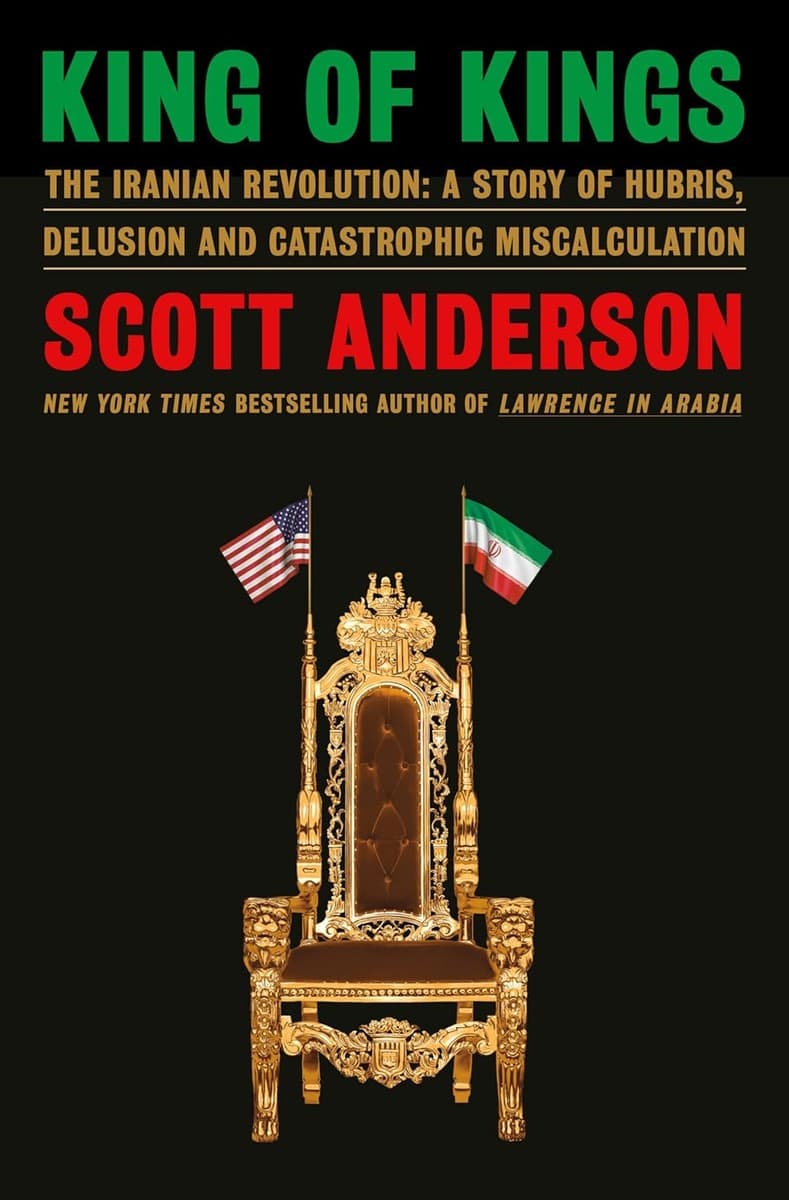
King of Kings

Scott Anderson

From the author of the acclaimed New York Times bestseller Lawrence in Arabia, a stunningly revelatory narrative history of one of the most momentous events in modern times, the jaw-dropping stupidity of the American government, and the dawn of the age of religious nationalism. On November 16th, 1977, at a state dinner in the White House, President Jimmy Carter toasted Shah Mohammad Reza Pahlavi, King of Kings, Light of the Aryans, Shadow of God on Earth, praising his "enlightened leadership" and extolling Iran as "a stabilizing influence in that part of the world." Iran had the world's fifth largest army and was awash in billions of dollars in oil revenues. Construction cranes dotted the skyline of its booming capital, Tehran. The regime's feared secret police force SAVAK had crushed communist opposition, and the Shah had bought off the conservative Muslim clergy inside the country. He seemed invulnerable, and invaluable to the United States as an ally in the Cold War. Fourteen months later the Shah fled Iran into exile, forced from the throne by a volcanic religious revolution led by a fiery cleric named Ayatollah Khomeini. How could the United States, which had one of the largest CIA stations in the world and thousands of military personnel in Iran, have been so blind? The spellbinding story Scott Anderson weaves is one of a dictator oblivious to the disdain of his subjects and a superpower blundering into disaster. The Shah emerges as a fascinating, Shakespearean character - a wannabe Richard III unaware of the depth of dissent to his rule, indecisive like Hamlet when action was called for, and at the end Lear-like as he raged against his fate. The Americans made terrible decisions at almost every juncture, from a secret pact designed by Kissinger and Nixon, to dismissing reports from the one diplomat who saw how hated the Shah was by the Iranian people (unlike almost all his colleagues, he spoke Farsi), to Jimmy Carter allowing the Shah to come to America for medical treatment, which set off the hostage crisis which forever damaged American influence in the world. Scott Anderson tells this astonishing tale with the narrative brio, mordant wit, and keen analysis that made his bestselling Lawrence in Arabia one of the key texts in understanding the modern Middle East. Based on voluminous research and dozens of interviews, King of Kings is driven by penetrating portraits of the people involved - the Iranian-American doctor who convinced American officials Khomeini was a moderate; the American teacher who learned of Khomeini's influence long before the cleric was even mentioned in official reports; the Shah's court minister who kept a detailed diary of all their interactions; the Shah's wife Farah who still mourns her lost kingdom; the hypocritical and misguided Jimmy Carter; and the implacable Khomeini who outmaneuvered his foes at every turn. The Iranian Revolution, Anderson convincingly argues, was as world-shattering an event as the French and Russian revolutions. In the Middle East, in India, in Southeast Asia, in Europe, and now in the United States, the hatred of economically-marginalized, religiously-fervent masses for a wealthy secular elite has led to violence and upheaval - and Iran was the template. King of Kings is a bravura work of history, and a warning.

View

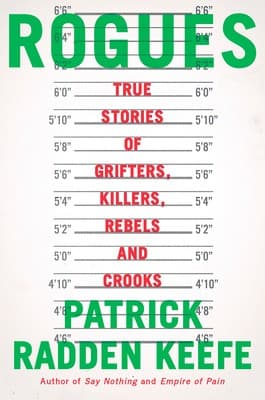
Rogues: True Stories of Grifters, Killers, Rebels and Crooks

Patrick Radden Keefe

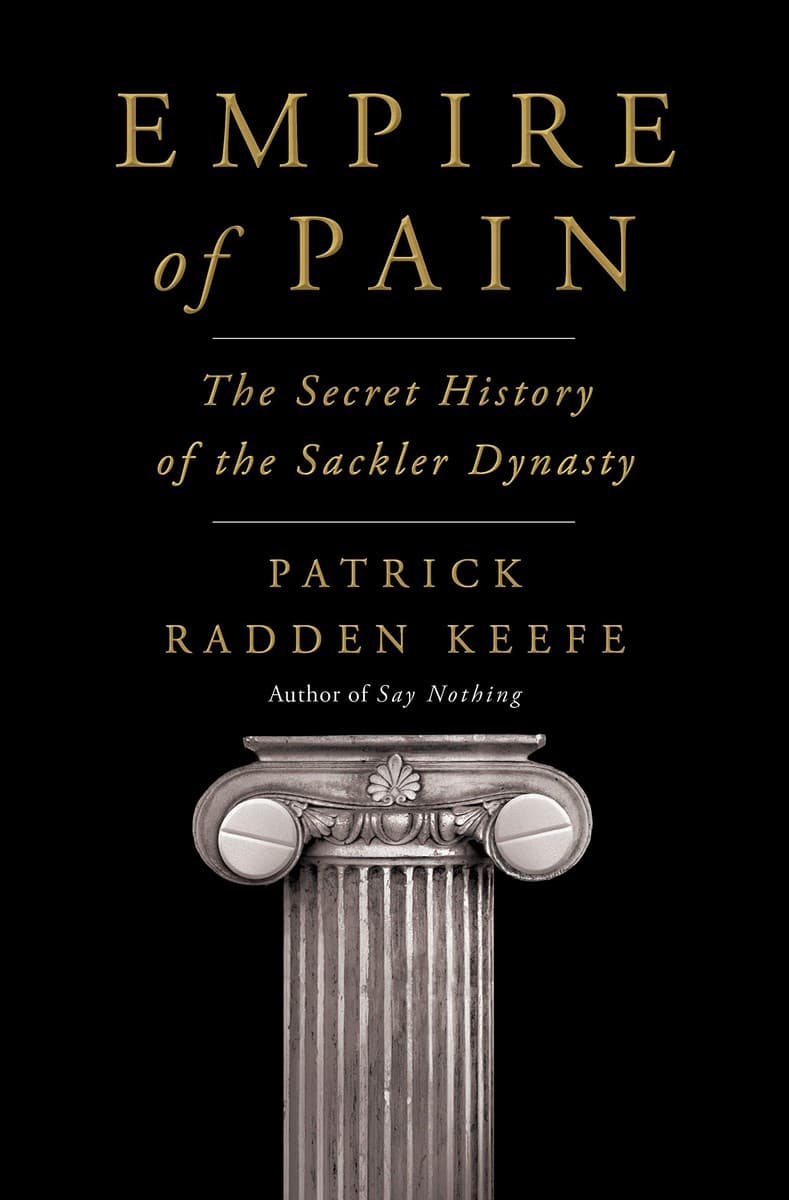
From the prize-winning, New York Times bestselling author of Say Nothing and Empire of Pain , twelve enthralling stories of skulduggery and intrigue by one of the most decorated journalists of our time. Patrick Radden Keefe has garnered prizes ranging from the National Magazine Award to the Orwell Prize to the National Book Critics Circle Award for his meticulously reported, hypnotically engaging work on the many ways people behave badly. Rogues brings together a dozen of his most celebrated articles from The New Yorker . As Keefe says in his preface, "They reflect on some of my abiding preoccupations: crime and corruption, secrets and lies, the permeable membrane separating licit and illicit worlds, the bonds of family, the power of denial." Keefe brilliantly explores the intricacies of forging $150,000 vintage wines, examines whether a whistleblower who dared to expose money laundering at a Swiss bank is a hero or a fabulist, spends time in Vietnam with Anthony Bourdain, chronicles the quest to bring down a cheerful international black market arms merchant, and profiles a passionate death penalty attorney who represents the "worst of the worst," among other bravura works of literary journalism. The appearance of his byline in The New Yorker is always an event, and collected here for the first time readers can see his work forms an always enthralling but deeply human portrait of criminals and rascals, as well as those who stand up against them.

RM 71.10
View

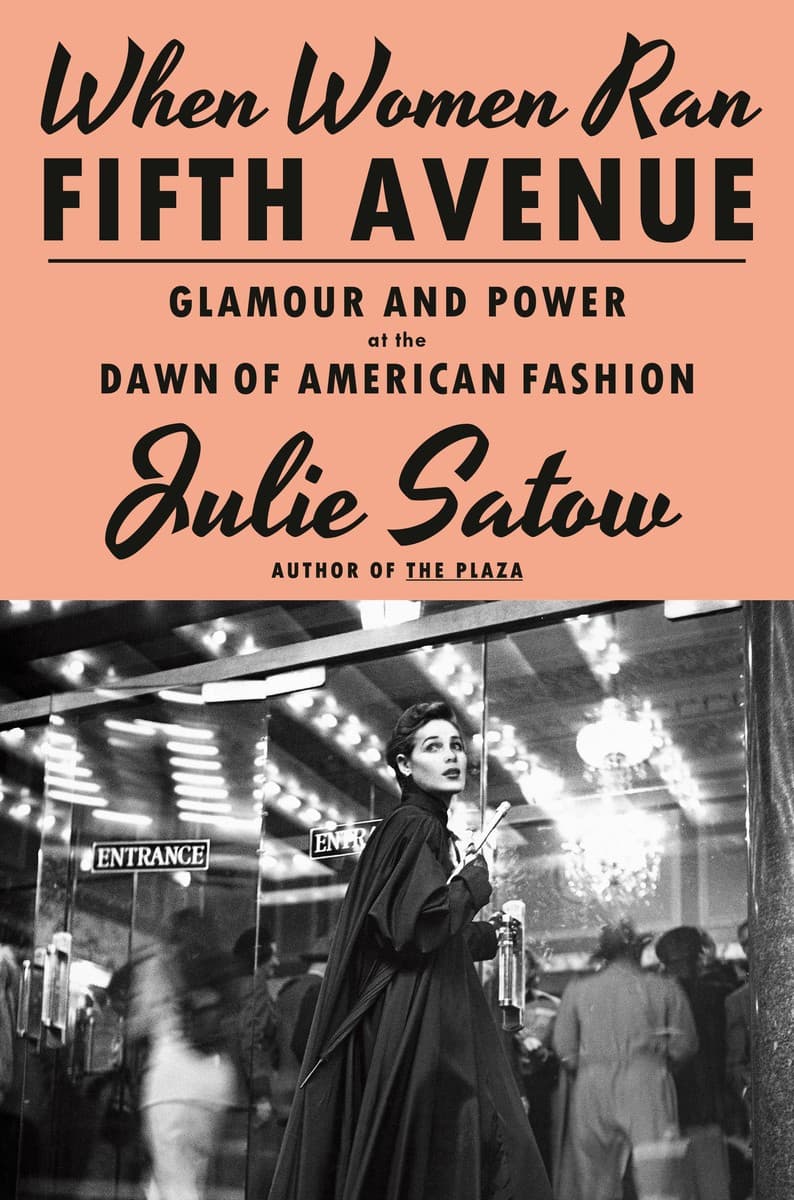
When Women Ran Fifth Avenue: Glamour and Power at the Dawn of American Fashion

Julie Satow

A glittering, glamorous portrait of the golden age of American department stores and of three visionary women who led them, from the award-winning author of The Plaza . The American department a palace of consumption that epitomized modern consumerism. Every wish could be met under one roof – afternoon tea, a stroll through the latest fashions, a wedding (or funeral) planned. It was a place where women, shopper and shopgirl alike, could stake out a newfound independence. Whether in New York or Chicago or on Main Street, USA, men owned the buildings, but inside, women ruled. In this hothouse atmosphere, three women rose to the top. Hortense Odlum of Bonwit Teller, Dorothy Shaver of Lord & Taylor, and Geraldine Stutz of Henri Bendel's took risks, innovated and competed as very different kinds of career women, forging new paths for the women who followed in their footsteps. In the 1930s, Hortense came to her husband's department store as a housewife tasked with attracting more shoppers like herself, and wound up running the company. Dorothy championed American designers during World War II--before which US fashions were almost exclusively Parisian copies--and beyond, becoming the first businesswoman to earn a salary of more than $1.5 million. And Geraldine re-invented the look of the modern department store in the 1960s, and had a preternatural sense for trends, inspiring a devoted following of ultra-chic shoppers as well as decades of copycats. In When Women Ran Fifth Avenue, journalist Julie Satow draws back the curtain on three American women who made twentieth-century department stores a mecca for women of every age, social class, and ambition. This stylish account, rich with personal drama and trade secrets, captures the department store in all its glitz, decadence, and fun, and showcases the women who made that beautifully curated world go round.

RM 82.95
View
Previous

Latest • Page 29/61

Next
WhatsApp support