Kongsee

Collection

Goodreads Choice Awards — Non-Fiction

Award-winning non-fiction titles recognised by the Goodreads Choice Awards. From memoirs to science, history to self-help.

1217 books available

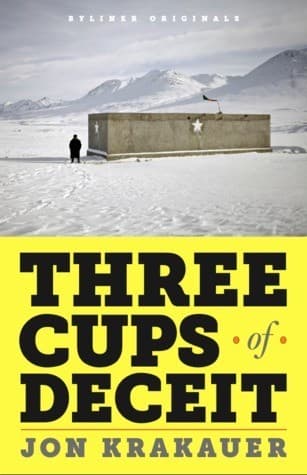
Three Cups of Deceit: How Greg Mortenson, Humanitarian Hero, Lost His Way

Jon Krakauer

This vastly expanded edition, as of October 2014, includes an afterword, a detailed look at further financial improprieties committed by Mortenson, an analysis of his recent claims of innocence, and fresh evidence from new sources from Pakistan, Afghanistan, and the US. Greg Mortenson has built a global reputation as a selfless humanitarian and children’s crusader, and he’s been nominated for the Nobel Peace Prize. He is also not what he appears to be. As acclaimed author Jon Krakauer discovered, Mortenson has not only fabricated substantial parts of his bestselling books Three Cups of Tea and Stones into Schools, but has also misused millions of dollars donated by unsuspecting admirers like Krakauer himself.This is the tragic tale of good intentions gone very wrong.One hundred percent of Jon Krakauer's proceeds from the sale of Three Cups of Deceit will be donated to the "Stop Girl Trafficking" project at the American Himalayan Foundation (www.himalayanfoundation.org/live/proj... THE AUTHORJon Krakauer is the author of "Eiger Dreams", "Into the Wild", "Into Thin Air", "Under the Banner of Heaven", and "Where Men Win Glory" and is the editor of the Modern Library Exploration series.PRAISE FOR "THREE CUPS OF DECEIT""The truth matters. Jon Krakauer's takedown of Greg Mortenson's book "Three Cups of Tea" and the charitable foundation he built from it is devastating. It is not just the fascinating story of a huckster who took publishers, philanthropists, journalists, academics, and a gullible public for a ride, but a detailed trip into the slippery netherworld where what matters most is what sells, not what really happened." —Mark Bowden, author of "Black Hawk Down""Packed with interviews and anecdotes that undercut Mortenson's image as a cheerful do-gooder, Krakauer's account of good intentions gone horribly wrong is a stunning example of investigative journalism." —Publishers Weekly“Krakauer forcefully claims that Mortenson improperly used his charity’s funds and failed to build all the schools he says he did.” —Elizabeth Taylor, Literary Editor, Chicago Tribune

RM 47.20
View

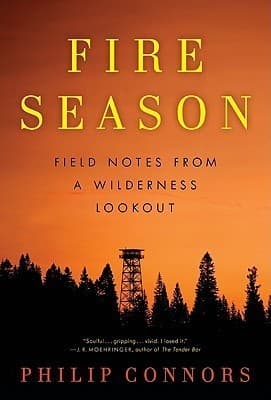
Fire Season

Philip Connors

A decade ago Philip Connors left work as an editor at the Wall Street Journal and talked his way into a job far from the streets of lower Manhattan: working as one of the last fire lookouts in America. Spending nearly half the year in a 7' x 7' tower, 10,000 feet above sea level in remote New Mexico, his tasks were simple: keep watch over one of the most fire-prone forests in the country and sound the alarm at the first sign of smoke. Fire Season is Connors's remarkable reflection on work, our place in the wild, and the charms of solitude. The landscape over which he keeps watch is rugged and roadless — it was the first region in the world to be officially placed off limits to industrial machines — and it typically gets hit by lightning more than 30,000 times per year. Connors recounts his days and nights in this forbidding land, untethered from the comforts of modern life: the eerie pleasure of being alone in his glass-walled perch with only his dog Alice for company; occasional visits from smokejumpers and long-distance hikers; the strange dance of communion and wariness with bears, elk, and other wild creatures; trips to visit the hidden graves of buffalo soldiers slain during the Apache wars of the nineteenth century; and always the majesty and might of lightning storms and untamed fire. Written with narrative verve and startling beauty, and filled with reflections on his literary forebears who also served as lookouts — among them Edward Abbey, Jack Kerouac, Norman Maclean, and Gary Snyder — Fire Season is a book to stand the test of time.

RM 82.91
View

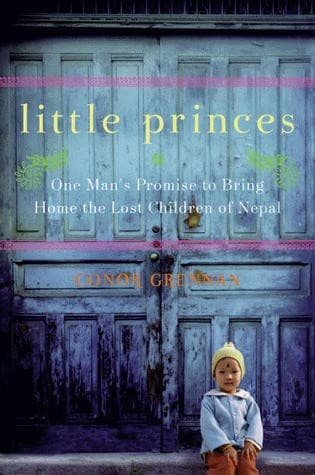
Little Princes

Conor Grennan

Little Princes is the epic story of Conor Grennan's battle to save the lost children of Nepal and how he found himself in the process. Part Three Cups of Tea , and part Into Thin Air , Grennan's remarkable memoir is at once gripping and inspirational, and it carries us deep into an exotic world that most readers know little about. One Person Can Make a Difference In search of adventure, twenty-nine-year-old Conor Grennan traded his day job for a year-long trip around the globe, a journey that began with a three-month stint volunteering at the Little Princes Children's Home, an orphanage in war-torn Nepal. Conor was initially reluctant to volunteer, unsure whether he had the proper skill, or enough passion, to get involved in a developing country in the middle of a civil war. But he was soon overcome by the herd of rambunctious, resilient children who would challenge and reward him in a way that he had never imagined. When Conor learned the unthinkable truth about their situation, he was stunned: The children were not orphans at all. Child traffickers were promising families in remote villages to protect their children from the civil war - for a huge fee - by taking them to safety. They would then abandon the children far from home, in the chaos of Nepal's capital, Kathmandu. For Conor, what began as a footloose adventure becomes a commitment to reunite the children he had grown to love with their families, but this would be no small task. He would risk his life on a journey through the legendary mountains of Nepal, facing the dangers of a bloody civil war and a debilitating injury. Waiting for Conor back in Kathmandu, and hopeful he would make it out before being trapped in by snow, was the woman who would eventually become his wife and share his life's work. Little Princes is a true story of families and children, and what one person is capable of when faced with seemingly insurmountable odds. At turns tragic, joyful, and hilarious, Little Princes is a testament to the power of faith and the ability of love to carry us beyond our wildest expectations.

View

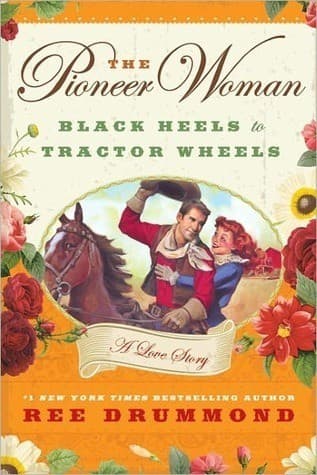
The Pioneer Woman Cooks: Food from My Frontier

Ree Drummond

I'm Pioneer Woman. And I love to cook. Once upon a time, I fell in love with a cowboy. A strapping, rugged, chaps-wearing cowboy. Then I married him, moved to his ranch, had his babies . . . and wound up loving it. Except the manure. Living in the country for more than fifteen years has taught me a handful of eternal truths: every new day is a blessing, every drop of rain is a gift . . . and nothing tastes more delicious than food you cook yourself. The Pioneer Woman Cooks: Food from My Frontier is a mouthwatering collection of the simple-but-scrumptious recipes that rotate through my kitchen on a regular basis, including Perfect Pancakes, Cowgirl Quiche, Sloppy Joes, Italian Meatball Soup, White Chicken Enchiladas, and a spicy Carnitas Pizza that'll win you over for life. There are also some elegant offerings for more special occasions at your house: Osso Buco, Honey-Plum-Soy Chicken, and Rib-Eye Steak with an irresistible Onion-Blue Cheese Sauce. And the decadent assortment of desserts, including Blackberry Chip Ice Cream, Apple Dumplings, and Coffee Cream Cake, will make your heart go pitter-pat in the most wonderful way. In addition to detailed step-by-step photographs, all the recipes in this book have one other important quality in common: They're guaranteed to make your kids, sweetheart, dinner guests, in-laws, friends, cousins, or resident cowboys smile, sigh, and beg for seconds. (And hug you and kiss you and be devoted to you for life.) I hope you enjoy, devour, and love this book. I sure did love making it for you.

RM 128.38
View

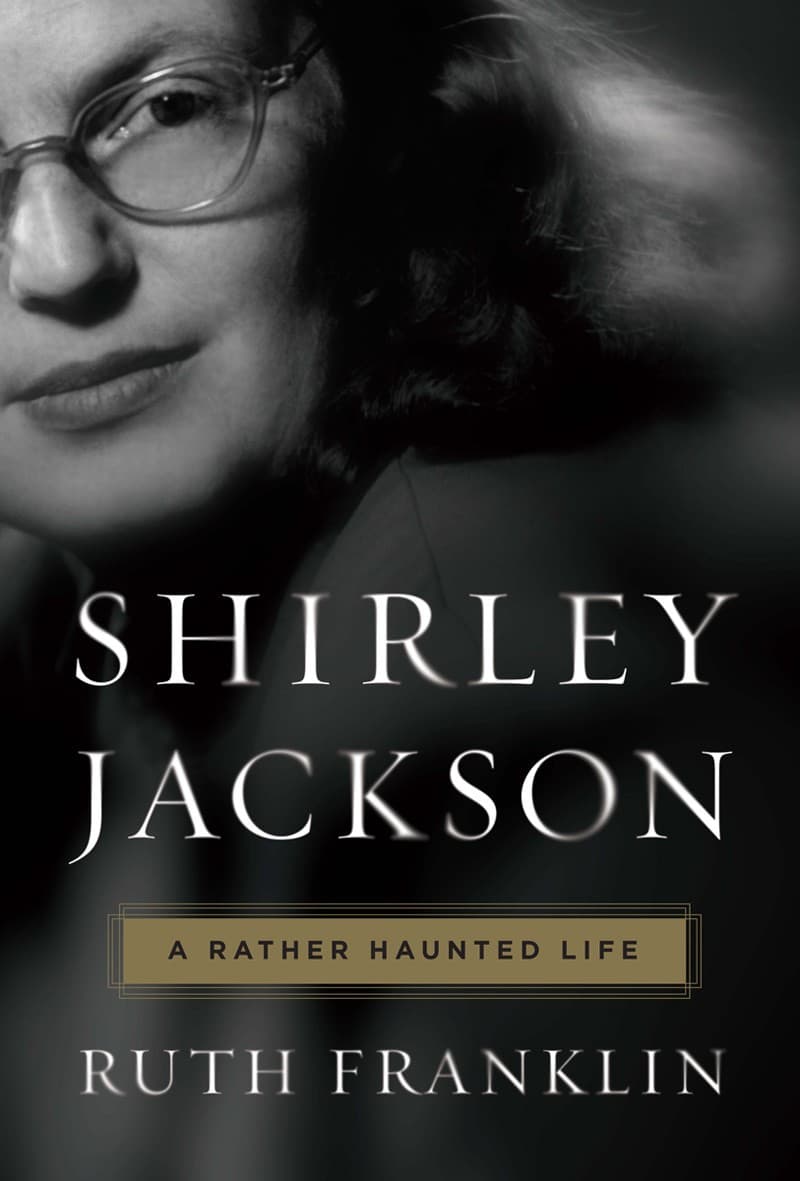
Shirley Jackson: A Rather Haunted Life

Ruth Franklin

This historically engaging and relevant biography establishes Shirley Jackson as a towering figure in American literature and revives the life and work of a neglected master. Still known to millions primarily as the author of the The Lottery , Shirley Jackson (1916-1965) has been curiously absent from the mainstream American literary canon. A genius of literary suspense and psychological horror, Jackson plumbed the cultural anxiety of postwar America more deeply than anyone. Now, biographer Ruth Franklin reveals the tumultuous life and inner darkness of the author of such classics as The Haunting of Hill House and We Have Always Lived in the Castle . Placing Jackson within an American gothic tradition that stretches back to Hawthorne and Poe, Franklin demonstrates how her unique contribution to this genre came from her focus on "domestic horror." Almost two decades before The Feminine Mystique ignited the women's movement, Jackson's stories and nonfiction chronicles were already exploring the exploitation and the desperate isolation of women, particularly married women, in American society. Franklin's portrait of Jackson gives us "a way of reading Jackson and her work that threads her into the weave of the world of words, as a writer and as a woman, rather than excludes her as an anomaly" (Neil Gaiman). The increasingly prescient Jackson emerges as a ferociously talented, determined, and prodigiously creative writer in a time when it was unusual for a woman to have both a family and a profession. A mother of four and the wife of the prominent New Yorker critic and academic Stanley Edgar Hyman, Jackson lived a seemingly bucolic life in the New England town of North Bennington, Vermont. Yet, much like her stories, which channeled the occult while exploring the claustrophobia of marriage and motherhood, Jackson's creative ascent was haunted by a darker side. As her career progressed, her marriage became more tenuous, her anxiety mounted, and she became addicted to amphetamines and tranquilizers. In sobering detail, Franklin insightfully examines the effects of Jackson's California upbringing, in the shadow of a hypercritical mother, on her relationship with her husband, juxtaposing Hyman's infidelities, domineering behavior, and professional jealousy with his unerring admiration for Jackson's fiction, which he was convinced was among the most brilliant he had ever encountered. Based on a wealth of previously undiscovered correspondence and dozens of new interviews, Shirley Jackson―an exploration of astonishing talent shaped by a damaging childhood and turbulent marriage―becomes the definitive biography of a generational avatar and an American literary giant.

View

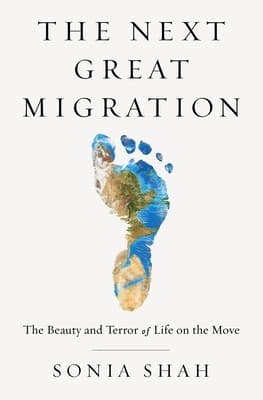
The Next Great Migration: The Beauty and Terror of Life on the Move

Sonia Shah

A prize-winning journalist upends our centuries-long assumptions about migration through science, history, and reporting--predicting its lifesaving power in the face of climate change. The news today is full of stories of dislocated people on the move. Wild species, too, are escaping warming seas and desiccated lands, creeping, swimming, and flying in a mass exodus from their past habitats. News media presents this scrambling of the planet's migration patterns as unprecedented, provoking fears of the spread of disease and conflict and waves of anxiety across the Western world. On both sides of the Atlantic, experts issue alarmed predictions of millions of invading aliens, unstoppable as an advancing tsunami, and countries respond by electing anti-immigration leaders who slam closed borders that were historically porous. But the science and history of migration in animals, plants, and humans tell a different story. Far from being a disruptive behavior to be quelled at any cost, migration is an ancient and lifesaving response to environmental change, a biological imperative as necessary as breathing. Climate changes triggered the first human migrations out of Africa. Falling sea levels allowed our passage across the Bering Sea. Unhampered by barbed wire, migration allowed our ancestors to people the planet, catapulting us into the highest reaches of the Himalayan mountains and the most remote islands of the Pacific, creating and disseminating the biological, cultural, and social diversity that ecosystems and societies depend upon. In other words, migration is not the crisis--it is the solution. Conclusively tracking the history of misinformation from the 18th century through today's anti-immigration policies, The Next Great Migration makes the case for a future in which migration is not a source of fear, but of hope.

View
Previous

Latest • Page 8/61

Next
WhatsApp support